Siberian: personality, care & health
Siberians are large, athletic semi-longhaired cats often described as confident and social. Coat, activity, handling preferences and health still vary substantially between individuals.
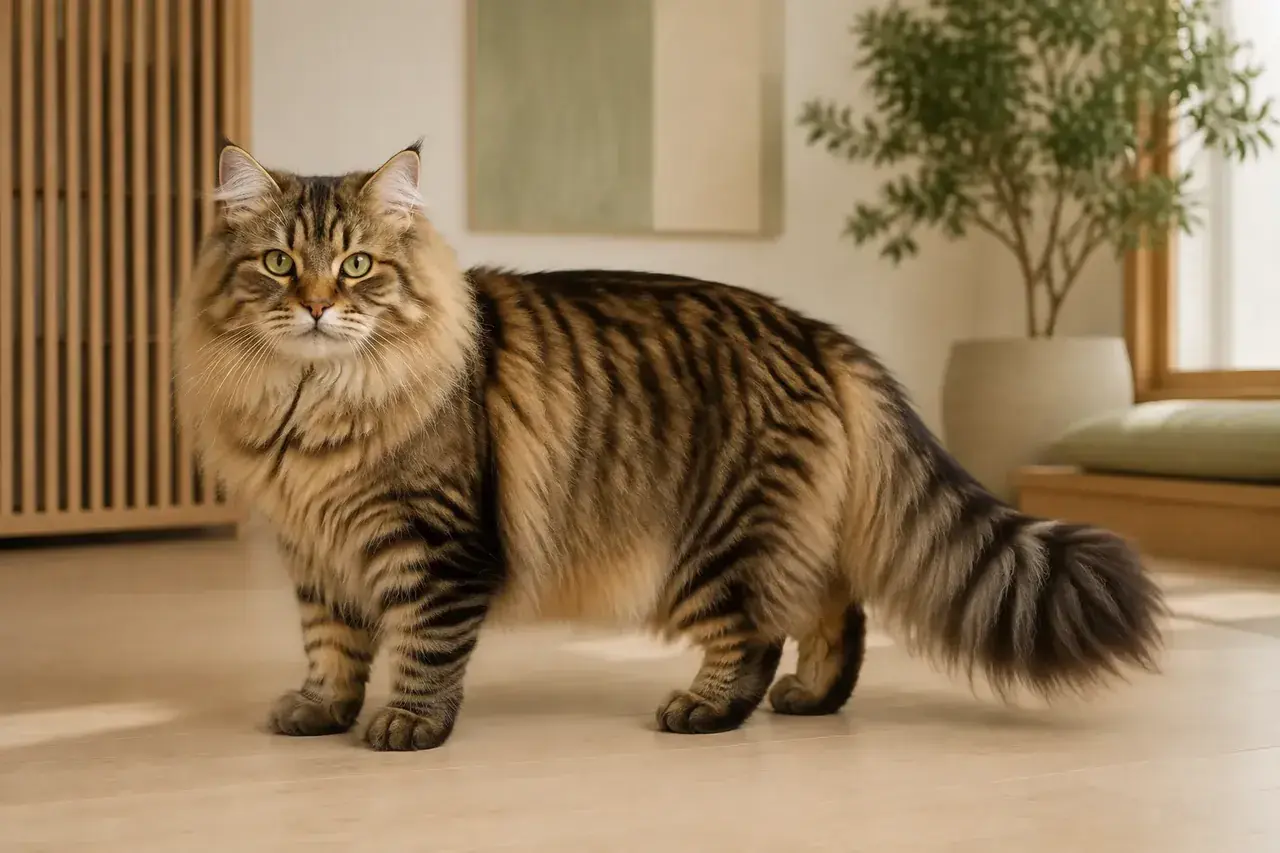 Topic illustration selected for this guide. Some learning images may be AI-assisted.
Siberian: personality, care & health — the quick answer
✓ Powerful long-haired cats with a thick triple coat.
✓ Expect seasonal shedding, sturdy climbing needs and individual rather than guaranteed allergy responses.
✓ Choose welfare and health over appearance
Powerful long-haired cats with a thick triple coat. Breed descriptions are tendencies, never promises: early experience, health and the individual cat shape daily life.
What people notice
Powerful long-haired cats with a thick triple coat.
Daily life and care
Expect seasonal shedding, sturdy climbing needs and individual rather than guaranteed allergy responses.
Choosing responsibly
Meet the cat, ask for documented health screening and avoid exaggerated features that impair breathing, movement, skin or comfort. Adoption is always worth considering.
Plan for size and seasonal coat
Choose sturdy climbing furniture, a generously sized carrier and litter trays that allow the adult cat to turn comfortably. Comb through the dense coat gently, especially during seasonal shedding and around friction areas, without pulling mats or routinely shaving. Judge body condition by touch as well as appearance because the coat can hide weight change.
Verify health claims carefully
Ask a responsible breeder for registration, family history and evidence of relevant screening, including discussion of hypertrophic cardiomyopathy. Claims that Siberians are hypoallergenic are not guarantees: individual people can react differently to individual cats. Spend time with the cat before committing when allergies are a concern, and choose for household fit rather than appearance.
Your quick checklist
Your progress is saved on this device.
Three simple things you can do
You do not have to change everything today. Pick one step that feels realistic, try it and see how your cat responds.
- 1Observe your cat’s individual baseline.
- 2Make one gentle change at a time.
- 3Ask a qualified professional when health or safety is involved.
Common mistakes
×Waiting for a dramatic symptom instead of noticing smaller changes from the cat’s normal routine.
×Changing several things at once, making it difficult to learn what actually helped.
×Treating general guidance as a substitute for advice from a veterinarian who knows the individual cat.
Questions cat people ask
Does every cat follow the same rule?+
No. Age, health, history, temperament and environment all change what works for an individual.
When should I seek professional help?+
Seek veterinary advice for sudden, persistent or concerning changes and urgent help for breathing difficulty, collapse, seizures, poisoning or urinary obstruction signs.
Still looking for the right answer?
Search the full EverYes Cats encyclopedia with your own words — a symptom, food, behaviour, breed or everyday question.
Checked, dated and transparent
- Prepared by
- EverYes Cats editorial team
- Last updated
- 4 September 2026
- Source checked
- 4 September 2026
- Primary reference
- FelineVMA Life Stage Guidelines ↗
We begin with the named reference, rewrite the information in plain language and add practical cat-parent steps. Urgent health statements are checked against veterinary sources. This guide has not been individually reviewed by a veterinarian unless explicitly stated. It provides education, not diagnosis or treatment.
How we choose and use sources →
Spotted something unclear or outdated? Tell us so we can review it.
Your answer helps us improve the cat encyclopedia.
British Shorthairs are typically sturdy, dense-coated cats often described as calm, but individuals vary and may prefer nearby companionship over being carried.