Can cats eat white fish?
Plain cooked boneless white fish is suitable as an occasional extra.
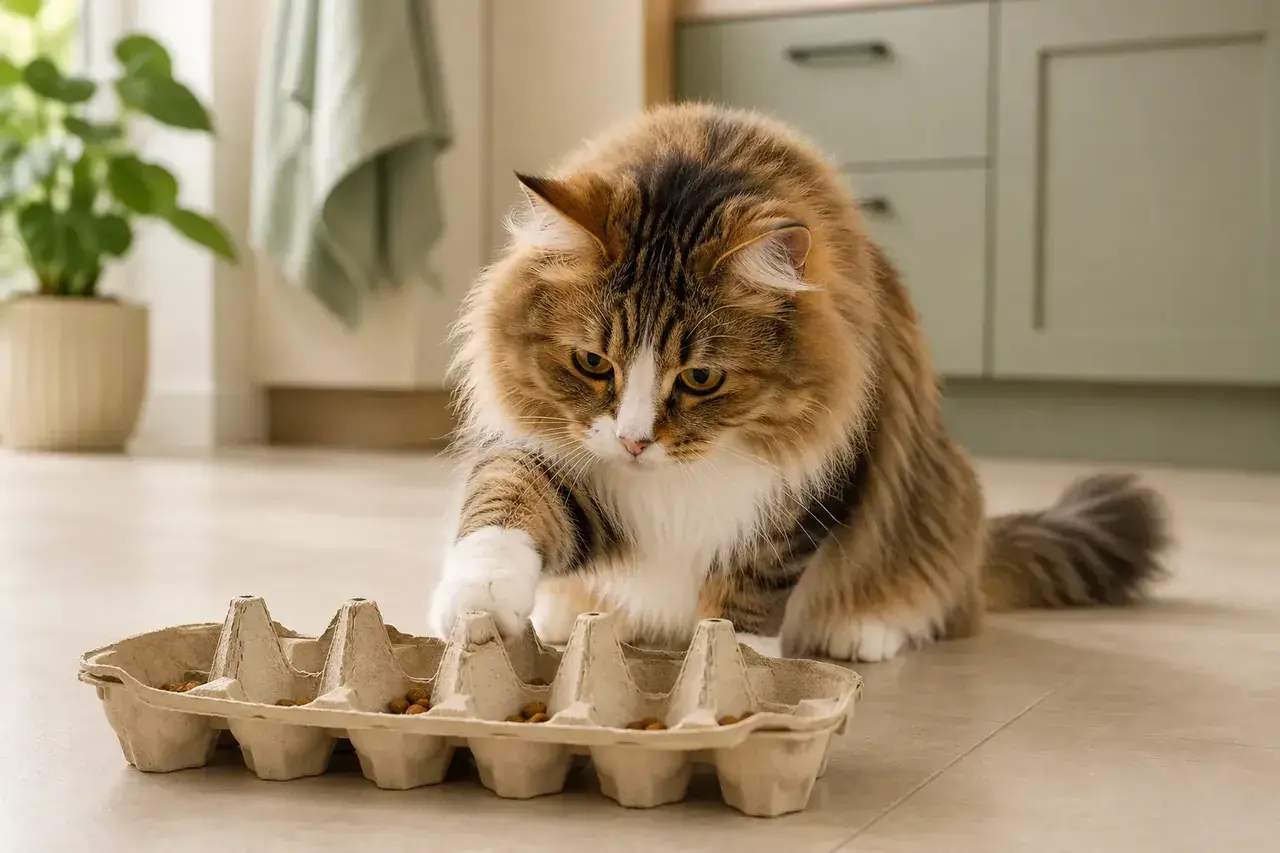 Topic illustration selected for this guide. Some learning images may be AI-assisted.
Plain cooked boneless white fish is suitable as an occasional extra.
Can cats eat white fish — the quick answer
✓ Plain cooked boneless white fish is suitable as an occasional extra.
✓ Steam or bake without seasoning and inspect carefully for bones.
✓ Seek urgent help for breathing trouble or a suspected bone; otherwise monitor a small plain bite.
Plain cooked boneless white fish is suitable as an occasional extra. This practical guide explains portions, preparation, hidden ingredients and when to call a veterinarian.
The short answer
A small piece of plain fully cooked boneless white fish can be an occasional extra for a cat without a relevant dietary restriction. It is not a complete cat diet. Check the actual recipe: batter, sauces, salt, raw fish and small bones change the answer.
The main risks
Batter, salt, sauces, raw fish and fine bones make human fish dishes unsuitable. Portion size changes the picture too. A lick, a pea-sized piece and half a plate are not equivalent exposures. Kittens, seniors, small cats and cats with chronic disease can also have less room for error. When in doubt, keep the wrapper or recipe and ask before offering more.
A safer way to serve it
Steam or bake a small portion without seasoning, let it cool and carefully inspect it for bones before offering a tiny flake. Keep the regular complete food as the meal. If the cat is on a prescription diet, ask the veterinary team before adding fish.
How much is a small amount?
For most optional foods, think in crumbs and teaspoons rather than human portions. Treats and extras should remain a small part of the daily calories, with complete food doing the nutritional work. A surprisingly tiny piece can still be a satisfying reward when it arrives at the right moment. If weight control matters, reserve part of the measured daily ration for rewards instead of adding more calories.
What to watch after a new food
Observe appetite, energy, breathing, swallowing, vomiting, stool and comfort over the next day. Mild soft stool after an unfamiliar rich food is different from repeated vomiting, severe diarrhea, marked lethargy, pain, tremors or collapse. Also notice repeated scratching or skin changes over time. Write down what was eaten and when; accurate details are more useful than guessing later.
If your cat already ate it
A tiny plain cooked bite usually calls for observation. If a bone may have been swallowed, the dish contains onion or garlic, or the cat retches, drools or has trouble swallowing, contact a veterinarian promptly with the recipe. Do not make the cat vomit at home.
When it is an emergency
Breathing difficulty, choking, blue or very pale gums, collapse, seizures, severe weakness, repeated retching, a swollen painful abdomen or inability to stand requires immediate emergency veterinary care. Suspected toxins deserve a call before symptoms appear because early treatment may be more effective. Use your local veterinarian, emergency clinic or animal poison service; online guidance cannot calculate an individual risk.
Special diets change the answer
A cat on a urinary, kidney, allergy, diabetes, weight-loss or gastrointestinal diet may need to avoid extras that seem harmless for another cat. Even a small treat can interfere with an elimination trial or add phosphorus, sodium, fat, carbohydrate or calories the plan is designed to control. Ask the veterinary team for approved rewards so every person in the home follows the same plan.
DEEPER GUIDE1 more detailed sectionsOpen +
Bottom line
Plain cooked boneless white fish is suitable as an occasional extra. Keep complete, life-stage-appropriate cat food as the foundation. Optional tastes should be genuinely optional: tiny, plain, infrequent and easy to stop. When an exposure involves a toxin, bone, pit, raw dough, unknown mushroom, concentrated product or worrying symptom, contact a veterinary professional promptly rather than relying on a wait-and-see experiment.
Your quick checklist
Your progress is saved on this device.
Three simple things you can do
You do not have to change everything today. Pick one step that feels realistic, try it and see how your cat responds.
- 1Observe your cat’s individual baseline.
- 2Make one gentle change at a time.
- 3Ask a qualified professional when health or safety is involved.
Common mistakes
×Waiting for a dramatic symptom instead of noticing smaller changes from the cat’s normal routine.
×Changing several things at once, making it difficult to learn what actually helped.
×Treating general guidance as a substitute for advice from a veterinarian who knows the individual cat.
Questions cat people ask
Does every cat follow the same rule?+
No. Age, health, history, temperament and environment all change what works for an individual.
When should I seek professional help?+
Seek veterinary advice for sudden, persistent or concerning changes and urgent help for breathing difficulty, collapse, seizures, poisoning or urinary obstruction signs.
Still looking for the right answer?
Search the full EverYes Cats encyclopedia with your own words — a symptom, food, behaviour, breed or everyday question.
Checked, dated and transparent
- Prepared by
- EverYes Cats editorial team
- Last updated
- 22 September 2026
- Source checked
- 22 September 2026
- Primary reference
- Cornell Feline Health Center: Feeding Your Cat ↗
We begin with the named reference, rewrite the information in plain language and add practical cat-parent steps. Urgent health statements are checked against veterinary sources. This guide has not been individually reviewed by a veterinarian unless explicitly stated. It provides education, not diagnosis or treatment.
How we choose and use sources →
Spotted something unclear or outdated? Tell us so we can review it.
Your answer helps us improve the cat encyclopedia.
Plain fully cooked boneless turkey can be a small treat, but skin, gravy, stuffing, seasoning and cooked bones are unsafe.