Can cats understand what they see on TV?
Cats can detect movement and may respond to prey-like shapes and sounds on modern screens.
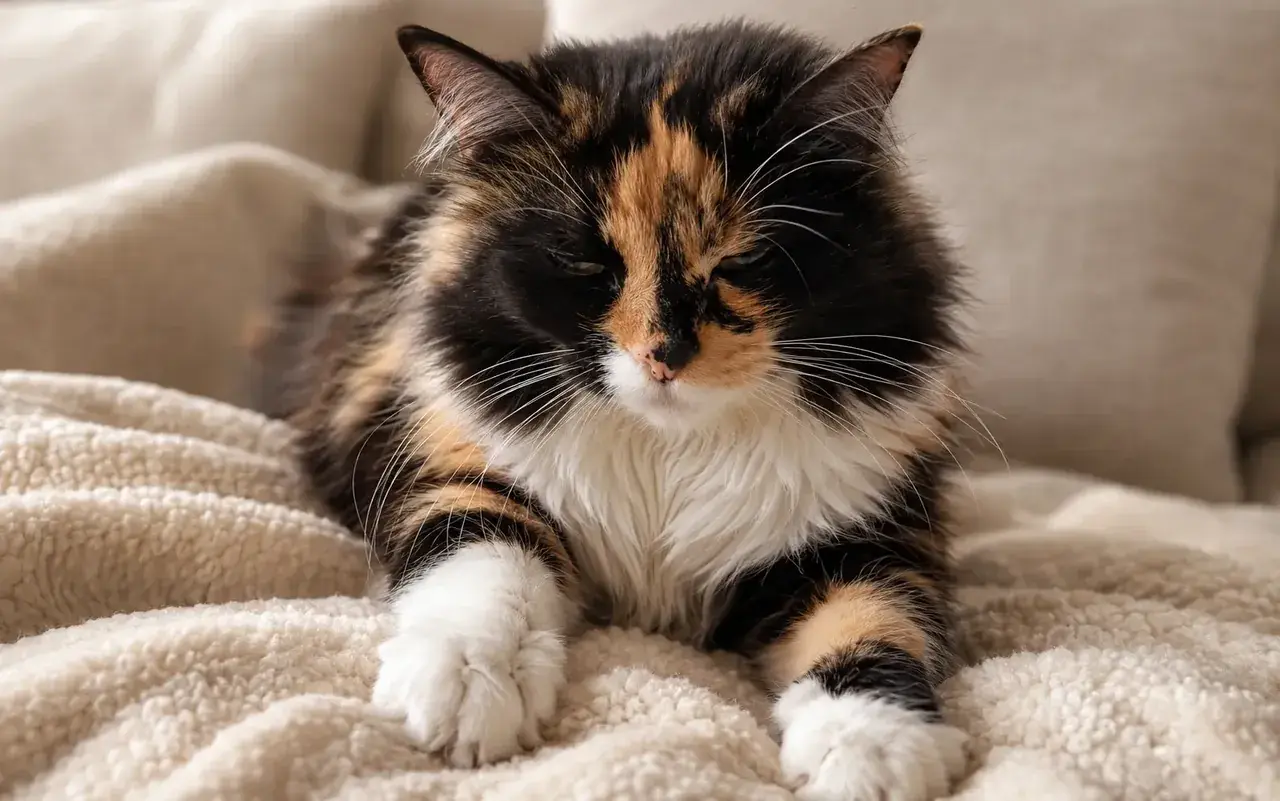 Topic illustration selected for this guide. Some learning images may be AI-assisted.
Can cats understand what they see on TV — the quick answer
✓ Cats can detect movement and may respond to prey-like shapes and sounds on modern screens.
✓ Use short supervised viewing and protect screens from jumping or scratching.
✓ Screen time should supplement—not replace—interactive play and real environmental enrichment.
Cats can detect movement and may respond to prey-like shapes and sounds on modern screens. They probably do not interpret the story as people do, but the motion can still trigger attention or hunting behaviour. Here is the useful version of the answer: what the behaviour may mean, what it does not prove and when it stops being just a fun cat fact.
The short answer
Cats can detect movement and may respond to prey-like shapes and sounds on modern screens. A single moment never tells the whole story, so compare the setting, the cat's posture and what happens next.
Why cats do this
They probably do not interpret the story as people do, but the motion can still trigger attention or hunting behaviour. Cats combine scent, sound, sight, touch, memory and learning. That is why the same visible action can have more than one reasonable explanation.
Read the whole cat
A loose cat that watches, tracks movement and walks away can be enjoying brief visual stimulation. Crouching, frantic pawing, repeated collisions, redirected biting or an inability to settle after the screen stops means the session is too intense.
What to do at home
Secure the screen and nearby furniture, remove unstable launch points and begin with a short supervised session at low volume. Follow viewing with real interactive play and a safe catch so the cat can complete a physical hunting sequence.
What this does not prove
Responding to birds or mice on a screen does not mean the cat understands a programme or mistakes every image for a real animal. Movement, contrast, sound, screen refresh and individual hunting interest all affect the response.
When to contact a veterinarian
A cat that suddenly stops tracking movement, repeatedly misjudges jumps or seems unable to see objects away from the screen needs a veterinary eye assessment. Do not use television as a home vision test.
Your quick checklist
Your progress is saved on this device.
Three simple things you can do
You do not have to change everything today. Pick one step that feels realistic, try it and see how your cat responds.
- 1Begin with a short supervised session and watch the cat rather than only the screen.
- 2Secure the television and remove launch points that could tip equipment.
- 3Follow screen watching with real interactive play that ends in a safe catch.
Common mistakes
×Assuming a cat understands the programme or story like a person.
×Using videos as the cat's only enrichment.
×Continuing when the cat becomes frantic, crashes into the screen or cannot disengage.
Questions cat people ask
Can cats actually see modern television images?+
Yes, cats can detect movement, contrast and prey-like shapes, although display characteristics and individual hunting interest affect the response.
Is cat television good for indoor cats?+
It can be a brief optional activity, but should supplement—not replace—climbing, scent, food exploration, social choice and interactive hunting play.
Still looking for the right answer?
Search the full EverYes Cats encyclopedia with your own words — a symptom, food, behaviour, breed or everyday question.
Checked, dated and transparent
- Prepared by
- EverYes Cats editorial team
- Last updated
- 19 September 2026
- Source checked
- 19 September 2026
- Primary reference
- International Cat Care ↗
We begin with the named reference, rewrite the information in plain language and add practical cat-parent steps. Urgent health statements are checked against veterinary sources. This guide has not been individually reviewed by a veterinarian unless explicitly stated. It provides education, not diagnosis or treatment.
How we choose and use sources →
Spotted something unclear or outdated? Tell us so we can review it.
Your answer helps us improve the cat encyclopedia.
A trill is a short rolling vocalisation often used during friendly greetings, attention and invitations to follow. Its meaning becomes clearer from where the cat goes and what happens next.