Cold-weather safety for cats
Cold weather can cause hypothermia, frostbite and hidden shelter risks. Indoor warmth, controlled access and checks around vehicles protect cats more reliably than assuming their coat is enough.
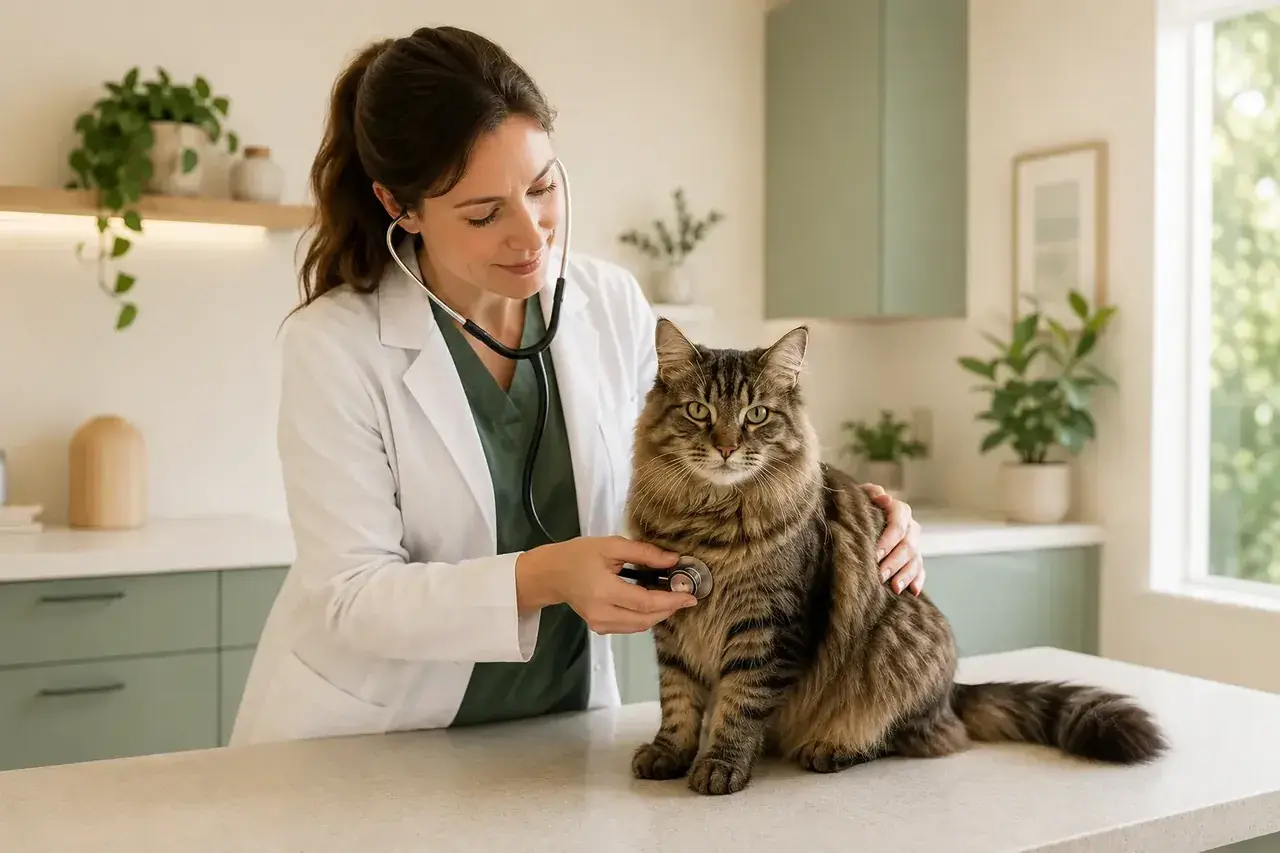 Topic illustration selected for this guide. Some learning images may be AI-assisted.
This sign can be urgent. Call a veterinarian or emergency clinic now for individual triage; do not wait for this article to diagnose the cause.
Cold-weather safety for cats — the quick answer
✓ Keep cats indoors during dangerous weather
✓ Check vehicles before starting
✓ Antifreeze exposure is an emergency
✓ Weakness or abnormal breathing after cold needs urgent care
A fur coat does not make every cat safe in freezing weather. Age, illness, wet fur, wind and lack of shelter change how quickly a cat loses heat.
Reduce exposure
Keep cats indoors in severe cold and provide warm dry beds away from drafts. Outdoor-access cats need a safe transition plan rather than being locked out.
Check hidden hazards
Cats may shelter near warm engines. Tap the hood and inspect before starting. Clean road salt from paws and store antifreeze securely; even small exposures can be deadly.
Recognise trouble
Shivering may occur, but severe hypothermia can cause weakness, confusion, slow responses, cold body surfaces or collapse. Frostbite may not be obvious immediately.
Warm safely
Move the cat to warmth, wrap in dry blankets and contact a veterinarian. Avoid direct high heat, rubbing damaged skin or delaying care for a cat that seems better.
Provide warmth and a dependable return
Keep cats indoors during severe cold, storms and icy conditions. For controlled outdoor time, ensure immediate access back inside and provide a dry insulated shelter with an entrance protected from wind. Kittens, senior cats, hairless cats and those with illness or low body condition become cold faster and need stricter limits.
Check cold-weather hazards
Tap the bonnet and inspect wheel areas before starting a vehicle because cats may seek engine warmth. Store antifreeze securely and clean spills immediately; even small exposure is an emergency. Shivering, weakness, confusion, pale skin, painful ears or paws, slow breathing or collapse requires gradual gentle warming and urgent veterinary care.
Your quick checklist
Your progress is saved on this device.
What to do now
Do not use this guide to delay care. Start with the first step and follow the veterinary professional's instructions.
- 1Keep cats indoors during dangerous cold and provide warm dry beds away from drafts.
- 2Check sheds, garages and vehicles before closing or starting them.
- 3Wipe paws after contact with salt or de-icer and seek care for pale, painful or damaged skin.
Common mistakes
×Assuming a thick coat prevents hypothermia or frostbite.
×Leaving antifreeze accessible.
×Using an unattended heat source that can burn or trap the cat.
Questions cat people ask
How cold is too cold for a cat?+
Risk depends on temperature, wind, wetness, shelter, age and health, so there is no single safe number. When conditions are dangerous for people or water freezes, bring cats into a heated secure space.
What are signs of hypothermia?+
Shivering, weakness, cold skin, slow responses, collapse or abnormal breathing require urgent warming guidance and veterinary care.
Still looking for the right answer?
Search the full EverYes Cats encyclopedia with your own words — a symptom, food, behaviour, breed or everyday question.
Checked, dated and transparent
- Prepared by
- EverYes Cats editorial team
- Last updated
- 4 September 2026
- Source checked
- 4 September 2026
- Primary reference
- AVMA Cold Weather Animal Safety ↗
We begin with the named reference, rewrite the information in plain language and add practical cat-parent steps. Urgent health statements are checked against veterinary sources. This guide has not been individually reviewed by a veterinarian unless explicitly stated. It provides education, not diagnosis or treatment.
How we choose and use sources →
Spotted something unclear or outdated? Tell us so we can review it.
Your answer helps us improve the cat encyclopedia.
Pollen, petals, leaves and vase water can all threaten a cat's kidneys.