A beginner’s guide to cat dental care
Dental care combines veterinary examination with realistic prevention at home. Brushing can reduce plaque, but it cannot remove established tartar or treat painful teeth.
 Topic illustration selected for this guide. Some learning images may be AI-assisted.
A beginner’s guide to cat dental care — the quick answer
✓ Use cat-safe toothpaste only
✓ Introduce brushing in tiny steps
✓ Bad breath and eating changes need attention
Dental disease is common and cats may continue eating despite oral pain. Home care and veterinary checks work together.
Introduce toothbrushing in three tiny steps
Comfort comes before coverage. Begin with seconds, not a full-mouth brushing session.
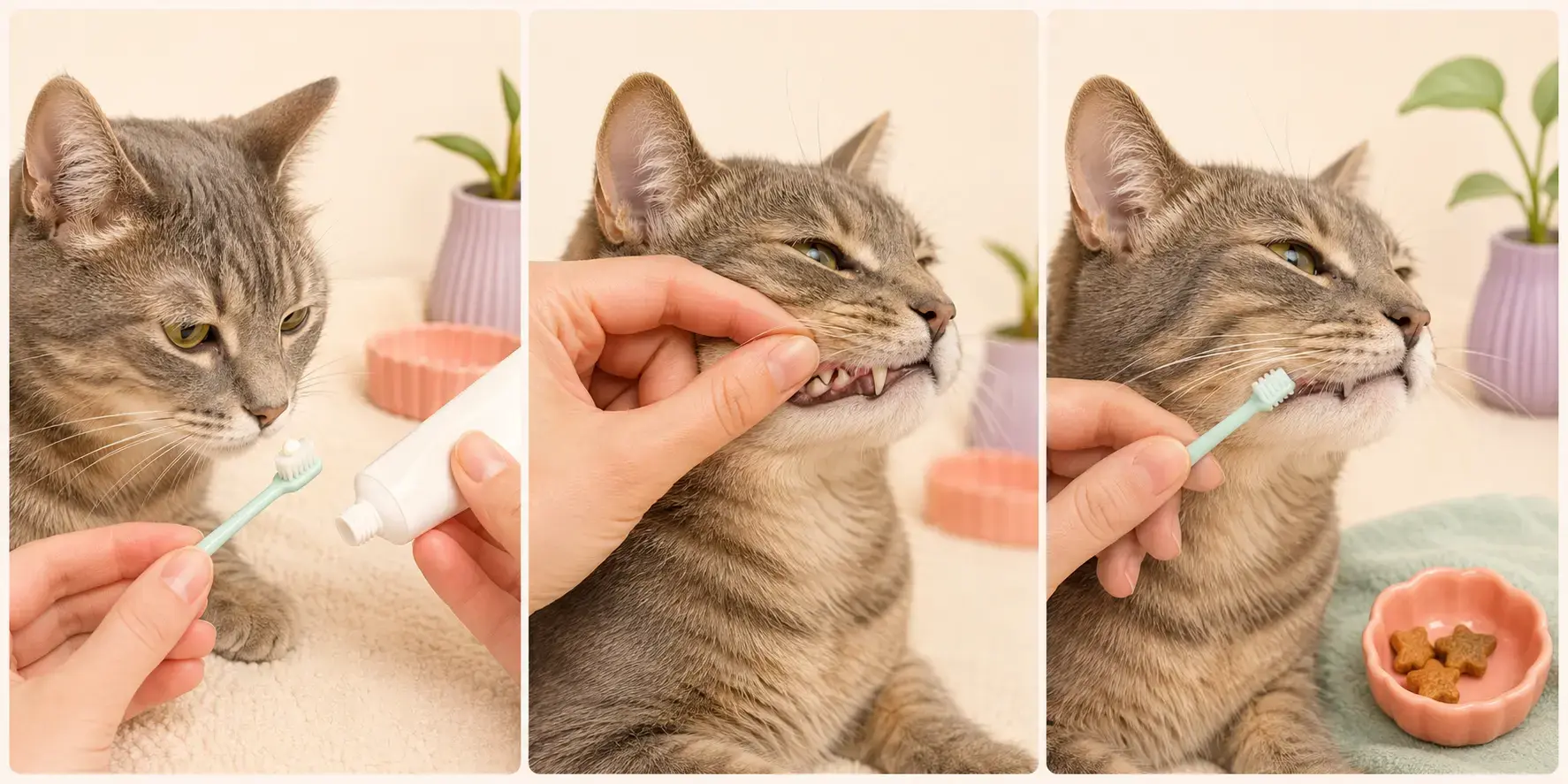
- 1Meet the tools
Let your cat investigate a small soft brush and cat-safe toothpaste without putting anything in the mouth.
- 2Practise the lip lift
Briefly lift the lip to reveal the outer tooth surface, reward, and stop before your cat pulls away.
- 3Add one brush stroke
Brush the outer surface gently for a moment, reward immediately and build very gradually.
Start with acceptance
Begin by pairing brief touches near the mouth with rewards. Progress slowly to a soft brush or veterinary-approved dental product.
Never use human toothpaste
Human toothpaste ingredients are not designed to be swallowed by cats. Use products specifically made for pets.
Know the warning signs
Drooling, pawing at the mouth, bad breath, dropping food or preferring one side can indicate pain and need veterinary assessment.
Start with examination when signs exist
Bad breath, red or bleeding gums, drooling, food dropping, chewing on one side, facial swelling or reduced eating can indicate pain. Do not force the mouth open or begin brushing an inflamed area. A full veterinary dental assessment may require anaesthesia and dental X-rays because important disease lies below the gum line.
Build prevention gradually
After the mouth is comfortable, introduce cheek touch, lip lifting and a cat-sized brush in tiny rewarded steps. Use only toothpaste made for cats; human products can be unsafe. Brush the outer tooth surfaces gently and ask the veterinary team about an achievable schedule and evidence-based alternatives when brushing is not possible.
Your quick checklist
Your progress is saved on this device.
Three simple things you can do
You do not have to change everything today. Pick one step that feels realistic, try it and see how your cat responds.
- 1Begin with one-second touches near the cheek.
- 2Use only cat-specific toothpaste and a soft suitable brush.
- 3Ask for an oral examination during routine veterinary visits.
Common mistakes
×Using human toothpaste.
×Forcing the mouth open and creating fear.
×Assuming normal eating proves the mouth is pain-free.
Questions cat people ask
Can dental treats replace brushing?+
They may support a dental plan but are not all equally effective and do not replace professional assessment. Ask your veterinarian about evidence-based options.
Why does my cat’s breath smell?+
Persistent bad breath can accompany dental disease or other health problems and deserves examination.
Still looking for the right answer?
Search the full EverYes Cats encyclopedia with your own words — a symptom, food, behaviour, breed or everyday question.
Checked, dated and transparent
- Prepared by
- EverYes Cats editorial team
- Last updated
- 4 September 2026
- Source checked
- 4 September 2026
- Primary reference
- Cornell Feline Health Center ↗
We begin with the named reference, rewrite the information in plain language and add practical cat-parent steps. Urgent health statements are checked against veterinary sources. This guide has not been individually reviewed by a veterinarian unless explicitly stated. It provides education, not diagnosis or treatment.
How we choose and use sources →
Spotted something unclear or outdated? Tell us so we can review it.
Your answer helps us improve the cat encyclopedia.
An occasional hairball can occur, but frequent vomiting, repeated unproductive retching or breathing changes should not be dismissed as normal. Coughing is often mistaken for a hairball.