Why does my cat always leave one piece of food?
A tiny leftover is often about access, smell or habit rather than a message. A calm, practical guide to what it means and what to do next.
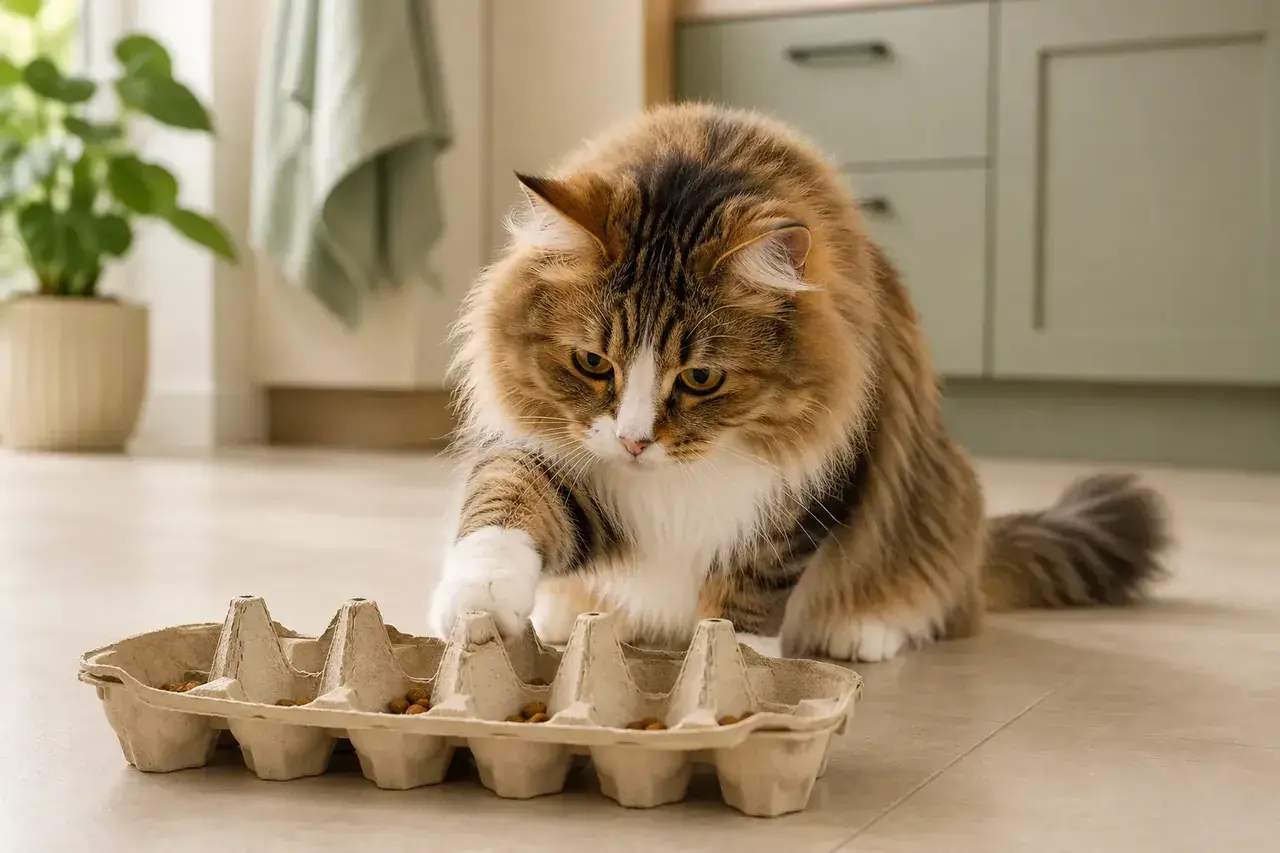 Topic illustration selected for this guide. Some learning images may be AI-assisted.
Why does my cat always leave one piece of food — the quick answer
✓ A tiny leftover is often about access, smell or habit rather than a message
✓ Use a wide flat dish, measure portions and track the total eaten rather than one repeated piece.
✓ Increasing leftovers, weight loss, nausea signs or chewing change requires veterinary advice.
A tiny leftover is often about access, smell or habit rather than a message. The last piece may sit at an awkward edge or remain after the cat is satisfied. This guide separates the useful observation from guesswork and gives you one safe next step.
The clear answer
A tiny leftover is often about access, smell or habit rather than a message. The last piece may sit at an awkward edge or remain after the cat is satisfied.
What to observe in your own cat
Measure the full portion and watch whether the same piece remains because it sits at the bowl edge, sticks to the surface or is harder to pick up. More important changes include leaving increasing amounts, approaching then backing away, food dropping or chewing on one side.
Why two cats may look different
Age, health, body shape, early experience, confidence and the immediate environment all affect what owners see. A common pattern can still deserve attention when it is new or different for this individual cat.
Make the home support the answer
Serve the same measured meal on a clean wide shallow plate in the usual quiet location. Keep the food, timing and portion unchanged for the comparison so bowl access can be assessed without introducing several new variables.
A practical next step
Track the amount offered and eaten across several meals rather than refilling whenever one piece remains. If weight and total intake are stable and the cat eats comfortably, one recurring leftover is usually a harmless pattern rather than a message.
What not to do
Do not punish, frighten, force handling or remove every familiar option at once. Avoid using a general explanation to dismiss a sudden change in health or behaviour.
Warning signs and veterinary help
Arrange veterinary advice for increasing leftovers, weight loss, drooling, bad breath, repeated lip licking, vomiting or changed chewing. A cat that stops eating or eats markedly less should be assessed promptly, especially if overweight or already unwell.
Source and limits
This educational guide is informed by International Cat Care. It can help you observe and prepare useful information, but it cannot examine your cat, diagnose a condition or replace individual veterinary advice.
Your quick checklist
Your progress is saved on this device.
Three simple things you can do
You do not have to change everything today. Pick one step that feels realistic, try it and see how your cat responds.
- 1Measure the whole meal rather than focusing on one piece.
- 2Clean the bowl and vary portion size slightly.
- 3Notice whether the last piece is difficult to reach at the edge.
Common mistakes
×Assigning a human superstition to the habit.
×Refilling the bowl every time one piece remains.
×Ignoring broader appetite change.
Questions cat people ask
Why does my cat leave one piece of food?+
Bowl geometry, satiety, scent, habit or random chance are more likely than a fixed message.
Does leaving a little food mean the portion is too large?+
Possibly, but use repeated measured intake and body condition rather than one meal to adjust portions.
Still looking for the right answer?
Search the full EverYes Cats encyclopedia with your own words — a symptom, food, behaviour, breed or everyday question.
Checked, dated and transparent
- Prepared by
- EverYes Cats editorial team
- Last updated
- 19 September 2026
- Source checked
- 19 September 2026
- Primary reference
- International Cat Care ↗
We begin with the named reference, rewrite the information in plain language and add practical cat-parent steps. Urgent health statements are checked against veterinary sources. This guide has not been individually reviewed by a veterinarian unless explicitly stated. It provides education, not diagnosis or treatment.
How we choose and use sources →
Spotted something unclear or outdated? Tell us so we can review it.
Your answer helps us improve the cat encyclopedia.
Bowl shape, play, caution and individual habit can all contribute. A calm, practical guide to what it means and what to do next.