Why does my cat lick my hair?
Licking a person's hair can be social grooming or scent mixing, but hair products and swallowed strands create avoidable risks.
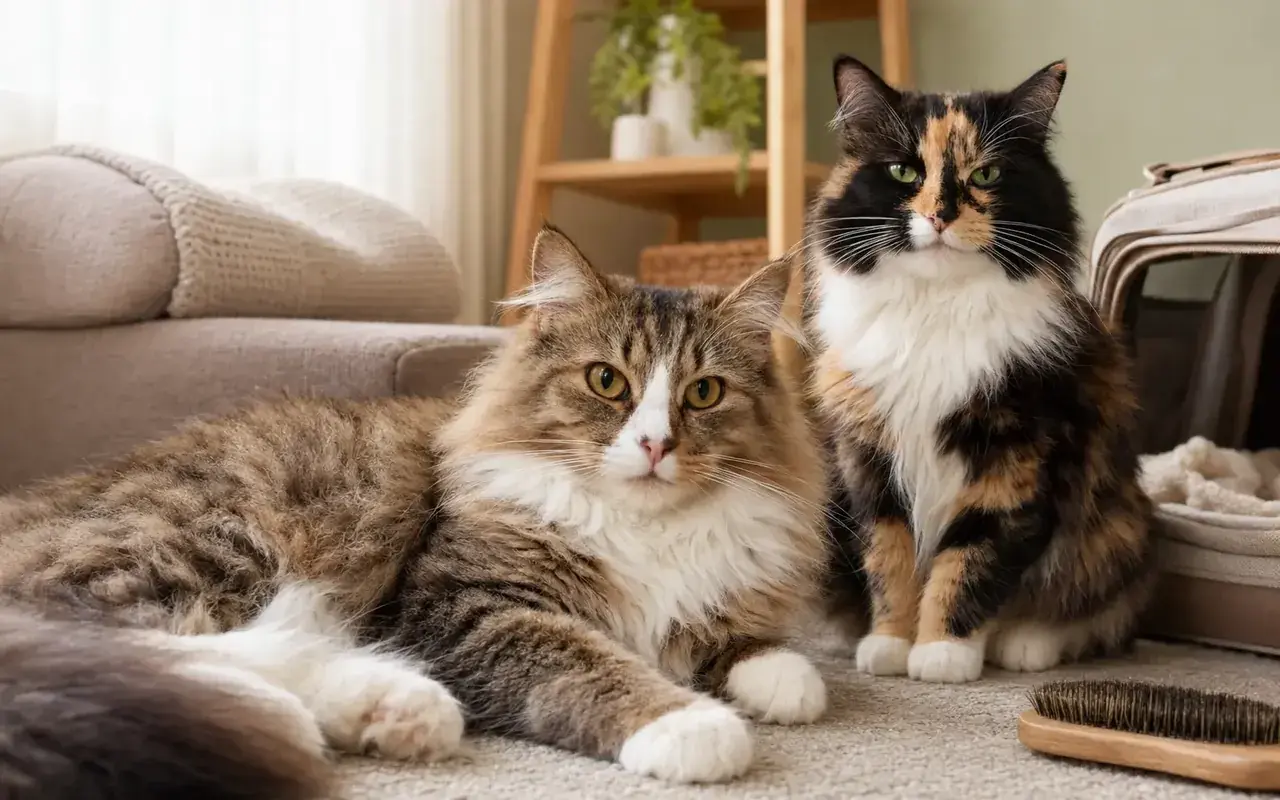 Topic illustration selected for this guide. Some learning images may be AI-assisted.
Why does my cat lick my hair — the quick answer
✓ Hair licking may extend social grooming or reflect interest in texture and scent
✓ Redirect gently, keep treated hair inaccessible and offer safe grooming or play instead.
✓ Repeated ingestion of hair, vomiting, appetite loss or compulsive grooming needs veterinary advice.
Hair licking may extend social grooming or reflect interest in texture and scent. Small amounts can be social, while swallowing hair or products is unsafe.
The short answer
Hair licking may extend social grooming or reflect interest in texture and scent. Small amounts can be social, while swallowing hair or products is unsafe.
What to observe
Check whether the cat chews, swallows strands or seeks hair products.
How to read the situation
Brief licking with a loose body may fit social grooming, scent mixing or attraction to texture. Persistent chewing, swallowing strands or returning immediately after redirection is different and creates an ingestion risk even when the interaction appears affectionate.
What to do now
Check every product used on the hair and scalp, then prevent access after medication or cosmetic application. Calmly offer a safe alternative such as brushing, play or a food activity and tie long hair away if the cat mouths strands.
What not to do
Never allow contact with minoxidil, which can be highly dangerous to cats, and be cautious with essential oils and medicated scalp products. Do not punish or pull the cat away by force; end access gently and remove the attraction.
When to contact a veterinarian
Get prompt advice after possible product exposure or swallowed hair, especially with drooling, vomiting, abdominal pain, poor appetite, lethargy or reduced stool. Bring the product package or ingredient list.
What to record
Write down when it began, how often it happens and what occurs immediately before and after. A short video, clear photo, food record or litter record can give the veterinary team useful context.
What to check first
Check which products are present and whether the cat chews or swallows hair. Note vomiting, gagging or missing hair ties.
DEEPER GUIDE1 more detailed sectionsOpen +
What to do next
Redirect to a safe grooming or play activity, secure hair accessories and prevent access after using medicated or strongly fragranced products. Swallowed string or hair ties, repeated vomiting, poor appetite or abdominal pain needs urgent veterinary advice.
Your quick checklist
Your progress is saved on this device.
Three simple things you can do
You do not have to change everything today. Pick one step that feels realistic, try it and see how your cat responds.
- 1Observe your cat’s individual baseline.
- 2Make one gentle change at a time.
- 3Ask a qualified professional when health or safety is involved.
Common mistakes
×Waiting for a dramatic symptom instead of noticing smaller changes from the cat’s normal routine.
×Changing several things at once, making it difficult to learn what actually helped.
×Treating general guidance as a substitute for advice from a veterinarian who knows the individual cat.
Questions cat people ask
Does every cat follow the same rule?+
No. Age, health, history, temperament and environment all change what works for an individual.
When should I seek professional help?+
Seek veterinary advice for sudden, persistent or concerning changes and urgent help for breathing difficulty, collapse, seizures, poisoning or urinary obstruction signs.
Still looking for the right answer?
Search the full EverYes Cats encyclopedia with your own words — a symptom, food, behaviour, breed or everyday question.
Checked, dated and transparent
- Prepared by
- EverYes Cats editorial team
- Last updated
- 19 September 2026
- Source checked
- 19 September 2026
- Primary reference
- International Cat Care ↗
We begin with the named reference, rewrite the information in plain language and add practical cat-parent steps. Urgent health statements are checked against veterinary sources. This guide has not been individually reviewed by a veterinarian unless explicitly stated. It provides education, not diagnosis or treatment.
How we choose and use sources →
Spotted something unclear or outdated? Tell us so we can review it.
Your answer helps us improve the cat encyclopedia.
A cat may bring toys to the bed because it is a safe social place for carrying, storing or presenting an object after play. The exact motive varies by cat.