Can a cat be safely kept away from an induction hob?
An induction hob may not heat without suitable cookware, but hot pans, residual heat, controls and spilled food still endanger cats.
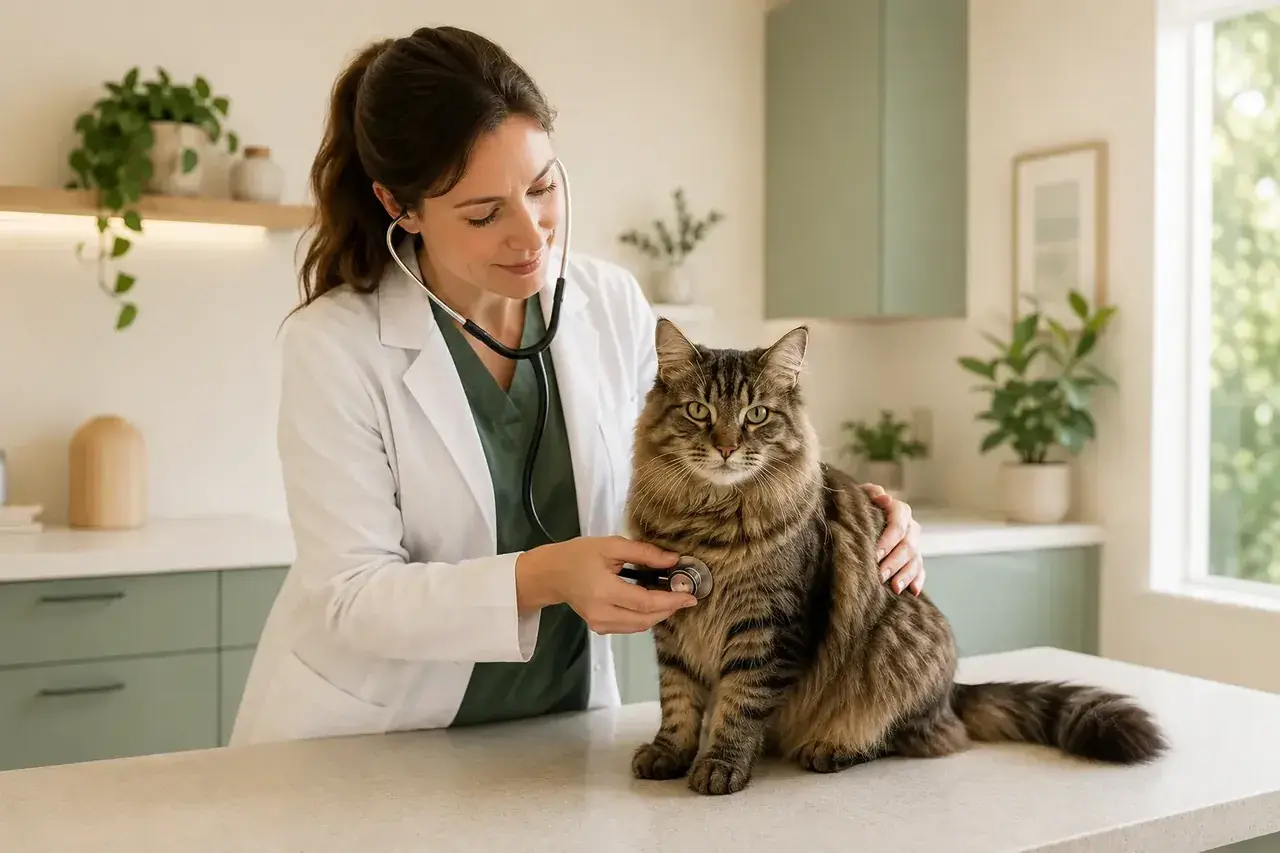 Topic illustration selected for this guide. Some learning images may be AI-assisted.
Can a cat be safely kept away from an induction hob — the quick answer
✓ The surface and cookware can remain dangerously hot even without a visible flame
✓ Keep the kitchen closed during cooking and cooling, use control locks and provide a distant rewarded perch.
✓ Any suspected burn needs prompt veterinary advice; severe burns or distress are urgent.
The surface and cookware can remain dangerously hot even without a visible flame. Paw controls and food smells create additional risks.
The short answer
The surface and cookware can remain dangerously hot even without a visible flame. Paw controls and food smells create additional risks.
What to observe
Map every route from the floor to the counter and note whether the cat can reach touch controls, pan handles, hot cookware or the surface while it cools. Check the manufacturer's residual-heat indicator and control-lock instructions rather than relying on the lack of a visible flame.
How to read the situation
Paw controls and food smells create additional risks. Compare the pattern with your cat’s usual behaviour and consider timing, body language, appetite, litter-box use, mobility and recent changes.
What to do now
Keep the cat out of the kitchen during cooking and cooling, activate the control lock and turn pan handles inward. Build a rewarding alternative station well away from the hob, and remove food residue promptly so the counter is not repeatedly reinforced.
What not to do
Do not test whether a paw can activate the controls, place the cat on the counter to teach a lesson or cover a warm hob with an unsuitable board. Never assume induction means the pan, food, glass surface and nearby steam cannot burn.
When to contact a veterinarian
Cool a suspected thermal burn under comfortably cool running water only when this can be done safely and call a veterinarian promptly; do not apply ice, butter or cream. Blistering, severe pain, breathing changes, smoke exposure or a large burn is urgent.
What to record
Write down when it began, how often it happens and what occurs immediately before and after. A short video, clear photo, food record or litter record can give the veterinary team useful context.
What to check first
Check whether the cat can reach controls, pan handles or the surface immediately after cooking.
DEEPER GUIDE1 more detailed sectionsOpen +
What to do next
Create a no-cat cooking zone, lock controls, turn handles inward and cover or block the cooled hob only with a manufacturer-safe solution. Any burn, smoke exposure or toxic-food ingestion needs urgent veterinary advice.
Your quick checklist
Your progress is saved on this device.
Three simple things you can do
You do not have to change everything today. Pick one step that feels realistic, try it and see how your cat responds.
- 1Observe your cat’s individual baseline.
- 2Make one gentle change at a time.
- 3Ask a qualified professional when health or safety is involved.
Common mistakes
×Waiting for a dramatic symptom instead of noticing smaller changes from the cat’s normal routine.
×Changing several things at once, making it difficult to learn what actually helped.
×Treating general guidance as a substitute for advice from a veterinarian who knows the individual cat.
Questions cat people ask
Does every cat follow the same rule?+
No. Age, health, history, temperament and environment all change what works for an individual.
When should I seek professional help?+
Seek veterinary advice for sudden, persistent or concerning changes and urgent help for breathing difficulty, collapse, seizures, poisoning or urinary obstruction signs.
Still looking for the right answer?
Search the full EverYes Cats encyclopedia with your own words — a symptom, food, behaviour, breed or everyday question.
Checked, dated and transparent
- Prepared by
- EverYes Cats editorial team
- Last updated
- 19 September 2026
- Source checked
- 19 September 2026
- Primary reference
- Cats Protection ↗
We begin with the named reference, rewrite the information in plain language and add practical cat-parent steps. Urgent health statements are checked against veterinary sources. This guide has not been individually reviewed by a veterinarian unless explicitly stated. It provides education, not diagnosis or treatment.
How we choose and use sources →
Spotted something unclear or outdated? Tell us so we can review it.
Your answer helps us improve the cat encyclopedia.
Laundry baskets offer familiar scent, soft texture and raised sides. They are comfortable only when detergents, cords and moving appliances are controlled.