Why does my cat sleep in a doorway?
A doorway can provide airflow, visibility and a strategic resting point. Check that the cat is relaxed and is not blocking another pet’s essential route.
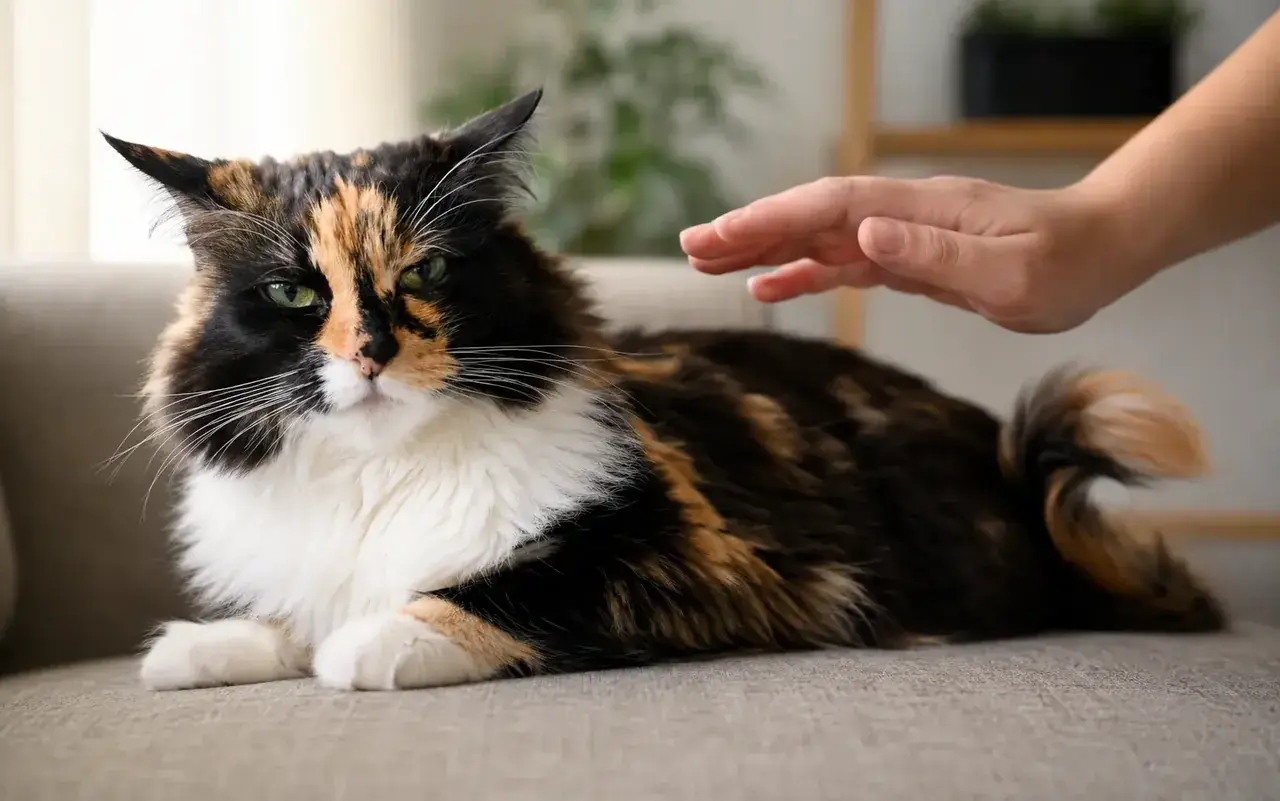 Topic illustration selected for this guide. Some learning images may be AI-assisted.
Why does my cat sleep in a doorway — the quick answer
✓ A doorway can offer airflow, a good view and control over household movement
✓ Place a comfortable bed beside the route and preserve several alternative paths.
✓ Guarding, conflict or a sudden inability to move from the spot needs assessment.
A doorway can offer airflow, a good view and control over household movement. The position may be strategic rather than an attempt to obstruct people.
The short answer
A doorway can offer airflow, a good view and control over household movement. The position may be strategic rather than an attempt to obstruct people.
What to observe
Check whether the cat is relaxed and whether another animal is being blocked.
How to read the situation
A doorway can offer airflow, a view of several rooms and a place to monitor household movement. Check whether the cat rests loosely and moves when needed, or instead blocks another cat, stays hyper-alert or chooses the threshold because preferred beds are inaccessible.
What to do now
Keep the route safe and provide a comfortable bed beside the doorway with a similar view and temperature. Make sure every cat can reach food, water and litter by another route, and reward use of the safer resting spot without forcing a sleeping cat.
What not to do
Do not step over the cat in the dark, push it with a foot or assume the position is a dominance display. Avoid closing doors that trap the cat away from essential resources or create a bottleneck between cats.
When to contact a veterinarian
Guarding, conflict or a sudden inability to move from the spot needs assessment.
What to record
Note which doorway, time, temperature and household activity coincide with the sleep position. Record staring, chasing, difficulty rising, night confusion or whether another cat hesitates to pass through.
What to check first
Watch who approaches, waits or turns away and whether the sleeping cat controls access to food, litter, stairs or people.
DEEPER GUIDE1 more detailed sectionsOpen +
What to do next
Place an equally comfortable bed beside the route and create alternative paths or resource locations so resting remains a choice rather than a social barrier. Guarding, escalating conflict, pain or a sudden inability to move from the spot needs assessment.
Your quick checklist
Your progress is saved on this device.
Three simple things you can do
You do not have to change everything today. Pick one step that feels realistic, try it and see how your cat responds.
- 1Provide a nearby bed with a similar view.
- 2Keep essential routes and emergency exits clear.
- 3Use gentle cues before moving through.
Common mistakes
×Stepping over without waking safely.
×Pushing the cat with a foot.
×Closing a door onto the resting area.
Questions cat people ask
Why does my cat sleep in a doorway?+
Doorways offer airflow, observation and control of movement between valued areas.
How do I encourage a safer spot?+
Place a comfortable alternative just outside the traffic line and reward its use.
Still looking for the right answer?
Search the full EverYes Cats encyclopedia with your own words — a symptom, food, behaviour, breed or everyday question.
Checked, dated and transparent
- Prepared by
- EverYes Cats editorial team
- Last updated
- 19 September 2026
- Source checked
- 19 September 2026
- Primary reference
- International Cat Care ↗
We begin with the named reference, rewrite the information in plain language and add practical cat-parent steps. Urgent health statements are checked against veterinary sources. This guide has not been individually reviewed by a veterinarian unless explicitly stated. It provides education, not diagnosis or treatment.
How we choose and use sources →
Spotted something unclear or outdated? Tell us so we can review it.
Your answer helps us improve the cat encyclopedia.
A new place may reflect temperature, noise or routine, but sudden relocation can accompany stress or discomfort. Learn what to observe, what to try safely and when to seek help.