Why Does My Cat Sleep With Paws Under the Chin?
Tucking the paws near the face can conserve warmth and create a compact secure resting posture. Offer both warm and cooler beds and let the cat choose.
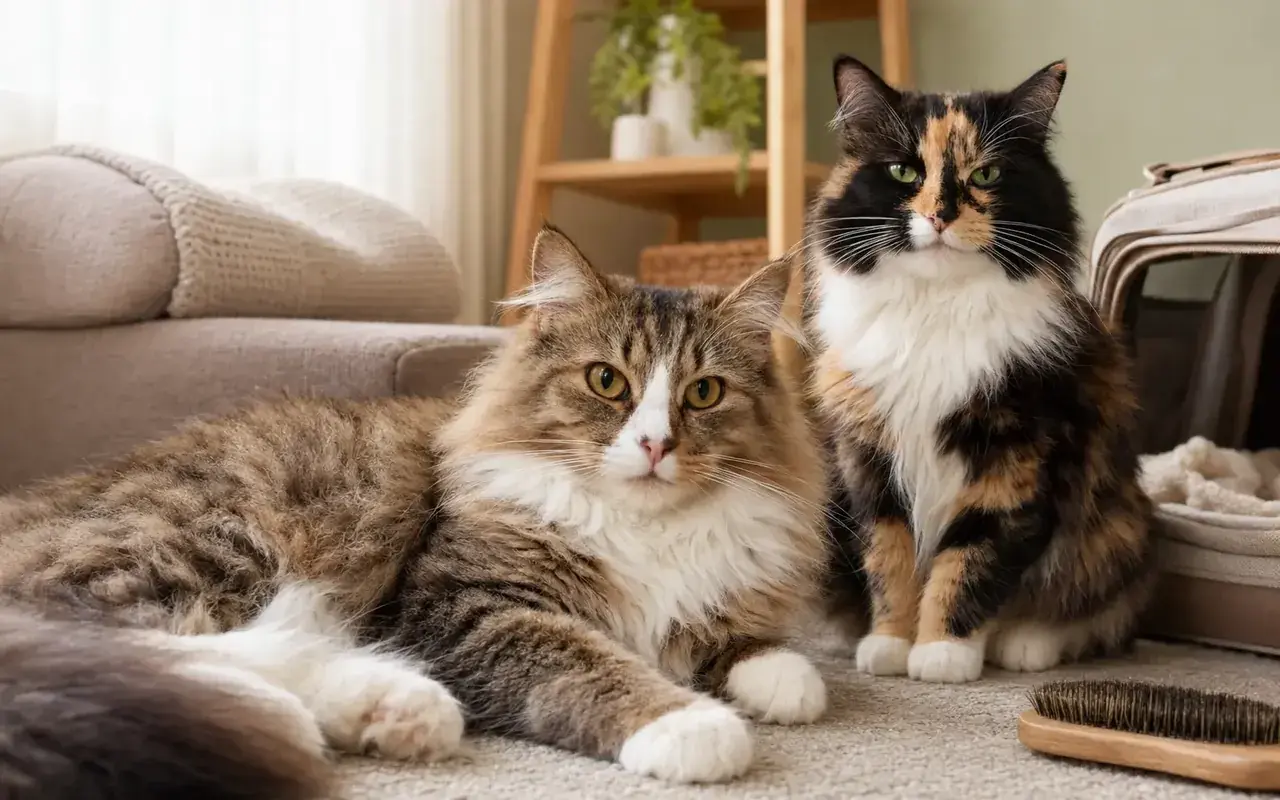 Topic illustration selected for this guide. Some learning images may be AI-assisted.
Why Does My Cat Sleep With Paws Under the Chin — the quick answer
✓ Tucking the paws near the face can conserve warmth and create a compact secure resting posture.
✓ Offer both warm and cooler beds and let the cat choose.
✓ A persistently hunched posture with poor appetite, pain or breathing change needs care.
Tucking the paws near the face can conserve warmth and create a compact secure resting posture. The safest interpretation begins with your cat's normal pattern and the full context.
The quick answer
Tucking the paws near the face can conserve warmth and create a compact secure resting posture.
What to observe first
Look for loose muscles, normal breathing and easy movement after waking.
Why context matters
A relaxed cat may tuck one or both paws under the chin for warmth or support and then stretch normally after waking. A cat that stays tightly hunched while awake, guards the chest or abdomen, or resists ordinary movement is showing a different posture.
What to do now
Offer both warm and cooler beds and let the cat choose.
Try one change at a time
Offer a soft warm bed and a cooler open surface in the same familiar area. Let the cat choose rather than moving the paws or repositioning the body. The preferred surface and room temperature may explain the pose.
When to contact a veterinarian
A persistently hunched posture with poor appetite, pain or breathing change needs care.
What to record
If the posture is new, note whether it occurs only in sleep and whether the cat rises, walks and jumps normally afterward. Record breathing rate at rest, appetite and any reluctance to move or be touched.
The practical takeaway
Loose muscles, quiet breathing and normal movement after waking support a comfortable sleeping interpretation. A persistent hunched posture while awake, pain, poor appetite or breathing change needs veterinary care.
Your quick checklist
Your progress is saved on this device.
Three simple things you can do
You do not have to change everything today. Pick one step that feels realistic, try it and see how your cat responds.
- 1Observe your cat’s individual baseline.
- 2Make one gentle change at a time.
- 3Ask a qualified professional when health or safety is involved.
Common mistakes
×Waiting for a dramatic symptom instead of noticing smaller changes from the cat’s normal routine.
×Changing several things at once, making it difficult to learn what actually helped.
×Treating general guidance as a substitute for advice from a veterinarian who knows the individual cat.
Questions cat people ask
Does every cat follow the same rule?+
No. Age, health, history, temperament and environment all change what works for an individual.
When should I seek professional help?+
Seek veterinary advice for sudden, persistent or concerning changes and urgent help for breathing difficulty, collapse, seizures, poisoning or urinary obstruction signs.
Still looking for the right answer?
Search the full EverYes Cats encyclopedia with your own words — a symptom, food, behaviour, breed or everyday question.
Checked, dated and transparent
- Prepared by
- EverYes Cats editorial team
- Last updated
- 19 September 2026
- Source checked
- 19 September 2026
- Primary reference
- International Cat Care ↗
We begin with the named reference, rewrite the information in plain language and add practical cat-parent steps. Urgent health statements are checked against veterinary sources. This guide has not been individually reviewed by a veterinarian unless explicitly stated. It provides education, not diagnosis or treatment.
How we choose and use sources →
Spotted something unclear or outdated? Tell us so we can review it.
Your answer helps us improve the cat encyclopedia.
Cats can doze lightly with partly open eyes, and a small third eyelid may be briefly visible.