Why does my cat use only one of several litter boxes?
Choosing one box is normal if it best matches the cat's location, litter and sense of safety. The other boxes still need to be genuinely separate and usable.
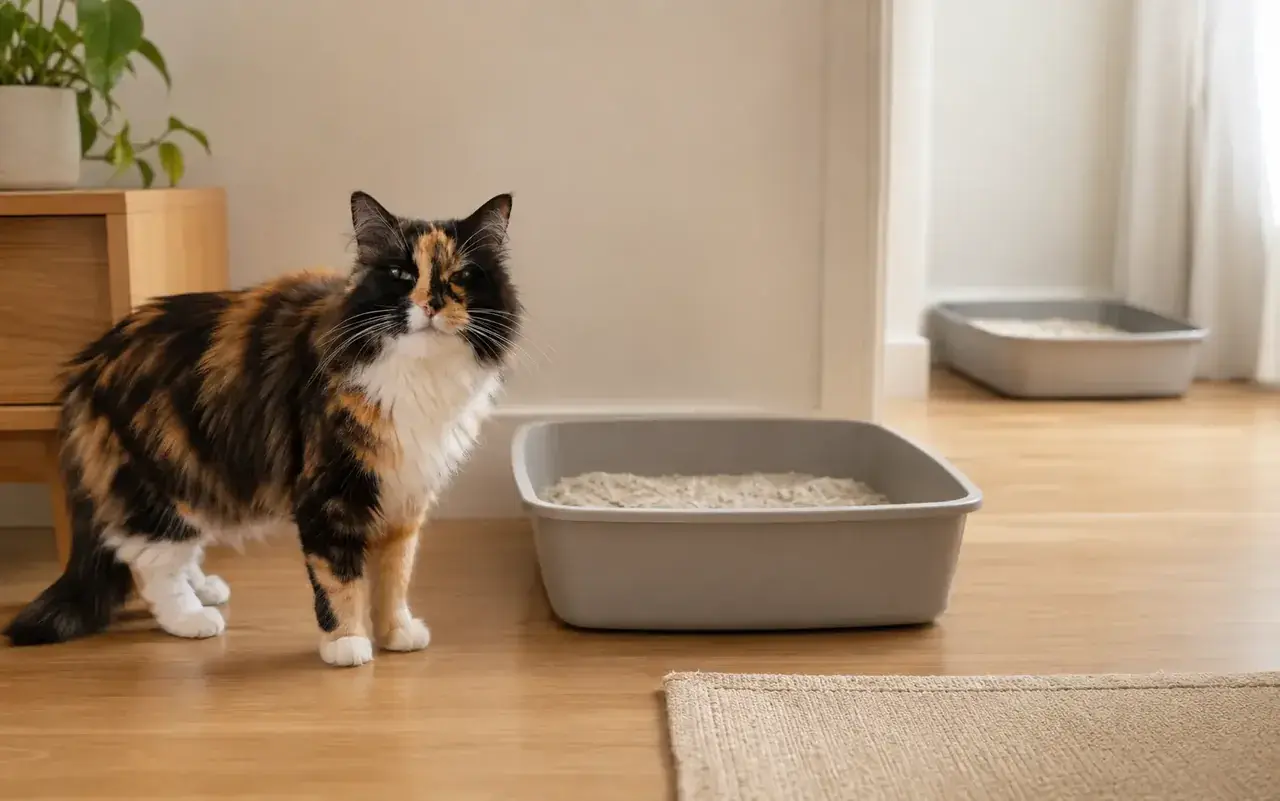 Topic illustration selected for this guide. Some learning images may be AI-assisted.
Why does my cat use only one of several litter boxes — the quick answer
✓ Location, substrate, safety and habit can make one box far more valuable than the others
✓ Place large boxes in separate useful areas and keep setup consistent while testing one variable.
✓ Sudden concentration on one box with frequent visits or straining needs veterinary assessment.
Location, substrate, safety and habit can make one box far more valuable than the others. Boxes placed side by side function more like one shared station.
The short answer
Location, substrate, safety and habit can make one box far more valuable than the others. Boxes placed side by side function more like one shared station.
What to observe
Compare size, litter, routes, noise and which animals pass each location.
How to read the situation
The preferred box may be larger, cleaner, quieter or easier to escape from. Boxes beside each other offer little extra choice, while another cat can make a seemingly good location feel unsafe without obvious fighting. A sudden preference can also occur when movement or elimination becomes painful.
What to do now
Place large boxes in separate useful areas and keep setup consistent while testing one variable.
What not to do
Do not remove the preferred box to force use of the others, and do not keep moving every tray at once. Avoid scented litter or liners as a quick fix. Preserve at least one familiar setup while testing a single feature.
When to contact a veterinarian
Sudden concentration on one box with frequent visits or straining needs veterinary assessment.
What to record
Map each box, litter type, size and cleaning schedule, then note which cat uses it and when. Record guarding, accidents, frequent visits, straining and clump size so location preference can be separated from a medical problem.
What to check first
Compare size, litter depth, cleanliness, noise and routes. In multi-cat homes, check subtle guarding around preferred locations.
DEEPER GUIDE1 more detailed sectionsOpen +
What to do next
Replicate helpful features while keeping boxes in different quiet areas; do not place several side by side and count them as separate resources. A sudden box preference with straining, pain or accidents needs veterinary assessment.
Your quick checklist
Your progress is saved on this device.
Three simple things you can do
You do not have to change everything today. Pick one step that feels realistic, try it and see how your cat responds.
- 1Observe your cat’s individual baseline.
- 2Make one gentle change at a time.
- 3Ask a qualified professional when health or safety is involved.
Common mistakes
×Waiting for a dramatic symptom instead of noticing smaller changes from the cat’s normal routine.
×Changing several things at once, making it difficult to learn what actually helped.
×Treating general guidance as a substitute for advice from a veterinarian who knows the individual cat.
Questions cat people ask
Does every cat follow the same rule?+
No. Age, health, history, temperament and environment all change what works for an individual.
When should I seek professional help?+
Seek veterinary advice for sudden, persistent or concerning changes and urgent help for breathing difficulty, collapse, seizures, poisoning or urinary obstruction signs.
Still looking for the right answer?
Search the full EverYes Cats encyclopedia with your own words — a symptom, food, behaviour, breed or everyday question.
Checked, dated and transparent
- Prepared by
- EverYes Cats editorial team
- Last updated
- 19 September 2026
- Source checked
- 19 September 2026
- Primary reference
- International Cat Care ↗
We begin with the named reference, rewrite the information in plain language and add practical cat-parent steps. Urgent health statements are checked against veterinary sources. This guide has not been individually reviewed by a veterinarian unless explicitly stated. It provides education, not diagnosis or treatment.
How we choose and use sources →
Spotted something unclear or outdated? Tell us so we can review it.
Your answer helps us improve the cat encyclopedia.
Start with about five centimetres of familiar unscented litter, then adjust gradually. The right depth lets a cat dig without hitting bare plastic or sinking into an unstable surface.