Why does my cat wait at the top of the stairs?
Waiting at the top of stairs may be social observation or route monitoring, but it can also block another cat and creates a trip hazard.
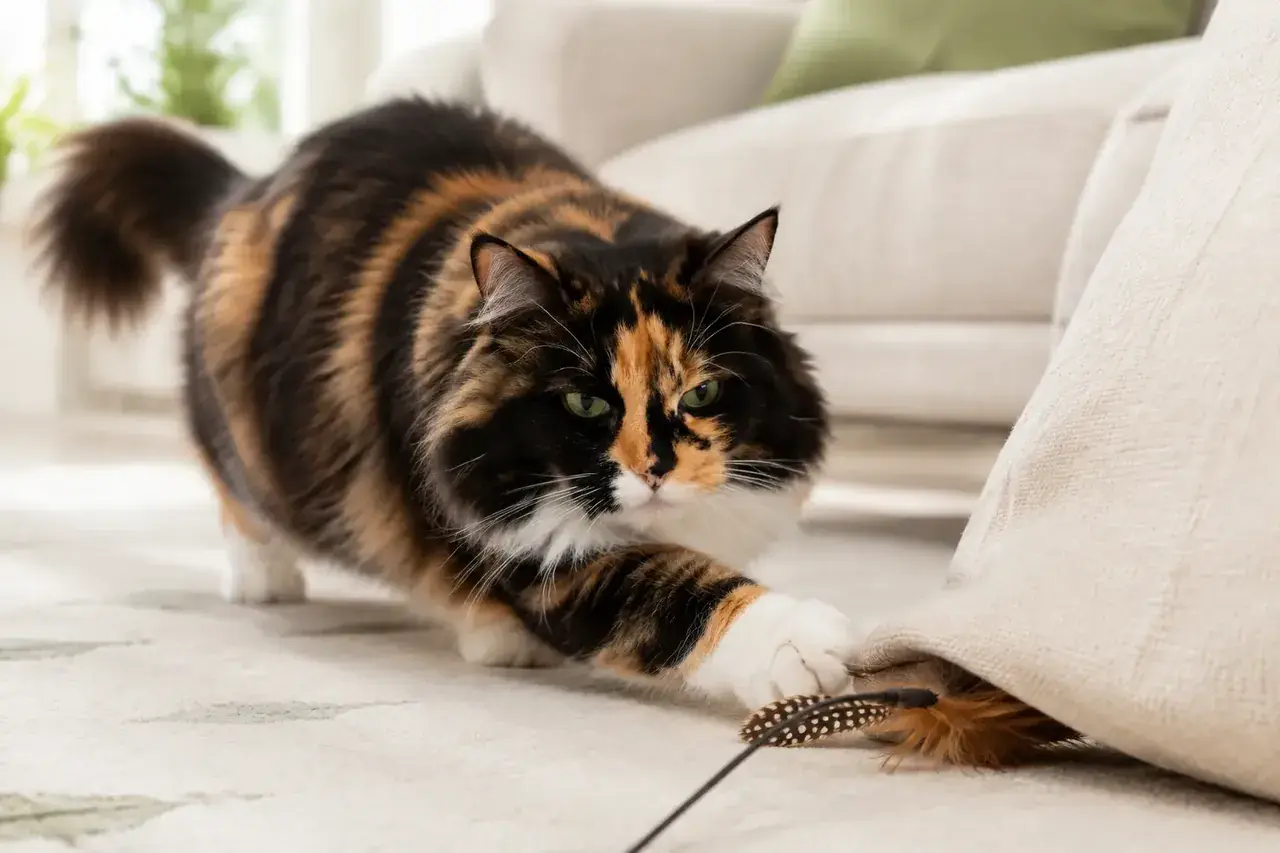 Topic illustration selected for this guide. Some learning images may be AI-assisted.
Why does my cat wait at the top of the stairs — the quick answer
✓ The position offers a broad view of household movement and may become a reliable greeting or resource-checking station
✓ Keep the landing well lit and non-slip, acknowledge calm greetings and provide an alternative nearby perch.
✓ A new pause with stiffness, hesitation, slipping or difficulty using stairs needs a veterinary mobility check.
The position offers a broad view of household movement and may become a reliable greeting or resource-checking station. This guide explains what to check before deciding what the behaviour means.
The short answer
The position offers a broad view of household movement and may become a reliable greeting or resource-checking station. The meaning becomes clearer when you compare the moment with your cat's normal pattern.
What to observe first
Check relaxed body language, safe passage and whether another cat or person is being blocked.
Why context matters
The landing can be a lookout, greeting point or narrow route between resources. Watch whether the cat rests loosely and lets others pass, or blocks movement, crouches, hesitates at the steps or waits because climbing has become uncomfortable.
What to do now
Keep the landing well lit and non-slip, acknowledge calm greetings and provide an alternative nearby perch.
A gentle way to test it
Add a stable perch away from the stair edge and improve lighting and traction without carrying the cat up and down as a test. In multi-cat homes, create another route where possible and place key resources on both levels.
When to contact a veterinarian
A new pause with stiffness, hesitation, slipping or difficulty using stairs needs a veterinary mobility check.
What to record
Note who approaches, whether anyone turns back and how the cat climbs and descends on a non-slip surface. Record stiffness after rest, missed steps, slipping and reluctance to jump; a side-view video can help a veterinary mobility assessment.
The practical takeaway
Start with the environment: Keep the landing well lit and non-slip, acknowledge calm greetings and provide an alternative nearby perch. If the pattern is new, frequent or paired with illness signs, use the warning guidance above.
DEEPER GUIDE2 more detailed sectionsOpen +
What to check first
Watch who approaches, pauses or turns back and whether the waiting cat seems relaxed, stiff, fearful or reluctant to use the stairs.
What to do next
Add a comfortable perch away from the landing, maintain clear non-slip routes and duplicate resources on different levels when needed. New stair hesitation, falling, weakness, pain or escalating cat conflict needs assessment.
Your quick checklist
Your progress is saved on this device.
Three simple things you can do
You do not have to change everything today. Pick one step that feels realistic, try it and see how your cat responds.
- 1Observe your cat’s individual baseline.
- 2Make one gentle change at a time.
- 3Ask a qualified professional when health or safety is involved.
Common mistakes
×Waiting for a dramatic symptom instead of noticing smaller changes from the cat’s normal routine.
×Changing several things at once, making it difficult to learn what actually helped.
×Treating general guidance as a substitute for advice from a veterinarian who knows the individual cat.
Questions cat people ask
Does every cat follow the same rule?+
No. Age, health, history, temperament and environment all change what works for an individual.
When should I seek professional help?+
Seek veterinary advice for sudden, persistent or concerning changes and urgent help for breathing difficulty, collapse, seizures, poisoning or urinary obstruction signs.
Still looking for the right answer?
Search the full EverYes Cats encyclopedia with your own words — a symptom, food, behaviour, breed or everyday question.
Checked, dated and transparent
- Prepared by
- EverYes Cats editorial team
- Last updated
- 19 September 2026
- Source checked
- 19 September 2026
- Primary reference
- AAHA/AAFP Feline Life Stage Guidelines ↗
We begin with the named reference, rewrite the information in plain language and add practical cat-parent steps. Urgent health statements are checked against veterinary sources. This guide has not been individually reviewed by a veterinarian unless explicitly stated. It provides education, not diagnosis or treatment.
How we choose and use sources →
Spotted something unclear or outdated? Tell us so we can review it.
Your answer helps us improve the cat encyclopedia.
Pre-bedtime restlessness often reflects normal evening activity, unused hunting energy or a learned routine. A new pattern with other changes needs medical attention.