Why does my cat use the litter box right after I clean it?
Waiting for litter cleaning often means the cat values a fresh tray or has learned the routine. It can also reveal that the box becomes unacceptable between cleanings.
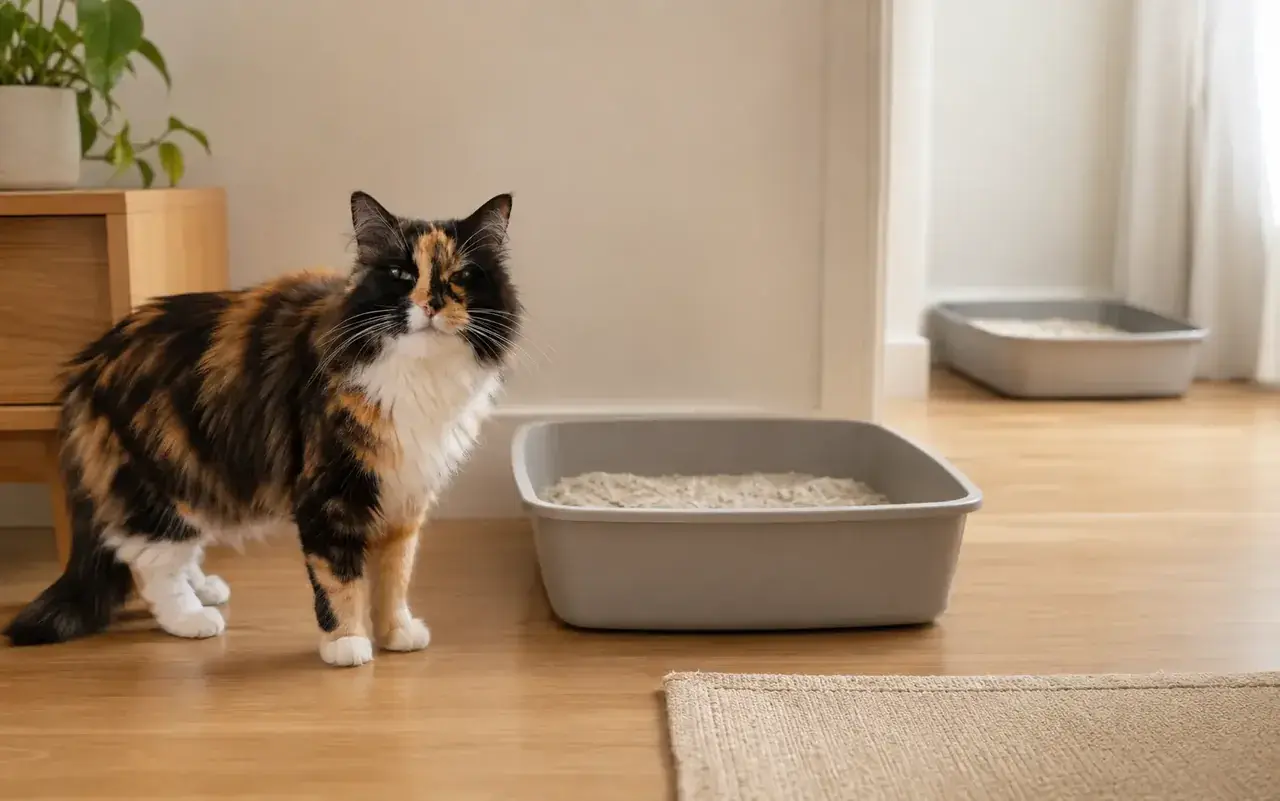 Topic illustration selected for this guide. Some learning images may be AI-assisted.
Why does my cat use the litter box right after I clean it — the quick answer
✓ Fresh substrate and restored scent space can invite immediate use
✓ Scoop predictably while retaining the familiar litter type and avoiding strong fragrance.
✓ Urgent repeated use or very small urine amounts is not a cleaning preference and needs veterinary help.
Fresh substrate and restored scent space can invite immediate use. Cleaning changes texture and scent, and the cat may simply have been waiting for a preferred condition. This guide separates the useful observation from guesswork and gives you one safe next step.
The clear answer
Fresh substrate and restored scent space can invite immediate use. Cleaning changes texture and scent, and the cat may simply have been waiting for a preferred condition.
What to observe in your own cat
Record how long the cat waits, how soiled the tray is and whether the cat uses another box meanwhile. Track clump size, urine and stool frequency, litter depth, box size, fragrance and whether another cat watches or blocks the route.
Why two cats may look different
Age, health, body shape, early experience, confidence and the immediate environment all affect what owners see. A common pattern can still deserve attention when it is new or different for this individual cat.
Make the home support the answer
Scoop at least daily and provide one large accessible box per cat plus one extra in genuinely separate locations. Keep the familiar unscented litter and leave enough clean substrate for digging without making every cleaning a complete scent reset.
A practical next step
Scoop predictably while retaining the familiar litter type and avoiding strong fragrance. Keep the change small and easy to reverse, then compare the same facts again rather than relying on memory.
What not to do
Do not delay cleaning to test how long the cat will hold urine or stool, and do not use strong fragrance to mask odour. Avoid suddenly replacing every box, litter type and location when one predictable scooping change can be assessed first.
Warning signs and veterinary help
Repeated visits, straining, crying, blood, house-soiling, constipation or very small urine amounts is not simply a preference for a clean box. Little or no urine is an emergency, especially in a male cat.
Source and limits
This educational guide is informed by International Cat Care. It can help you observe and prepare useful information, but it cannot examine your cat, diagnose a condition or replace individual veterinary advice.
DEEPER GUIDE2 more detailed sectionsOpen +
What to check first
Track clump count, odour, box size, litter depth and whether another cat has used or guarded it.
What to do next
Scoop at least daily, provide one box per cat plus one extra in separate locations and avoid heavily fragranced products. Holding urine, repeated attempts, crying, blood or little urine needs urgent veterinary care.
Your quick checklist
Your progress is saved on this device.
Three simple things you can do
You do not have to change everything today. Pick one step that feels realistic, try it and see how your cat responds.
- 1Scoop at predictable intervals before the cat usually needs the box.
- 2Provide an additional clean box in another location.
- 3Use unscented litter and avoid strong cleaning residue.
Common mistakes
×Waiting deliberately to test the cat.
×Using perfume to make the box smell clean.
×Assuming preference for cleanliness is stubbornness.
Questions cat people ask
Why does my cat use the box right after I clean it?+
The cat may prefer a clean substrate, respond to the disturbance or re-establish familiar scent.
How often should litter be scooped?+
At least daily, and often twice daily in multi-cat homes or when the cat strongly prefers a clean box.
Still looking for the right answer?
Search the full EverYes Cats encyclopedia with your own words — a symptom, food, behaviour, breed or everyday question.
Checked, dated and transparent
- Prepared by
- EverYes Cats editorial team
- Last updated
- 19 September 2026
- Source checked
- 19 September 2026
- Primary reference
- International Cat Care ↗
We begin with the named reference, rewrite the information in plain language and add practical cat-parent steps. Urgent health statements are checked against veterinary sources. This guide has not been individually reviewed by a veterinarian unless explicitly stated. It provides education, not diagnosis or treatment.
How we choose and use sources →
Spotted something unclear or outdated? Tell us so we can review it.
Your answer helps us improve the cat encyclopedia.
Some healthy cats simply do not cover stool. A change can also reflect a small or dirty box, disliked litter, social pressure, pain or urgency.