Why are there bubbles in my cat’s water bowl?
Short-lived bubbles often come from pouring water, a fountain return or saliva after drinking. Persistent foam, film, slime, odour or repeated drooling deserves closer inspection.
 Topic illustration selected for this guide. Some learning images may be AI-assisted.
Why are there bubbles in my cat’s water bowl — the quick answer
✓ Small bubbles can come from pouring, fountains or saliva, while foam, slime or odor suggests cleaning is needed.
✓ Observe first: Inspect the bowl, filter, pump and water surface in good light.
✓ Act safely: Wash food-contact parts, refresh water and replace filters according to instructions.
Small bubbles can come from pouring, fountains or saliva, while foam, slime or odor suggests cleaning is needed.. This guide helps you separate an ordinary individual habit from a change worth acting on. Read the whole cat, the timing and the wider pattern rather than relying on one isolated sign.
Separate ordinary bubbles from a bowl problem
Short-lived bubbles after pouring are often trapped air. Persistent foam, film, odour or bubbles linked with drooling deserve a closer check.
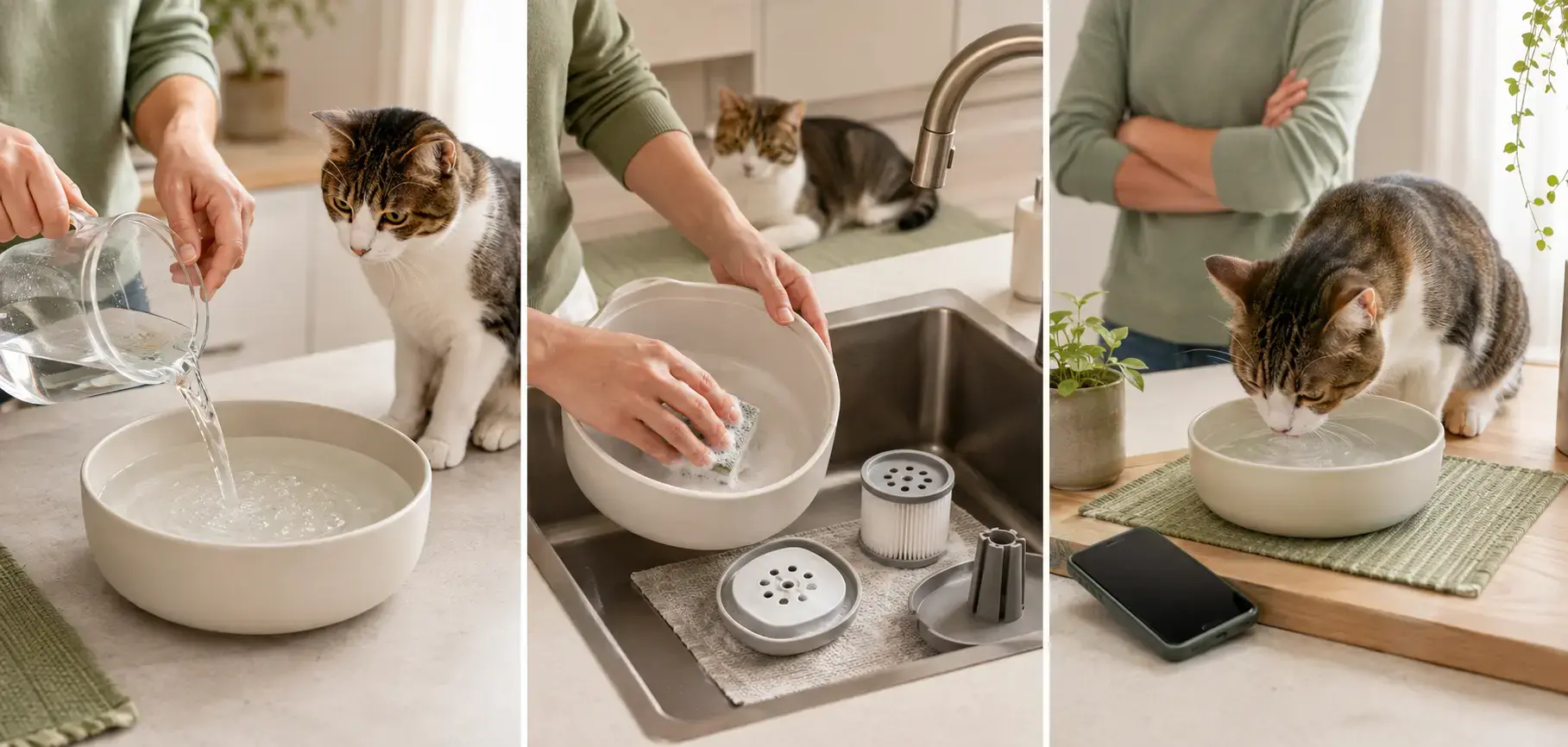
- 1Refresh and watch
Replace the water, inspect the clean bowl in good light and notice whether bubbles disappear before or only appear after drinking.
- 2Clean every water-contact part
Wash the bowl, fountain, pump and accessible filter housing as directed, rinse thoroughly and replace filters on schedule.
- 3Observe the cat too
Call a veterinarian for persistent drooling, mouth pain, repeated swallowing, vomiting, poor eating or suspected chemical contamination.
The short answer
Small bubbles can come from pouring, fountains or saliva, while foam, slime or odor suggests cleaning is needed.. Context matters: age, health, environment and what happened immediately beforehand can change the meaning.
What to observe
Inspect the bowl, filter, pump and water surface in good light. A short written note or video can reveal patterns that memory misses.
How to read the situation
Bubbles present immediately after filling often come from trapped air, while bubbles appearing after drinking may include saliva. A slippery film, persistent foam, unusual colour or odour points toward the bowl, fountain or contamination and calls for cleaning and fresh water.
What to do now
Wash food-contact parts, refresh water and replace filters according to instructions.
What not to do
Do not add fragrance, disinfectant, supplements or human mouth products to the water. Rinse every food-contact part thoroughly and follow the fountain manufacturer's filter instructions. If chemical contamination is possible, remove access and seek professional advice.
When to contact a veterinarian
Excessive drooling, difficulty swallowing or suspected chemical contamination needs prompt veterinary advice.
What to record
Photograph the surface before and after the cat drinks and note whether the effect returns after the bowl and fountain parts are washed. Also record drooling, repeated swallowing, mouth pawing, vomiting or difficulty eating.
Separate trapped air from contamination
Refresh the bowl and watch what happens before and after the cat drinks. Inspect the rim, water surface, fountain pump and filter in good light. Wash every food-contact part, rinse thoroughly and replace filters according to the manufacturer's instructions. Do not add fragrance, cleaner or unapproved supplements to the water.
DEEPER GUIDE1 more detailed sectionsOpen +
Check the cat as well as the bowl
Bubbles that appear only after drinking can include saliva. Look for heavy drooling, pawing at the mouth, repeated swallowing, bad breath, vomiting or difficulty eating. Contact a veterinarian promptly for mouth pain, swallowing trouble, suspected chemical exposure or new persistent drooling.
Your quick checklist
Your progress is saved on this device.
Three simple things you can do
You do not have to change everything today. Pick one step that feels realistic, try it and see how your cat responds.
- 1Refresh the water and inspect the surface, bowl, fountain pump and filter in good light.
- 2Wash every food-contact part with a cat-safe routine and rinse thoroughly.
- 3Watch whether bubbles follow pouring or drinking and whether the cat drools or has trouble swallowing.
Common mistakes
×Assuming persistent foam or slime is only trapped air.
×Adding cleaners, fragrances or supplements directly to the drinking water.
×Ignoring excessive saliva, mouth pain or possible chemical contamination.
Questions cat people ask
Why are there bubbles in my cat’s water bowl?+
Small short-lived bubbles commonly come from pouring water, a fountain return or saliva after drinking. Persistent foam, film, slime or odour suggests the bowl or fountain needs inspection and cleaning.
Can bubbles mean my cat is drooling?+
Saliva can create bubbles, especially after drinking. Repeated drooling, pawing at the mouth, difficulty swallowing, vomiting or possible toxin exposure needs prompt veterinary advice.
Still looking for the right answer?
Search the full EverYes Cats encyclopedia with your own words — a symptom, food, behaviour, breed or everyday question.
Checked, dated and transparent
- Prepared by
- EverYes Cats editorial team
- Last updated
- 19 September 2026
- Source checked
- 19 September 2026
- Primary reference
- Cats Protection ↗
We begin with the named reference, rewrite the information in plain language and add practical cat-parent steps. Urgent health statements are checked against veterinary sources. This guide has not been individually reviewed by a veterinarian unless explicitly stated. It provides education, not diagnosis or treatment.
How we choose and use sources →
Spotted something unclear or outdated? Tell us so we can review it.
Your answer helps us improve the cat encyclopedia.
Aroma fades after opening, while storage temperature and oxidation change how food smells to a cat..