Why are my cat’s eyes watering?
A small amount of clear tearing can follow mild irritation, but squinting, pain, cloudiness, redness, injury or coloured discharge needs prompt veterinary attention because eye problems can worsen quickly.
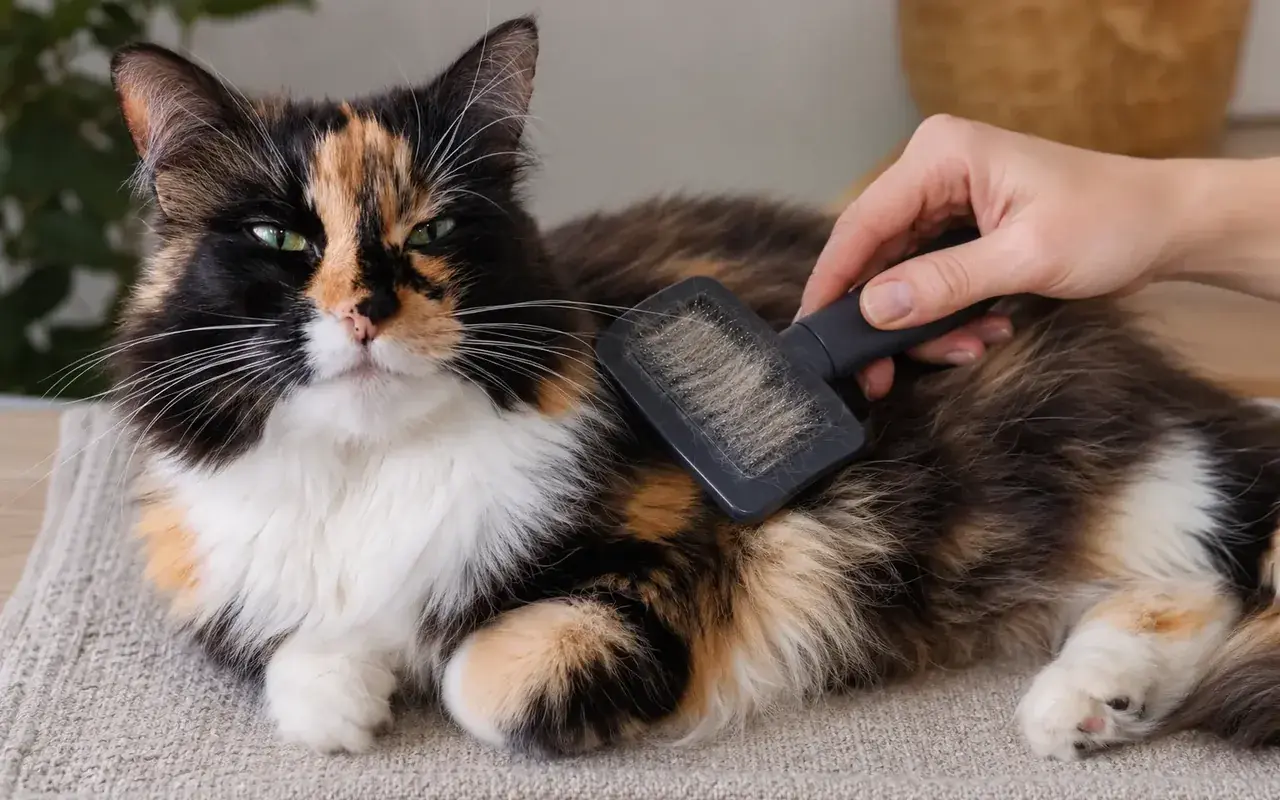 Topic illustration selected for this guide. Some learning images may be AI-assisted.
Why are my cat’s eyes watering — the quick answer
✓ Clear tears without discomfort can be monitored briefly; squinting, cloudiness, redness or discharge should be assessed.
✓ Prevent rubbing, keep the cat indoors and wipe only the surrounding fur with clean damp cotton.
✓ Same-day advice is sensible for squinting, pain, cloudiness, injury or a closed eye; sudden vision loss is urgent.
Clear tears without discomfort can be monitored briefly; squinting, cloudiness, redness or discharge should be assessed. This guide separates the quick answer from the details that actually help at home, with no blame and no dramatic guessing.
Check watery eyes without delaying care
Eye problems can worsen quickly. Observe gently, clean only the surrounding fur and arrange care for pain or visible eye changes.
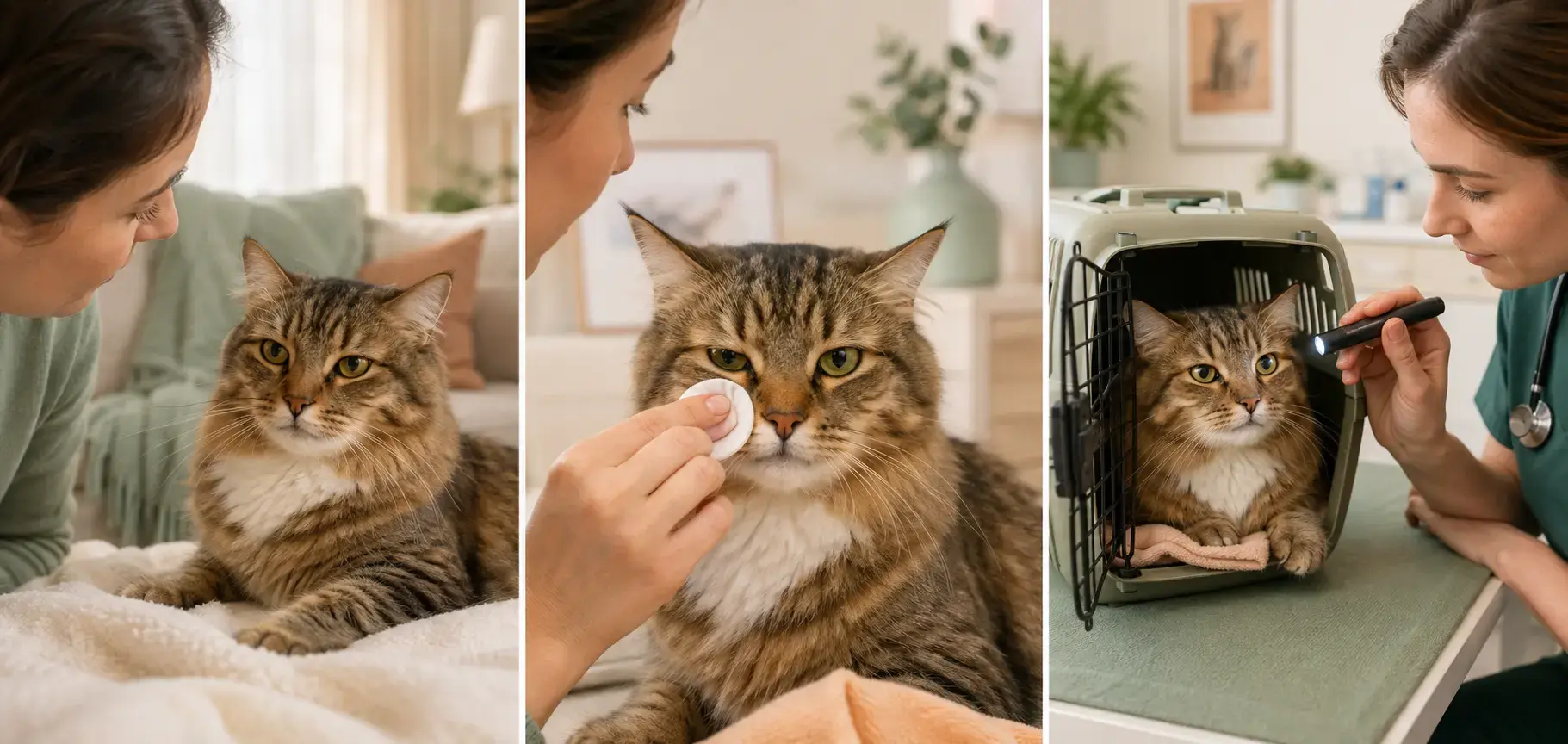
- 1Compare both eyes
In good light, note squinting, redness, cloudiness, pupil size and the colour and amount of discharge without forcing the lids open.
- 2Clean only the nearby fur
Use clean damp material to wipe below the eye, use a separate piece for each side and never apply human or leftover eye medication.
- 3Call for painful or changed eyes
Seek prompt veterinary advice for squinting, a closed eye, marked redness, cloudiness, injury or coloured discharge.
The short answer
Clear tears without discomfort can be monitored briefly; squinting, cloudiness, redness or discharge should be assessed. Eye problems can worsen quickly and causes are difficult to separate at home. A scratch and an infection may begin with similar signs. The useful question is not simply whether something can happen, but what is normal for this individual cat and what has changed. Age, health, routine and previous experience can all change the safest answer.
What you can do today
Keep the cat indoors, prevent rubbing and gently wipe tears from the surrounding fur with clean damp material. Use a fresh area for each eye. Do not force the lids open or place any product in the eye unless a veterinarian directs it.
What to watch
Compare one eye with the other for squinting, redness, cloudiness, pupil size, third-eyelid visibility and discharge colour. Also note sneezing, nasal discharge, recent rough play, dust or product exposure and whether the cat avoids light.
What not to do
Do not use human eye drops or old veterinary medication. Online tips can sound confident while missing the cat’s medical history, exact exposure or stress level. Avoid adding several remedies at once, because that makes both improvement and deterioration harder to interpret.
When to contact a veterinarian
Same-day advice is sensible for squinting, pain, cloudiness, injury or a closed eye; sudden vision loss is urgent. Cats often hide pain, so a persistent small change may be more meaningful than one dramatic-looking moment. Difficulty breathing, collapse, seizures, suspected poisoning, uncontrolled bleeding or repeated straining with little or no urine requires emergency help.
A kind next step
Clear tears from both comfortable eyes can be observed briefly, but persistence or recurrence deserves veterinary advice. A painful, closed, cloudy or injured eye should not wait for a home remedy because scratches, ulcers and infection can look similar without examination.
Check both eyes without forcing them open
Compare tear colour, redness, pupil size, cloudiness, blinking and whether one eye stays partly closed. Note sneezing, nasal discharge, rubbing and recent dust, grooming products, play or trauma. Wipe only the surrounding fur with clean damp material and use a separate piece for each eye.
Know which eye signs cannot wait
Seek same-day veterinary advice for squinting, pain, marked redness, a closed eye, coloured discharge or suspected scratch. Sudden vision change, an obviously injured or bulging eye, severe cloudiness or unequal pupils with illness or neurological signs can require emergency care. Never use human drops or leftover medication.
Your quick checklist
Your progress is saved on this device.
Three simple things you can do
You do not have to change everything today. Pick one step that feels realistic, try it and see how your cat responds.
- 1Compare both eyes for redness, squinting, cloudiness and pupil differences.
- 2Wipe tears gently with separate clean damp material for each eye.
- 3Arrange prompt care for pain, one-sided change, coloured discharge or an eye held closed.
Common mistakes
×Using human eye drops.
×Calling squinting simple tears.
×Reusing old prescription medication.
Questions cat people ask
Why are my cat's eyes watering?+
Irritation, infection, blocked tear drainage, eyelid anatomy, ulcers and other eye disease can cause tears. Context and examination matter.
When is a watery eye urgent?+
Squinting, cloudiness, injury, severe redness, unequal pupils or holding the eye closed needs prompt or emergency veterinary assessment.
Still looking for the right answer?
Search the full EverYes Cats encyclopedia with your own words — a symptom, food, behaviour, breed or everyday question.
Checked, dated and transparent
- Prepared by
- EverYes Cats editorial team
- Last updated
- 19 September 2026
- Source checked
- 19 September 2026
- Primary reference
- Cornell Feline Health Center ↗
We begin with the named reference, rewrite the information in plain language and add practical cat-parent steps. Urgent health statements are checked against veterinary sources. This guide has not been individually reviewed by a veterinarian unless explicitly stated. It provides education, not diagnosis or treatment.
How we choose and use sources →
Spotted something unclear or outdated? Tell us so we can review it.
Your answer helps us improve the cat encyclopedia.
Debris is a clue, not a diagnosis, and home cleaning can hide the cause.