Why won’t my cat let me touch the back paws?
Many cats protect their back paws because handling feels vulnerable, but a new reaction can reveal pain. Build consent gradually and never restrain the leg for practice.
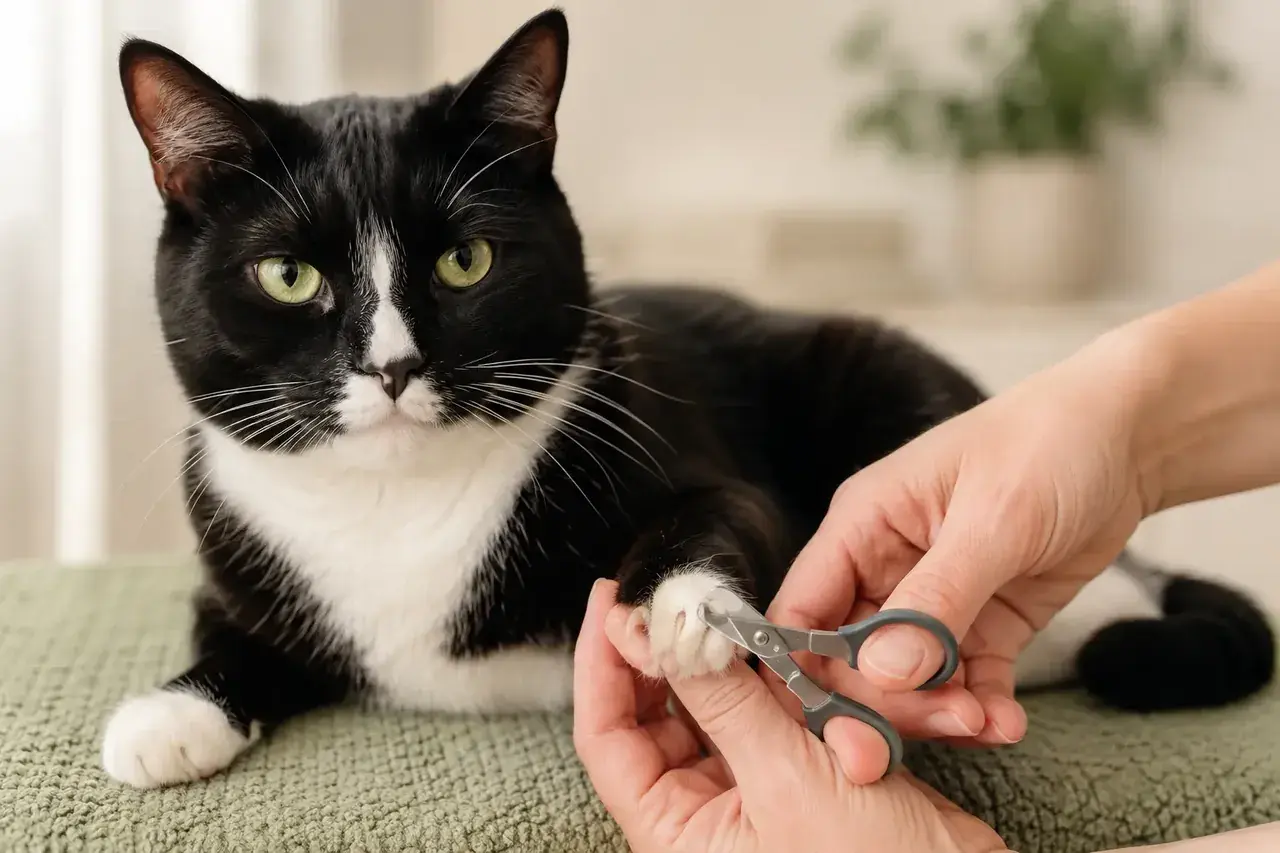 Topic illustration selected for this guide. Some learning images may be AI-assisted.
Why won’t my cat let me touch the back paws — the quick answer
✓ Hind-paw handling can feel vulnerable and may also expose pain or a negative history
✓ Begin with brief touch higher on the leg, reward calmness and stop well before withdrawal.
✓ A new reaction, limping, swelling or overgrooming needs veterinary assessment.
Hind-paw handling can feel vulnerable and may also expose pain or a negative history. Consent can differ by body area even in a trusting relationship.
The short answer
Hind-paw handling can feel vulnerable and may also expose pain or a negative history. Consent can differ by body area even in a trusting relationship.
What to observe first
Notice whether sensitivity affects one paw or both and whether it is lifelong or new. Watch walking, jumping, claw wear, licking and reactions to surfaces before attempting any handling.
Why the setting matters
A cat may trust a person yet dislike vulnerable hind-paw handling. Slippery footing, being cornered or expecting a nail trim can increase tension. New avoidance after an injury or alongside limping is more concerning than a stable preference.
What you can do
Begin with brief touch higher on the leg, reward calmness and stop well before withdrawal.
A gentle way to test it
Begin with one brief touch on a tolerated area higher on the leg, reward calmness and stop before the cat withdraws. Progress over many short sessions only while the cat voluntarily stays; do not make reaching the paw the goal of every session.
When to contact a veterinarian
A new reaction, limping, swelling or overgrooming needs veterinary assessment.
Prepare useful information
Film ordinary walking and photograph a visible damaged claw only without restraint. Note which paw, when the reaction began, swelling, heat, overgrooming and changes in jumping so the veterinarian can target the examination.
Start far from the paw
Briefly touch a tolerated area higher on the leg, reward calmness and stop. Progress over many short sessions toward the foot only while the cat stays loose and voluntarily remains. One calm touch is useful progress.
DEEPER GUIDE1 more detailed sectionsOpen +
Check for a physical reason
Observe walking, jumping, claw condition, swelling and overgrooming without forcing examination. Limping, heat, a damaged claw, pain or sudden sensitivity needs veterinary assessment before further handling training.
Your quick checklist
Your progress is saved on this device.
Three simple things you can do
You do not have to change everything today. Pick one step that feels realistic, try it and see how your cat responds.
- 1Begin with brief touch higher on the leg and reward calmness.
- 2Stop before pulling away and progress over many sessions.
- 3Check for pain if tolerance changes suddenly.
Common mistakes
×Holding the paw tightly.
×Trying to trim every claw at once.
×Calling pain-related avoidance stubbornness.
Questions cat people ask
Why does my cat hate back-paw touching?+
Paws are sensitive and restraint feels vulnerable; limited handling history or pain can add to avoidance.
How do I prepare for nail trims?+
Pair tiny, voluntary handling steps with rewards before introducing pressure or clippers.
Still looking for the right answer?
Search the full EverYes Cats encyclopedia with your own words — a symptom, food, behaviour, breed or everyday question.
Checked, dated and transparent
- Prepared by
- EverYes Cats editorial team
- Last updated
- 19 September 2026
- Source checked
- 19 September 2026
- Primary reference
- AAHA/AAFP Feline Life Stage Guidelines ↗
We begin with the named reference, rewrite the information in plain language and add practical cat-parent steps. Urgent health statements are checked against veterinary sources. This guide has not been individually reviewed by a veterinarian unless explicitly stated. It provides education, not diagnosis or treatment.
How we choose and use sources →
Spotted something unclear or outdated? Tell us so we can review it.
Your answer helps us improve the cat encyclopedia.
A cooperative mouth look is built in seconds: chin touch, brief lip lift and immediate release. It does not replace a veterinary dental examination.