How cats drink without scooping water
Cats usually touch water with the upper surface of the tongue tip and lift rapidly, creating a liquid column that the jaws close around before gravity pulls it down.
 Topic illustration selected for this guide. Some learning images may be AI-assisted.
How cats drink without scooping water — the quick answer
✓ A cat touches liquid with the upper tongue tip and lifts fast, drawing up a water column.
✓ Use a stable wide bowl filled high enough for comfortable access.
✓ Messy drinking, coughing or inability to lap can signal oral or neurologic trouble.
A cat touches liquid with the upper tongue tip and lifts fast, drawing up a water column. The jaws close around the rising liquid before gravity pulls it down. This guide keeps the fascinating detail while separating observation, evidence and internet exaggeration.
See how a cat turns one tongue touch into a drink
Cats usually do not scoop water like a spoon. Rapid tongue movement uses inertia and gravity to lift a narrow column that the jaws close around.
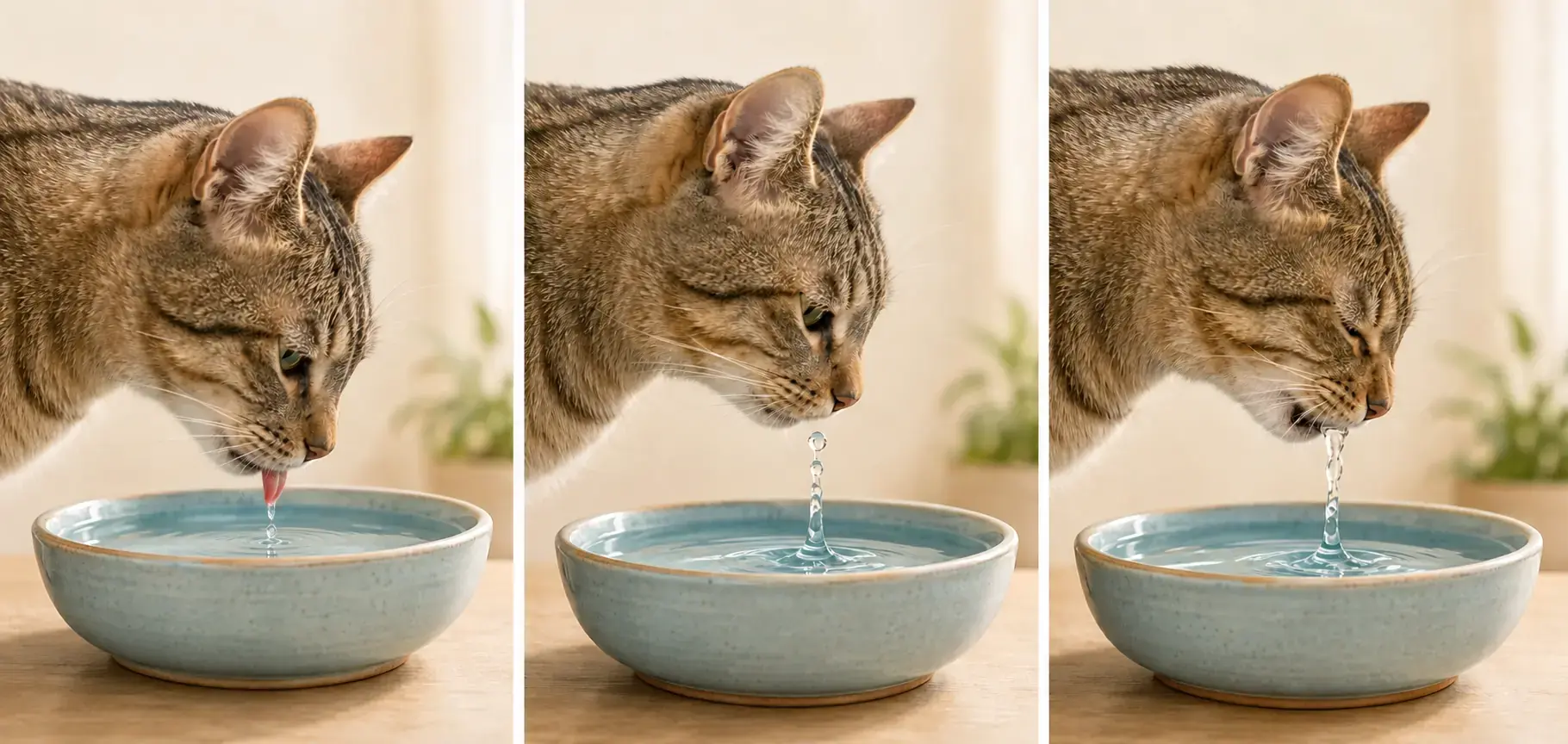
- 1The tongue tip touches the surface
The upper side of the tongue tip makes brief contact with the water while the jaw stays above the bowl.
- 2A water column rises
The tongue retracts rapidly and inertia draws a narrow column upward before gravity can pull it back down.
- 3The jaws close around the liquid
The cat closes its mouth around the rising column and repeats several fast laps before swallowing.
The quick fact
A cat touches liquid with the upper tongue tip and lifts fast, drawing up a water column. It describes a common biological or behavioural pattern, not a guarantee about every individual cat. Genetics, age, health, learning and context can all change what you see.
Why it works that way
The jaws close around the rising liquid before gravity pulls it down. Many odd-looking feline features become logical when we remember the cat's history as a small ambush hunter that must gather information quickly while also staying safe.
What it means at home
Use a stable wide bowl filled high enough for comfortable access. Observe without restraint and do not recreate a viral demonstration when it compromises comfort. A good fact should improve curiosity and care, not turn the cat into a prop.
Myth check
The tongue tip briefly contacts the surface and lifts a column of water; it does not curl into a deep spoon. Slow-motion descriptions explain the usual mechanism, not an exact lap count or drinking speed that every cat must match.
What to notice
Look for a change from the cat's usual intake and technique rather than judging splashes alone. Coughing, repeated swallowing, dropping the jaw, difficulty reaching the water or a clear increase or decrease in drinking deserves attention.
When it becomes a health question
Measure unusual drinking over a day if practical and discuss a persistent change with a veterinarian. Inability to drink, repeated coughing, marked weakness or breathing difficulty needs prompt care; do not force water into the mouth.
A fast balance between inertia and gravity
High-speed observations show that the tongue does not form a deep ladle. It briefly contacts the surface and rises, while the cat times jaw closure around the upward-moving column. Several quick laps build a swallow.
Make the mechanics easier at home
Use a stable clean bowl with a comfortable opening and enough fresh water that the cat does not need to reach deep. Offer several quiet locations and test a fountain only as an optional preference. A clear increase or decrease in drinking matters more than the exact lapping style.
Your quick checklist
Your progress is saved on this device.
Three simple things you can do
You do not have to change everything today. Pick one step that feels realistic, try it and see how your cat responds.
- 1Provide a clean stable bowl with a comfortable wide opening.
- 2Keep the water level easy to reach and refresh it regularly.
- 3Offer several quiet water locations away from litter and busy routes.
Common mistakes
×Assuming every cat needs a fountain.
×Placing the only bowl where another animal can block it.
×Ignoring a clear change in thirst because the lapping looks normal.
Questions cat people ask
Do cats scoop water with their tongues?+
Usually not like a spoon. The upper tongue tip touches the surface and lifts a column of water that the jaws close around.
Why do cats drink so quickly?+
Rapid lapping helps maintain the rising water column before gravity pulls it down. Several laps contribute to each swallow.
Still looking for the right answer?
Search the full EverYes Cats encyclopedia with your own words — a symptom, food, behaviour, breed or everyday question.
Checked, dated and transparent
- Prepared by
- EverYes Cats editorial team
- Last updated
- 19 September 2026
- Source checked
- 19 September 2026
- Primary reference
- Merck Veterinary Manual ↗
We begin with the named reference, rewrite the information in plain language and add practical cat-parent steps. Urgent health statements are checked against veterinary sources. This guide has not been individually reviewed by a veterinarian unless explicitly stated. It provides education, not diagnosis or treatment.
How we choose and use sources →
Spotted something unclear or outdated? Tell us so we can review it.
Your answer helps us improve the cat encyclopedia.
Vertical pupils can narrow tightly in bright light and open widely in dim conditions. Read pupils with lighting, posture and activity—not as a one-word mood label.