Hyperthyroidism in cats
Hyperthyroidism commonly affects older cats and can cause weight loss despite appetite, increased thirst, restlessness, vomiting, diarrhea or a fast heart rate. Veterinary testing is required.
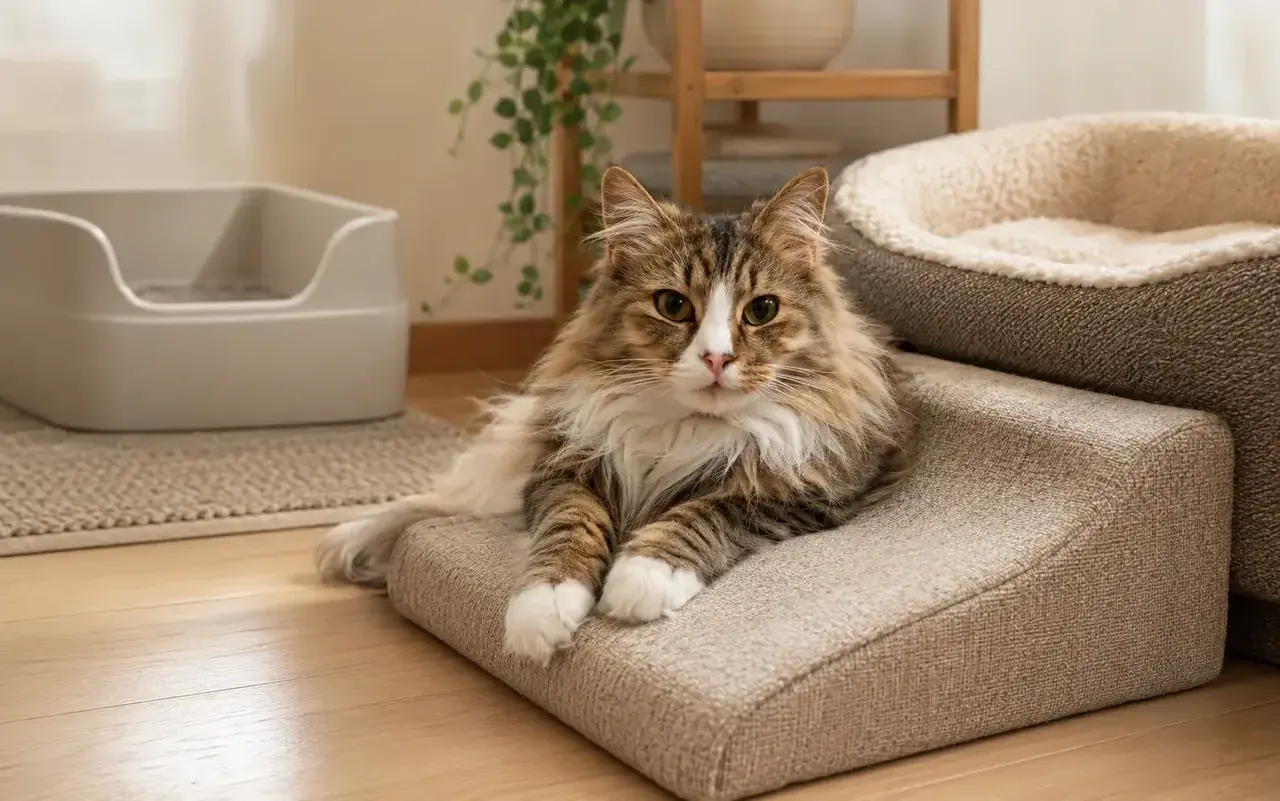 Topic illustration selected for this guide. Some learning images may be AI-assisted.
Hyperthyroidism in cats — the quick answer
✓ Weight loss despite hunger is important
✓ Thirst, vomiting or hyperactivity may occur
✓ A blood test is usually part of diagnosis
✓ Treatment choice depends on the whole cat and household
Hyperthyroidism is common in older cats and usually results from excessive thyroid hormone. Signs may be gradual, and no single symptom confirms the diagnosis.
Build the pattern, then test it
Strong appetite with weight loss can be a thyroid clue, but it does not confirm a diagnosis. Home observations help the veterinarian choose and interpret the right tests.
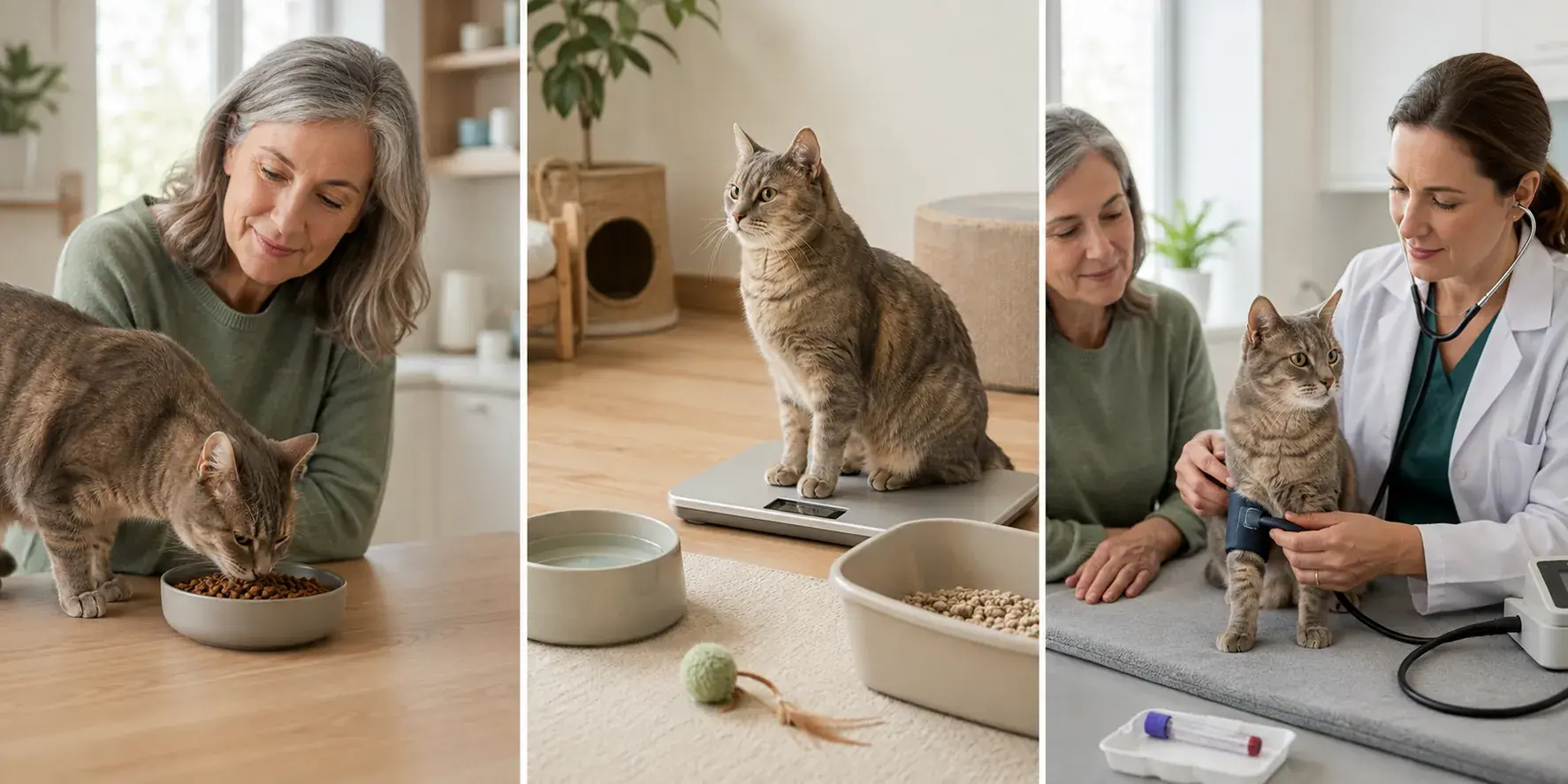
- 1Notice the combination
Record appetite alongside weight loss, thirst, urine, vomiting, stool, restlessness, vocalisation, coat quality and any unusual quietness.
- 2Track the trend consistently
Use the same scale weekly, measure food and water changes and bring the complete medication and supplement list to the appointment.
- 3Ask about the whole senior assessment
Veterinary examination, thyroid blood testing, kidney values, urine, blood pressure and heart assessment may all influence diagnosis and treatment choices.
Build the pattern
Track weight, appetite, thirst, urine, vomiting, stool, activity and coat quality. Some cats become restless or vocal; others show less typical quietness and poor appetite.
Why the heart and pressure matter
Excess thyroid hormone can raise heart rate and contribute to heart changes and hypertension. Your veterinarian may recommend blood pressure and heart assessment.
How it is confirmed
A physical examination and thyroid-hormone blood test are common first steps. Kidney values and other tests help reveal conditions that may influence treatment.
Treatment is individual
Options can include medication, radioiodine, surgery or a carefully controlled therapeutic diet. Each has practical benefits and limitations to discuss with the clinic.
Bring a clear home history
Record weight trends, measured food intake, drinking, urine, stool, vomiting, sleep and activity. Do not assume a hungry active senior is simply ageing well. The veterinarian may examine the thyroid area, blood pressure, heart and body condition and use blood and urine tests, while also checking for kidney or heart disease that can influence treatment.
Follow treatment and monitoring precisely
Options may include medication, radioactive iodine, surgery or a veterinary therapeutic diet, depending on health and access. Do not change doses or mix a prescription iodine-restricted diet with other foods without advice. Repeat examinations and blood tests are important because control can change and treatment may reveal underlying kidney disease. Breathing difficulty or collapse is urgent.
Your quick checklist
Your progress is saved on this device.
Three simple things you can do
You do not have to change everything today. Pick one step that feels realistic, try it and see how your cat responds.
- 1Record weight, appetite, thirst, vomiting, activity and medication doses.
- 2Discuss treatment options and monitoring with the veterinarian rather than treating symptoms alone.
- 3Attend repeat thyroid, kidney and blood-pressure checks as scheduled.
Common mistakes
×Assuming weight loss is healthy because appetite is strong.
×Changing or stopping medication without blood-test guidance.
×Using an unproven supplement instead of established treatment.
Questions cat people ask
What are common signs of hyperthyroidism in cats?+
Weight loss despite appetite, increased thirst, restlessness, vomiting, diarrhoea and coat changes can occur, but signs vary and require testing.
Is feline hyperthyroidism curable?+
Radioactive iodine can be curative for many cats, while medication, surgery or dietary management may suit others. The veterinarian assesses individual risks.
Still looking for the right answer?
Search the full EverYes Cats encyclopedia with your own words — a symptom, food, behaviour, breed or everyday question.
Checked, dated and transparent
- Prepared by
- EverYes Cats editorial team
- Last updated
- 4 September 2026
- Source checked
- 4 September 2026
- Primary reference
- Cornell Feline Health Center: Hyperthyroidism ↗
We begin with the named reference, rewrite the information in plain language and add practical cat-parent steps. Urgent health statements are checked against veterinary sources. This guide has not been individually reviewed by a veterinarian unless explicitly stated. It provides education, not diagnosis or treatment.
How we choose and use sources →
Spotted something unclear or outdated? Tell us so we can review it.
Your answer helps us improve the cat encyclopedia.
A deaf or hard-of-hearing cat can live confidently when communication is visual and tactile, escape risks are controlled and sudden hearing change is medically assessed.