Why does my kitten keep attacking the older cat’s tail?
A kitten may chase an older cat's tail as moving prey, but repeated biting can become painful and prevent rest. Redirect early and give the older cat kitten-free space.
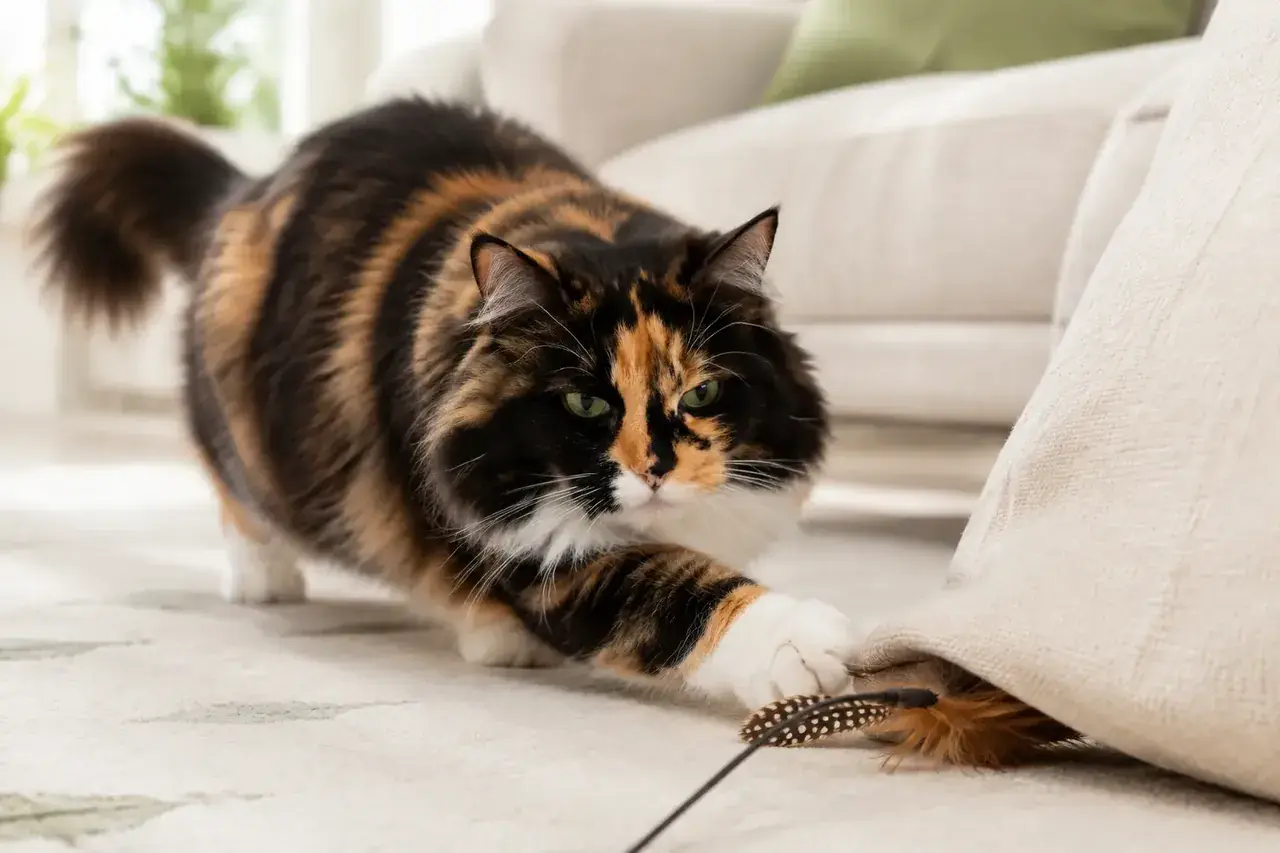 Topic illustration selected for this guide. Some learning images may be AI-assisted.
Why does my kitten keep attacking the older cat’s tail — the quick answer
✓ A moving tail is an irresistible play target, but the older cat still needs protection and choice
✓ Provide frequent wand play, interrupt before pouncing and create kitten-free senior resting areas.
✓ Injury, escalating fights, hiding or appetite and litter changes needs professional help.
A moving tail is an irresistible play target, but the older cat still needs protection and choice. Repeated pestering can turn ordinary kitten play into chronic social stress.
The short answer
A moving tail is an irresistible play target, but the older cat still needs protection and choice. Repeated pestering can turn ordinary kitten play into chronic social stress.
What to observe first
Compare the moment with your cat’s usual pattern. Note timing, frequency, body language, appetite, litter-box use, mobility and any recent household change.
Why the setting matters
A moving tail is an irresistible target for many kittens, but the adult cat still needs uninterrupted sleep and control over distance. Watch whether the older cat can leave, whether warnings end the interaction and whether pursuit spreads to beds, food or litter routes.
What you can do
Give the kitten frequent short wand-toy sessions away from the adult and finish with a safe catch. Add high resting places and a kitten-free retreat for the older cat, and separate calmly when the kitten repeatedly ignores clear warnings.
A gentle way to test it
Make one small safe adjustment and give the cat time and choice. Avoid punishment, forced handling and several changes at once, because they make the response harder to understand.
When to contact a veterinarian
Check both cats for punctures, swelling, pain or a tail held abnormally. Seek help when attacks cause injury, the adult stops resting or using resources, or conflict continues despite structured play and protected escape options.
Prepare useful information
Write down when it began and how often it occurs. A short video, clear photo, food record or litter record can help a veterinary professional assess a pattern that may not appear during the appointment.
Interrupt before the pounce
Notice the stare, crouch and weight shift that occur before the tail attack. Move a toy across the kitten's path before contact rather than grabbing the kitten after the bite, and reward play directed toward the toy.
DEEPER GUIDE1 more detailed sectionsOpen +
Protect rest and escape
Give the older cat high or gated resting areas, separate resources and routes that do not end in a trap. Hissing is communication; do not punish it. Wounds, escalating fights or a senior becoming withdrawn need professional help.
Your quick checklist
Your progress is saved on this device.
Three simple things you can do
You do not have to change everything today. Pick one step that feels realistic, try it and see how your cat responds.
- 1Interrupt early with an appropriate moving toy.
- 2Give the older cat kitten-free resting routes and heights.
- 3Schedule several short play sessions daily.
Common mistakes
×Expecting the older cat to provide all discipline.
×Punishing normal kitten play.
×Allowing persistent pursuit without escape.
Questions cat people ask
Why does my kitten attack the older cat’s tail?+
A moving tail triggers play and hunting behavior, especially when the kitten has excess energy.
When should I separate them?+
Pause interaction when the older cat cannot disengage, hides, stops resources use or conflict escalates.
Still looking for the right answer?
Search the full EverYes Cats encyclopedia with your own words — a symptom, food, behaviour, breed or everyday question.
Checked, dated and transparent
- Prepared by
- EverYes Cats editorial team
- Last updated
- 19 September 2026
- Source checked
- 19 September 2026
- Primary reference
- International Cat Care ↗
We begin with the named reference, rewrite the information in plain language and add practical cat-parent steps. Urgent health statements are checked against veterinary sources. This guide has not been individually reviewed by a veterinarian unless explicitly stated. It provides education, not diagnosis or treatment.
How we choose and use sources →
Spotted something unclear or outdated? Tell us so we can review it.
Your answer helps us improve the cat encyclopedia.
Social grooming is normal, but excessive licking can reflect tension, displacement or attraction to painful or abnormal skin.