How to stop a kitten climbing people’s legs
Kittens climb legs for access, attention or because moving fabric resembles play. Prevent rehearsal with safe climbing options and reward four paws on the floor.
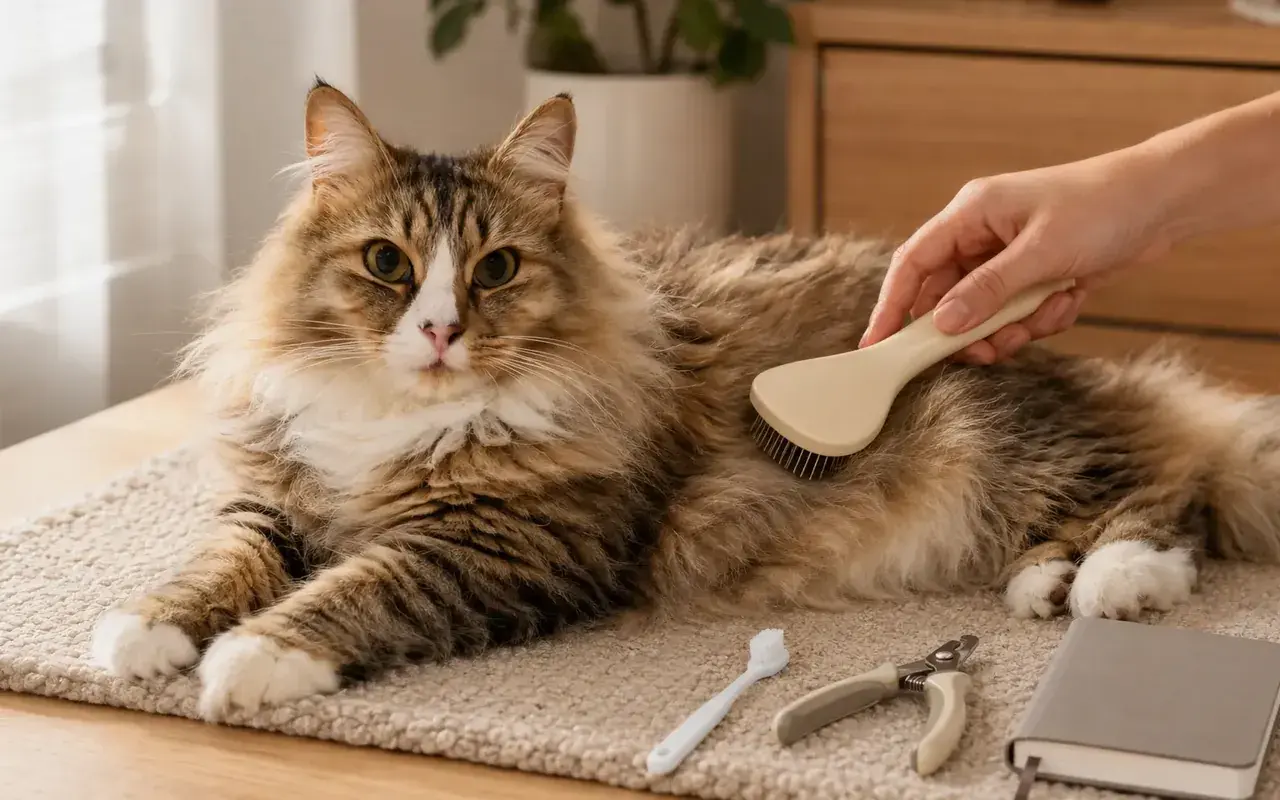 Topic illustration selected for this guide. Some learning images may be AI-assisted.
How to stop a kitten climbing people’s legs — the quick answer
✓ The kitten is seeking height, play or attention and needs an immediately available alternative
✓ Place a tall stable scratcher nearby, redirect with a wand toy and reward use of legal climbing routes.
✓ Deep scratches or bites need appropriate human medical care; unusual frantic behaviour needs veterinary advice.
The kitten is seeking height, play or attention and needs an immediately available alternative. Movement and fabric can accidentally make legs behave like exciting climbing toys.
The short answer
The kitten is seeking height, play or attention and needs an immediately available alternative. Movement and fabric can accidentally make legs behave like exciting climbing toys.
What to observe first
Notice whether the kitten climbs as food is prepared, a door opens or a person begins walking. The trigger helps you put a permitted climbing place exactly where it is needed. Check for a safe landing route and whether claws are snagging clothing.
Why the setting matters
Movement and fabric can accidentally make legs behave like exciting climbing toys. One isolated detail rarely explains behaviour or health on its own, so look at the whole cat and the immediate environment.
What you can do
Place a tall stable scratcher nearby, redirect with a wand toy and reward use of legal climbing routes.
A gentle way to test it
Before the predictable climbing moment, place a stable perch or scratcher nearby and invite the kitten there with a toy or small reward. Reinforce four paws on the floor or on the perch before it jumps at a leg. Keep the sessions short and repeat at the same routine point.
When to contact a veterinarian
A sudden frantic change with distress, poor appetite or abnormal movement deserves veterinary advice. Clean human scratches and seek medical advice for deep wounds or bites; do not shake a climbing kitten off your leg.
Prepare useful information
Write down when it began and how often it occurs. A short video, clear photo, food record or litter record can help a veterinary professional assess a pattern that may not appear during the appointment.
Make the alternative easier
Place a stable cat tree or step near the places where climbing usually happens. Before preparing food or opening a door, toss a toy or reward the kitten on a mat. Keep claws trimmed safely and wear protective clothing during training.
DEEPER GUIDE1 more detailed sectionsOpen +
Respond without turning it into a game
Freeze rather than shaking the kitten off, support them safely if necessary and redirect to the approved perch. Avoid shouting, spraying or pushing. Sudden frantic climbing with distress or injury needs assessment.
Your quick checklist
Your progress is saved on this device.
Three simple things you can do
You do not have to change everything today. Pick one step that feels realistic, try it and see how your cat responds.
- 1Provide tall stable climbing alternatives nearby.
- 2Redirect before the climb and reward four paws on the floor.
- 3Wear protective fabric while the habit is being retrained.
Common mistakes
×Shouting or shaking the kitten off.
×Rewarding climbs with immediate pickup.
×Using unstable cat furniture.
Questions cat people ask
Why does my kitten climb my legs?+
Height seeking, attention and undeveloped impulse control can make clothing an easy ladder.
Will the kitten grow out of it?+
It may decline, but consistent alternatives and reinforcement prevent the behavior becoming practiced.
Still looking for the right answer?
Search the full EverYes Cats encyclopedia with your own words — a symptom, food, behaviour, breed or everyday question.
Checked, dated and transparent
- Prepared by
- EverYes Cats editorial team
- Last updated
- 21 September 2026
- Source checked
- 21 September 2026
- Primary reference
- International Cat Care ↗
We begin with the named reference, rewrite the information in plain language and add practical cat-parent steps. Urgent health statements are checked against veterinary sources. This guide has not been individually reviewed by a veterinarian unless explicitly stated. It provides education, not diagnosis or treatment.
How we choose and use sources →
Spotted something unclear or outdated? Tell us so we can review it.
Your answer helps us improve the cat encyclopedia.
Digging before defecating is normal preparation when it is brief and the cat passes stool comfortably. Prolonged digging can signal litter-box or medical discomfort.