Your kitten’s first week at home
A kitten's first week should prioritise safety, predictable care and gradual confidence. A complete base room makes eating, litter use, rest and observation easier to monitor while preventing overwhelming exploration.
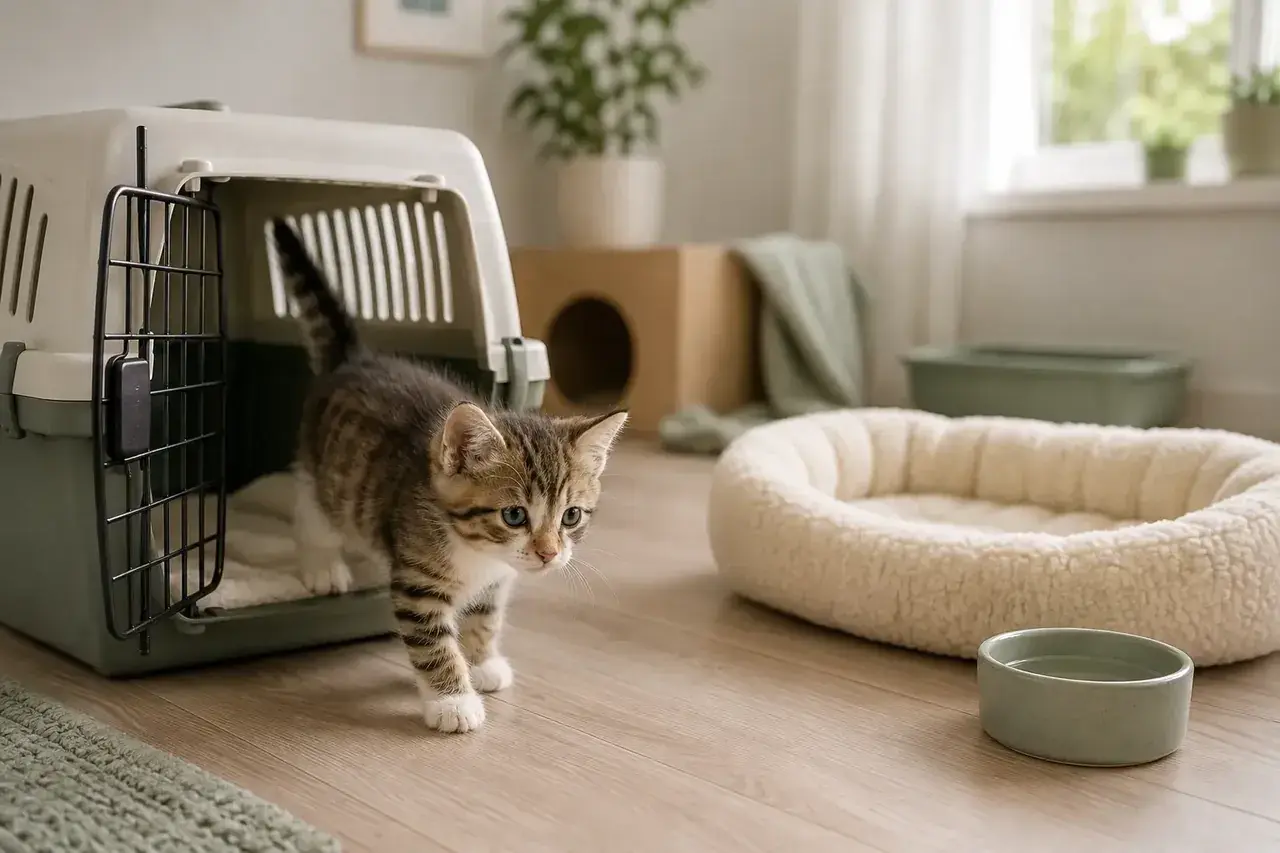 Topic illustration selected for this guide. Some learning images may be AI-assisted.
Your kitten’s first week at home — the quick answer
✓ Kitten-proof cords, plants and small objects
✓ Use complete kitten food
✓ Arrange veterinary care early
A smaller starting space can help a new kitten learn where resources are and feel secure before exploring the whole home.
Prepare one safe room
Include a bed, hiding place, water, appropriate food, toys and a litter tray positioned away from food.
Let confidence lead
Sit quietly, offer play and allow the kitten to approach. Expand access gradually as toileting and confidence become reliable.
Build healthy habits
Discuss vaccinations, parasite control, identification, neutering and nutrition with a veterinary professional.
Begin with a small complete territory
Prepare food, water, a low-entry litter tray, hiding, a warm bed, scratching and stable height before arrival. Open the carrier inside the closed room and let the kitten emerge voluntarily. Keep visitors and introductions limited while you confirm normal eating, drinking, urine, stool, play and sleep. Check windows, cords, plants and small swallowable objects before every expansion.
Build the health and social plan
Arrange a veterinary visit based on age, records and any symptoms, and ask about vaccination, parasites, microchipping, nutrition and safe exposure. Introduce handling, sounds and people in brief positive sessions. Poor appetite, repeated vomiting or diarrhea, breathing difficulty, marked lethargy or failure to urinate needs prompt veterinary advice.
Your quick checklist
Your progress is saved on this device.
Three simple things you can do
You do not have to change everything today. Pick one step that feels realistic, try it and see how your cat responds.
- 1Secure cords, toxic plants, gaps and swallowable objects.
- 2Keep the kitten in one well-equipped base room initially.
- 3Book veterinary care and bring all available history.
Common mistakes
×Giving unrestricted access before litter habits are reliable.
×Changing food immediately without need.
×Overwhelming the kitten with visitors and constant handling.
Questions cat people ask
Should a kitten sleep alone?+
Provide a warm safe sleeping area nearby and follow age-appropriate veterinary advice. Very young kittens have needs that differ from older adopted kittens.
When can the kitten explore more rooms?+
Expand gradually after the kitten is eating, toileting and moving confidently in the base area.
Still looking for the right answer?
Search the full EverYes Cats encyclopedia with your own words — a symptom, food, behaviour, breed or everyday question.
Checked, dated and transparent
- Prepared by
- EverYes Cats editorial team
- Last updated
- 4 September 2026
- Source checked
- 4 September 2026
- Primary reference
- AAHA/AAFP Feline Life Stage Guidelines ↗
We begin with the named reference, rewrite the information in plain language and add practical cat-parent steps. Urgent health statements are checked against veterinary sources. This guide has not been individually reviewed by a veterinarian unless explicitly stated. It provides education, not diagnosis or treatment.
How we choose and use sources →
Spotted something unclear or outdated? Tell us so we can review it.
Your answer helps us improve the cat encyclopedia.
Overtired kittens can lose self-control and turn ordinary play into harder grabbing and biting..