Why does my cat wait outside a closed door?
A closed door interrupts access to territory, information and familiar people.
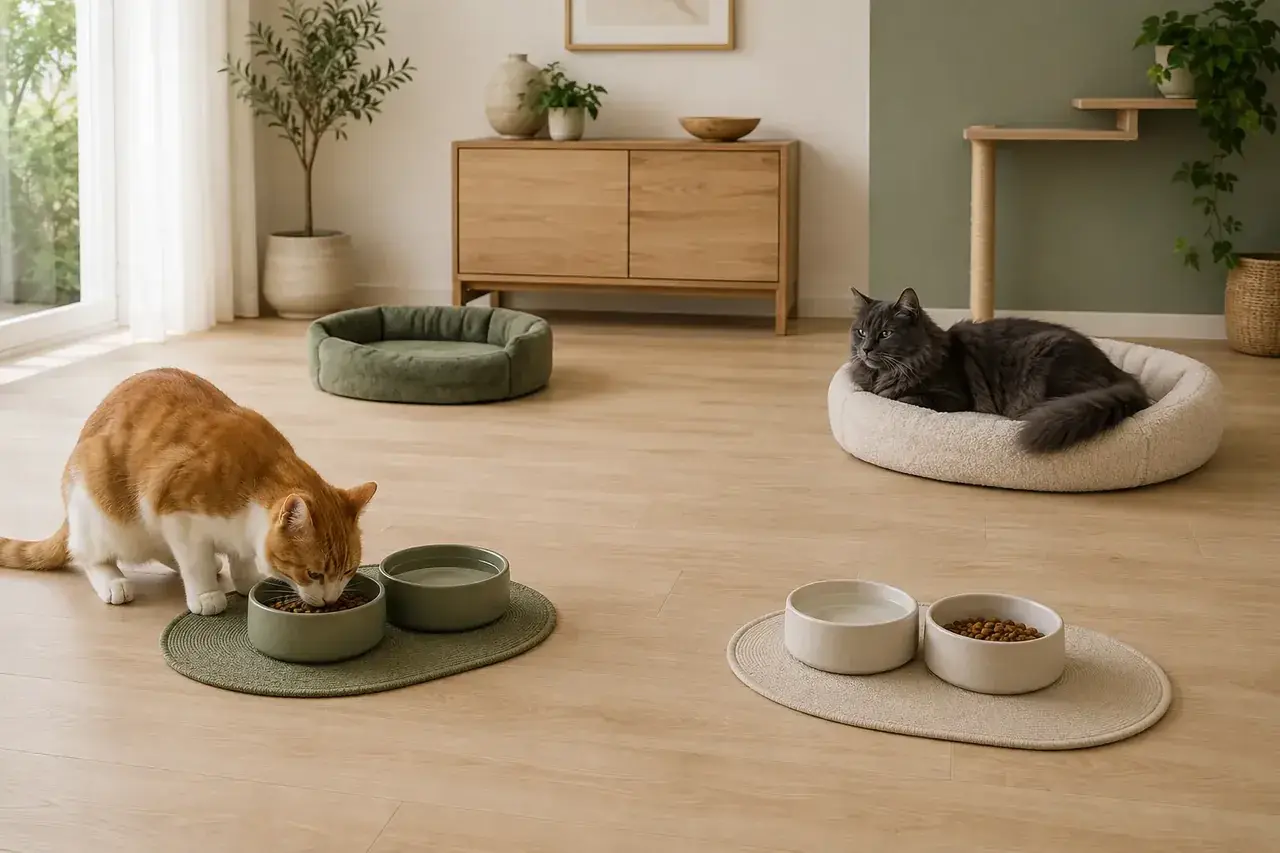 Topic illustration selected for this guide. Some learning images may be AI-assisted.
Why does my cat wait outside a closed door — the quick answer
✓ A closed door interrupts access to territory, information and familiar people.
✓ Keep important resources accessible and build predictable times for contact and independent activity.
✓ Persistent panic, self-injury or inability to settle when alone needs qualified help.
A closed door interrupts access to territory, information and familiar people. The waiting may reflect curiosity, routine or frustration rather than separation anxiety by itself. Here is the useful version of the answer: what the behaviour may mean, what it does not prove and when it stops being just a fun cat fact.
The short answer
A closed door interrupts access to territory, information and familiar people. A single moment never tells the whole story, so compare the setting, the cat's posture and what happens next.
Why cats do this
The waiting may reflect curiosity, routine or frustration rather than separation anxiety by itself. Cats combine scent, sound, sight, touch, memory and learning. That is why the same visible action can have more than one reasonable explanation.
Read the whole cat
A cat resting loosely outside a door may be keeping track of a familiar person or waiting for a predictable activity. Repeated frantic scratching, inability to settle or missing food and litter because the door is closed tells a different story. Watch what the cat does when the door opens.
What to do at home
Keep water, litter and resting places available on the cat's side of the door. If access must be limited, make the routine predictable and offer a comfortable alternative nearby. Reward calm moments without accidentally making every scratch the signal that opens the door.
What this does not prove
Waiting at a bathroom or bedroom door does not by itself diagnose separation anxiety. Curiosity, territorial access and learned routines can all explain it. Look for distress across several absences rather than assigning a label from one photograph.
When to contact a veterinarian
If a cat newly panics at closed doors, injures itself trying to get through or cannot settle when alone, discuss the pattern with a veterinarian or qualified cat behaviour professional. Record the duration and what happens before and after the door closes.
Your quick checklist
Your progress is saved on this device.
Three simple things you can do
You do not have to change everything today. Pick one step that feels realistic, try it and see how your cat responds.
- 1Make sure food, water, litter and safe resting places remain accessible on the cat's side of the door.
- 2Create predictable times for contact, play and independent settling.
- 3Reward a comfortable waiting place away from the doorway when privacy is needed.
Common mistakes
×Opening the door only after increasingly loud scratching or calling.
×Assuming waiting alone proves a clinical separation problem.
×Using punishment or spraying water near a territorial doorway.
Questions cat people ask
Should I always let my cat through?+
No. Consistent household boundaries are reasonable when all essential resources and welfare needs are met. Make the alternative comfortable and predictable.
When does door waiting suggest distress?+
Persistent panic, drooling, self-injury, destructive escape attempts, prolonged vocalising or inability to eat and settle deserves veterinary and qualified behaviour support.
Still looking for the right answer?
Search the full EverYes Cats encyclopedia with your own words — a symptom, food, behaviour, breed or everyday question.
Checked, dated and transparent
- Prepared by
- EverYes Cats editorial team
- Last updated
- 19 September 2026
- Source checked
- 19 September 2026
- Primary reference
- International Cat Care ↗
We begin with the named reference, rewrite the information in plain language and add practical cat-parent steps. Urgent health statements are checked against veterinary sources. This guide has not been individually reviewed by a veterinarian unless explicitly stated. It provides education, not diagnosis or treatment.
How we choose and use sources →
Spotted something unclear or outdated? Tell us so we can review it.
Your answer helps us improve the cat encyclopedia.
A relaxed cat may continue purring while drifting into light sleep, especially during a warm, familiar resting routine. Purring alone does not prove comfort or deep sleep.