Why does my cat yawn when I pet it?
A yawn during calm contact can accompany relaxation, waking or a shift from one activity to another.
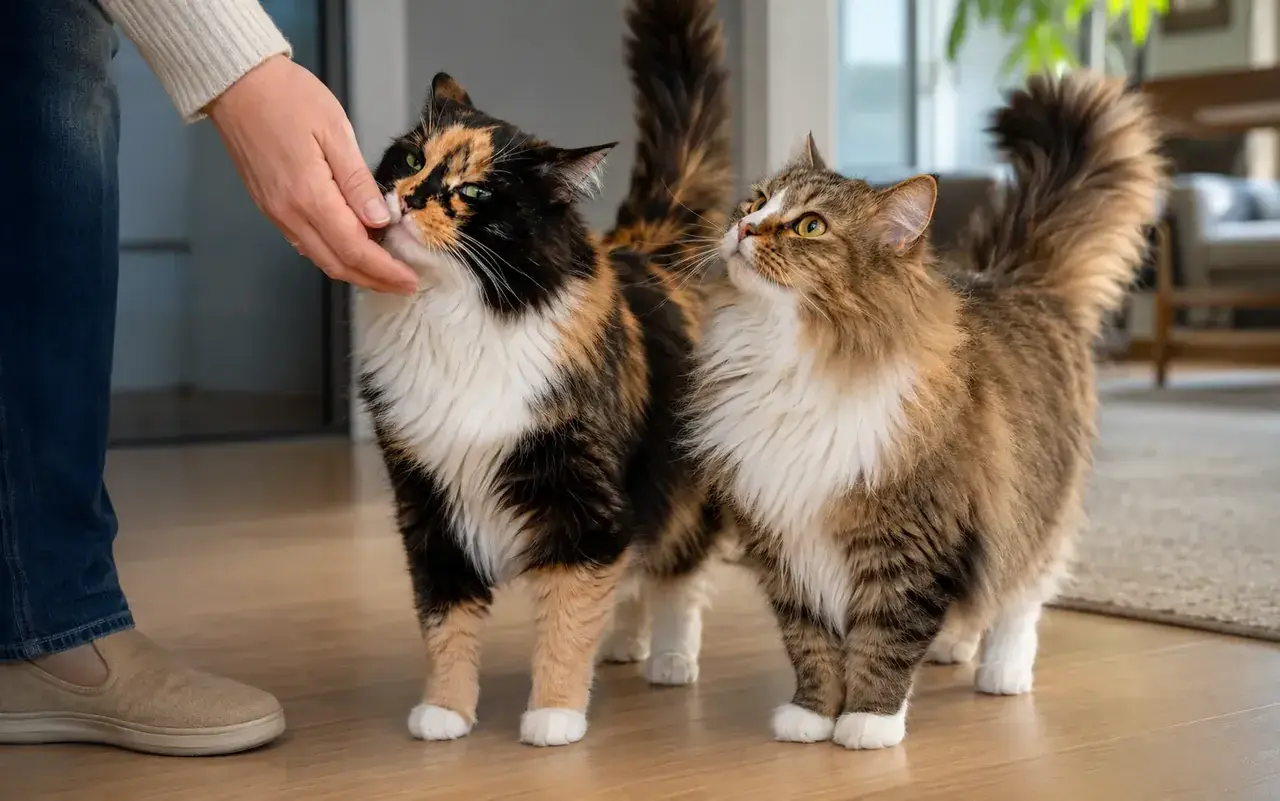 Topic illustration selected for this guide. Some learning images may be AI-assisted.
Why does my cat yawn when I pet it — the quick answer
✓ A yawn during calm contact can accompany relaxation, waking or a shift from one activity to another.
✓ Keep touch brief and pause so the cat can choose whether contact continues.
✓ Repeated yawning with drooling, bad breath, mouth pawing or eating difficulty needs an oral examination.
A yawn during calm contact can accompany relaxation, waking or a shift from one activity to another. It is not a reliable sign of boredom or trust by itself; the loose or tense body around it matters more. Here is the useful version of the answer: what the behaviour may mean, what it does not prove and when it stops being just a fun cat fact.
The short answer
A yawn during calm contact can accompany relaxation, waking or a shift from one activity to another. A single moment never tells the whole story, so compare the setting, the cat's posture and what happens next.
Why cats do this
It is not a reliable sign of boredom or trust by itself; the loose or tense body around it matters more. Cats combine scent, sound, sight, touch, memory and learning. That is why the same visible action can have more than one reasonable explanation.
Read the whole cat
Notice whether the cat stretches, keeps soft eyes and stays near your hand after the yawn, or turns away, stiffens and flicks the tail. A yawn during contact does not on its own tell you whether the cat wants more petting. The choice to return after a brief pause gives better information.
What to do at home
Pause your hand after the yawn and give the cat space to move away. If the cat leans back in, continue with one or two gentle strokes, then pause again. Keep an eye on where touch is welcomed instead of repeating the same spot to get another reaction.
What this does not prove
A yawn is not a reliable test of trust, boredom or irritation. Compare the cat's behaviour before and after touch and whether the same pattern appears when it is simply waking. Avoid assigning a fixed emotional meaning to one gesture.
When to contact a veterinarian
Repeated yawning with drooling, bad breath, mouth pawing or eating difficulty needs an oral examination. Seek faster help for breathing difficulty, collapse, seizures, major trauma, suspected poisoning, severe pain or repeated unsuccessful attempts to urinate.
Your quick checklist
Your progress is saved on this device.
Three simple things you can do
You do not have to change everything today. Pick one step that feels realistic, try it and see how your cat responds.
- 1Notice whether the yawn follows waking and whether the cat's muscles remain loose before and after it.
- 2Pause petting after a few strokes and let the cat lean back in if contact is still wanted.
- 3Check breath, saliva, eating and mouth comfort when yawning becomes frequent or looks incomplete.
Common mistakes
×Treating one yawn as proof of trust, boredom or stress without context.
×Continuing to touch a cat that turns away or becomes tense after yawning.
×Ignoring drooling, bad breath or chewing changes because the cat still eats.
Questions cat people ask
Does yawning while being petted mean my cat is relaxed?+
It can occur during relaxed waking or a transition between activities, but one yawn is not a reliable emotion test. Loose posture and voluntary continued contact make relaxation more likely.
When can frequent yawning indicate a problem?+
Repeated yawning with drooling, bad breath, mouth pawing, reduced grooming, difficulty eating or reluctance to open the mouth needs veterinary assessment.
Still looking for the right answer?
Search the full EverYes Cats encyclopedia with your own words — a symptom, food, behaviour, breed or everyday question.
Checked, dated and transparent
- Prepared by
- EverYes Cats editorial team
- Last updated
- 21 September 2026
- Source checked
- 21 September 2026
- Primary reference
- International Cat Care ↗
We begin with the named reference, rewrite the information in plain language and add practical cat-parent steps. Urgent health statements are checked against veterinary sources. This guide has not been individually reviewed by a veterinarian unless explicitly stated. It provides education, not diagnosis or treatment.
How we choose and use sources →
Spotted something unclear or outdated? Tell us so we can review it.
Your answer helps us improve the cat encyclopedia.
A relaxed cat may continue purring while drifting into light sleep, especially during a warm, familiar resting routine. Purring alone does not prove comfort or deep sleep.