Antifreeze and cats: prevention and immediate action
Ethylene glycol exposure can cause fatal kidney damage, and early signs may be easy to miss.
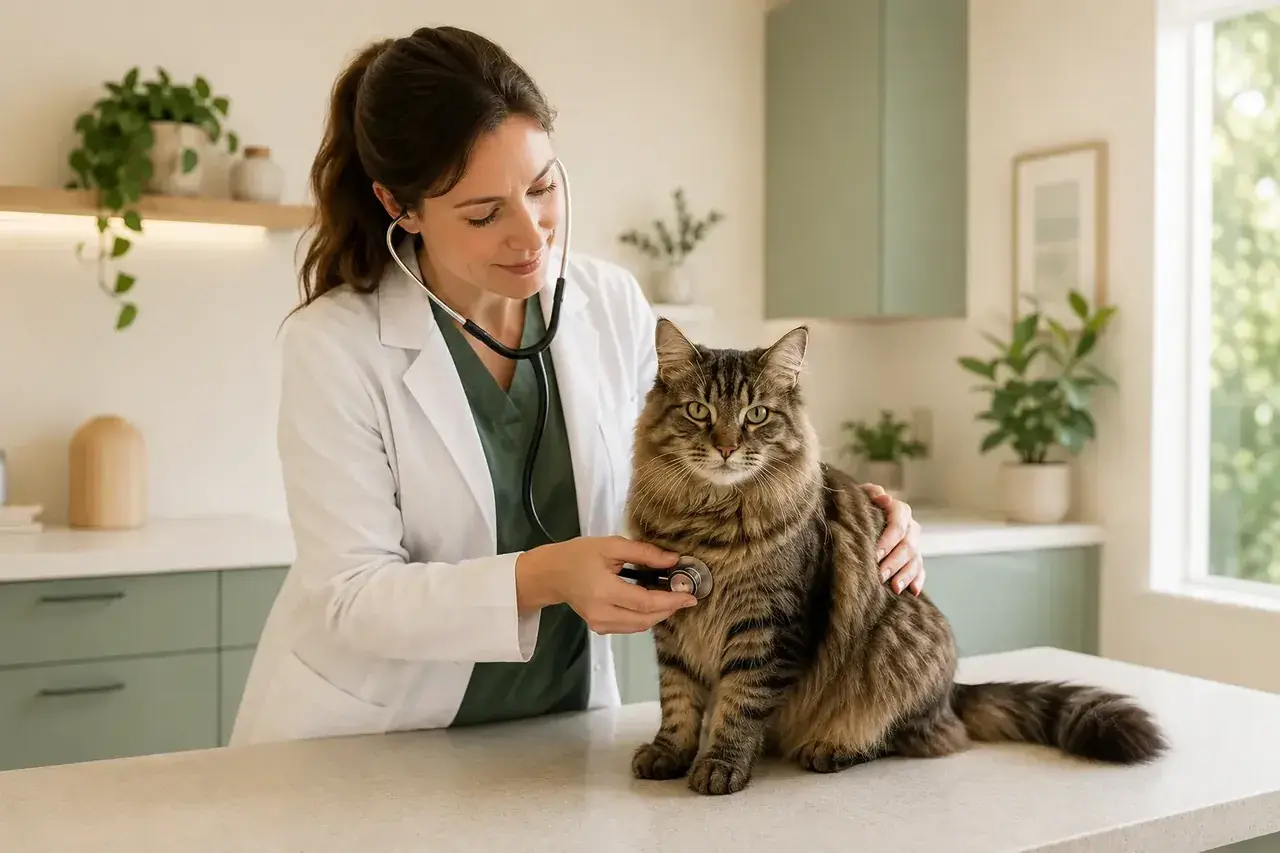 Topic illustration selected for this guide. Some learning images may be AI-assisted.
Antifreeze and cats: prevention and immediate action — the quick answer
✓ Store automotive fluids locked away, inspect vehicles for leaks and clean spills immediately while excluding pets.
✓ If exposure is possible, bring the product container and contact an emergency veterinarian without delay.
✓ Suspected antifreeze exposure is always an immediate emergency.
Ethylene glycol exposure can cause fatal kidney damage, and early signs may be easy to miss. This guide explains how to reduce the risk, prepare the household, respond safely and recognize when the cat needs urgent professional care.
Why this deserves a plan
Antifreeze containing ethylene glycol can cause life-threatening poisoning and kidney injury, while early signs may be subtle or delayed. Even a small spill on a floor or paw can lead to ingestion during grooming.
Make the safe choice the easy choice
Keep coolant in its original sealed container inside locked storage, inspect vehicles for leaks and exclude cats from garages and work areas. Clean any spill immediately according to the product instructions.
A practical step-by-step routine
If exposure may have occurred, move the cat away from the area, prevent further grooming when this can be done safely and call an emergency veterinarian immediately. Take the product container or photograph the full label.
What not to do
Do not wait for obvious illness, offer food or a home remedy, induce vomiting or allow a cat to walk through a spill. Do not assume every coolant has the same ingredients; identify the actual product.
Know the urgent threshold
Possible antifreeze exposure is an immediate emergency even when the cat appears normal. Tell the clinic when the exposure could have happened, how contact occurred and whether any product is missing.
Keep products identifiable
Leave medicines, chemicals and plant-care products in original labeled packaging. Photograph labels before travel and do not decant substances into food or drink containers. In a possible poisoning, the exact ingredient and concentration can change professional advice. A vague description such as cleaner or flea product is much less useful than the complete label.
Why home remedies can make things worse
Inducing vomiting, offering milk, applying oil or using human medication may delay treatment or cause additional injury. Some substances damage the throat again when vomited; some cats cannot safely vomit at all. Call a veterinarian or qualified poison service for instructions tailored to the substance, amount, timing and individual cat.
Common mistake: waiting for visible symptoms
Some injuries and toxins cause delayed signs. Early professional advice may allow safer, more effective action than waiting. If exposure is plausible, call and let a qualified professional decide the urgency. The absence of vomiting, crying or collapse does not prove that the cat is unharmed.
DEEPER GUIDE1 more detailed sectionsOpen +
The bottom line
The central risk is simple: ethylene glycol exposure can cause fatal kidney damage, and early signs may be easy to miss. The practical response is to if exposure is possible, bring the product container and contact an emergency veterinarian without delay. Build layers that still work when people are rushed and cats are frightened. When exposure or injury may have occurred, seek professional advice early instead of waiting for certainty.
Your quick checklist
Your progress is saved on this device.
Three simple things you can do
You do not have to change everything today. Pick one step that feels realistic, try it and see how your cat responds.
- 1Observe your cat’s individual baseline.
- 2Make one gentle change at a time.
- 3Ask a qualified professional when health or safety is involved.
Common mistakes
×Waiting for a dramatic symptom instead of noticing smaller changes from the cat’s normal routine.
×Changing several things at once, making it difficult to learn what actually helped.
×Treating general guidance as a substitute for advice from a veterinarian who knows the individual cat.
Questions cat people ask
Does every cat follow the same rule?+
No. Age, health, history, temperament and environment all change what works for an individual.
When should I seek professional help?+
Seek veterinary advice for sudden, persistent or concerning changes and urgent help for breathing difficulty, collapse, seizures, poisoning or urinary obstruction signs.
Still looking for the right answer?
Search the full EverYes Cats encyclopedia with your own words — a symptom, food, behaviour, breed or everyday question.
Checked, dated and transparent
- Prepared by
- EverYes Cats editorial team
- Last updated
- 24 September 2026
- Source checked
- 24 September 2026
- Primary reference
- ASPCA Animal Poison Control ↗
We begin with the named reference, rewrite the information in plain language and add practical cat-parent steps. Urgent health statements are checked against veterinary sources. This guide has not been individually reviewed by a veterinarian unless explicitly stated. It provides education, not diagnosis or treatment.
How we choose and use sources →
Spotted something unclear or outdated? Tell us so we can review it.
Your answer helps us improve the cat encyclopedia.
Concentrated oils can be inhaled, swallowed or absorbed through skin and may be unsafe for cats.