Why some dog flea treatments are dangerous to cats
Concentrated permethrin in some dog flea products can cause life-threatening poisoning in cats through direct application, a spill or close contact with a recently treated dog.
 Topic illustration selected for this guide. Some learning images may be AI-assisted.
Why some dog flea treatments are dangerous to cats — the quick answer
✓ Use only products specifically prescribed or labeled for the individual cat and separate treated dogs as directed.
✓ Check the species, weight range and active ingredient every time before application.
✓ Twitching, tremors, seizures, drooling or exposure to a dog-only product is an emergency.
Products containing concentrated permethrin intended for dogs can cause severe poisoning in cats. This guide explains how to reduce the risk, prepare the household, respond safely and recognize when the cat needs urgent professional care.
Treat possible permethrin exposure as an emergency
Dog flea products containing concentrated permethrin can be life-threatening to cats. Separate the source, prevent grooming and call for professional help immediately.
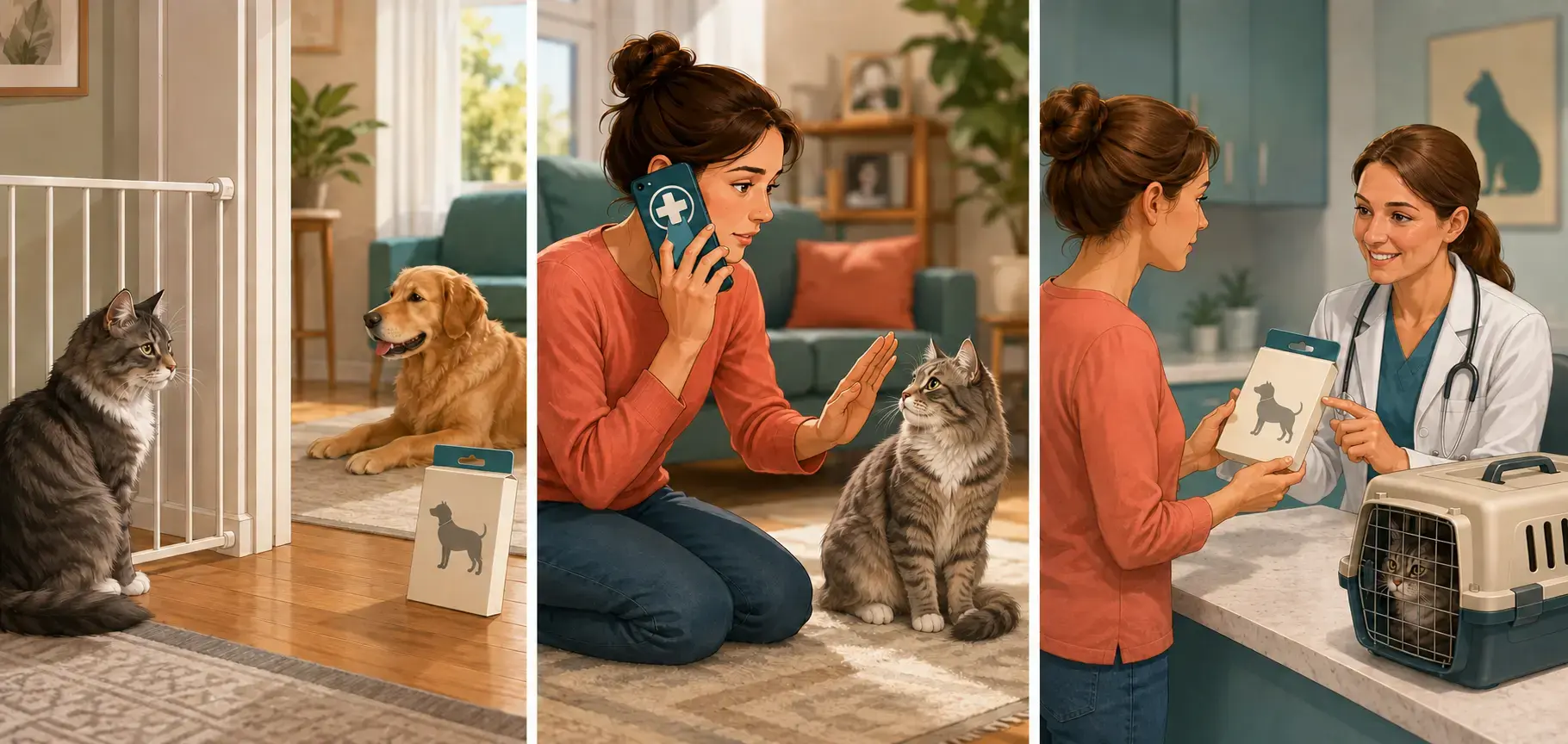
- 1Separate the cat from the source
Move the cat away from the product and any recently treated dog without allowing further skin contact, licking or shared bedding.
- 2Call before symptoms appear
Prevent grooming and phone an emergency veterinarian or animal poison service immediately; do not wait for twitching or tremors.
- 3Bring the exact package
Take the product container or a clear photograph so the veterinary team can identify the active ingredient and concentration quickly.
Why this deserves a plan
Some flea and tick products made for dogs contain concentrations of permethrin that can severely poison cats. Exposure may occur through a mistaken application, a spill or close contact with a recently treated dog.
Make the safe choice the easy choice
Store dog and cat parasite products separately in their original boxes. Before every dose, confirm the species, individual pet, weight range, active ingredient and directions rather than relying on package colour or memory.
A practical step-by-step routine
Apply only a product labelled or prescribed for that individual cat. If a dog is treated in a mixed-pet home, follow the label and veterinary advice on separating pets and preventing the cat from grooming or contacting the application site.
What not to do
Never split a dog product, estimate a cat dose or use a treatment simply because it worked for another animal. After possible exposure, do not apply solvents or home remedies or delay calling while waiting for tremors.
Know the urgent threshold
Direct application, a spill on the coat or contact with a dog-only permethrin product needs immediate veterinary or poison-service advice. Twitching, tremors, wobbliness, drooling or seizures is an emergency; keep the package available.
See the room from cat height
Check where dog and cat products are stored, where doses are applied and whether cats share beds or groom treated dogs. A cat can be exposed by direct application, a spill or contact with a recently treated dog, not only by chewing the package.
Use layers, not one perfect barrier
Store dog and cat treatments separately in original packaging, read species and active ingredients aloud before use, and keep cats away from treated dogs for the period directed by the product or veterinarian. One household member should confirm every dose before application.
Keep products identifiable
Keep the box, applicator and leaflet because the active ingredient, concentration, dog weight range and application time guide emergency advice. Do not decant flea products or discard the package immediately after treatment.
DEEPER GUIDE2 more detailed sectionsOpen +
Common mistake: waiting for visible symptoms
Permethrin exposure is urgent even before signs appear. Tremors, twitching and seizures may develop after a delay, and earlier decontamination or treatment may be safer. Call an emergency veterinarian or animal poison service immediately with the package available.
The bottom line
The central risk is simple: products containing concentrated permethrin intended for dogs can cause severe poisoning in cats. The practical response is to check the species, weight range and active ingredient every time before application. Build layers that still work when people are rushed and cats are frightened. When exposure or injury may have occurred, seek professional advice early instead of waiting for certainty.
Your quick checklist
Your progress is saved on this device.
Three simple things you can do
You do not have to change everything today. Pick one step that feels realistic, try it and see how your cat responds.
- 1Separate the cat from the product and any recently treated dog.
- 2Prevent grooming and call an emergency veterinarian or poison service immediately.
- 3Bring the package so the active ingredient and concentration can be identified.
Common mistakes
×Applying a dog flea product to a cat.
×Waiting for tremors before calling.
×Trying to induce vomiting or improvise treatment at home.
Questions cat people ask
Why is permethrin dangerous to cats?+
Cats cannot process concentrated permethrin safely. Exposure can overstimulate the nervous system and cause twitching, tremors, seizures and death.
Can a cat be poisoned by touching a treated dog?+
Yes. Close grooming or contact with a recently treated dog can transfer product. Follow separation instructions exactly and call immediately if exposure is possible.
Still looking for the right answer?
Search the full EverYes Cats encyclopedia with your own words — a symptom, food, behaviour, breed or everyday question.
Checked, dated and transparent
- Prepared by
- EverYes Cats editorial team
- Last updated
- 24 September 2026
- Source checked
- 24 September 2026
- Primary reference
- ASPCA Animal Poison Control ↗
We begin with the named reference, rewrite the information in plain language and add practical cat-parent steps. Urgent health statements are checked against veterinary sources. This guide has not been individually reviewed by a veterinarian unless explicitly stated. It provides education, not diagnosis or treatment.
How we choose and use sources →
Spotted something unclear or outdated? Tell us so we can review it.
Your answer helps us improve the cat encyclopedia.
Ethylene glycol exposure can cause fatal kidney damage, and early signs may be easy to miss.