Teach a cat that the vacuum predicts safety
Vacuum training works by pairing a distant, low-intensity version of the sound with choice and reward. The cat should always have an escape route and a quiet alternative room.
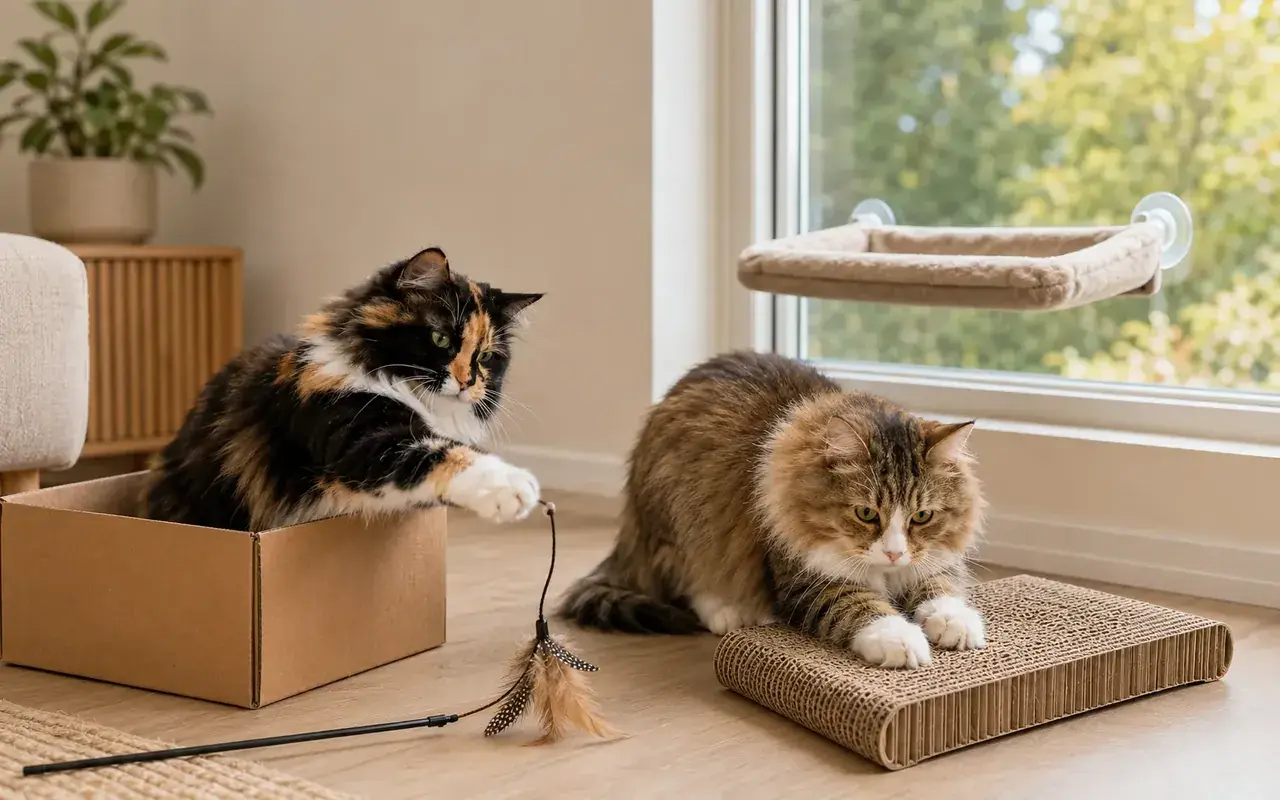 Topic illustration selected for this guide. Some learning images may be AI-assisted.
Teach a cat that the vacuum predicts safety — the quick answer
✓ Give access to a vacuum-free room
✓ Train at the cat's safe distance
✓ Pair tiny steps with valued rewards
✓ Never chase a cat with the machine
The vacuum combines noise, movement and unpredictable approach. Training should begin with distance and choice, not with switching it on beside the cat.
Separate the vacuum into small, predictable experiences
Sound, movement and distance should change one at a time. The cat always needs a clear route to a vacuum-free room.
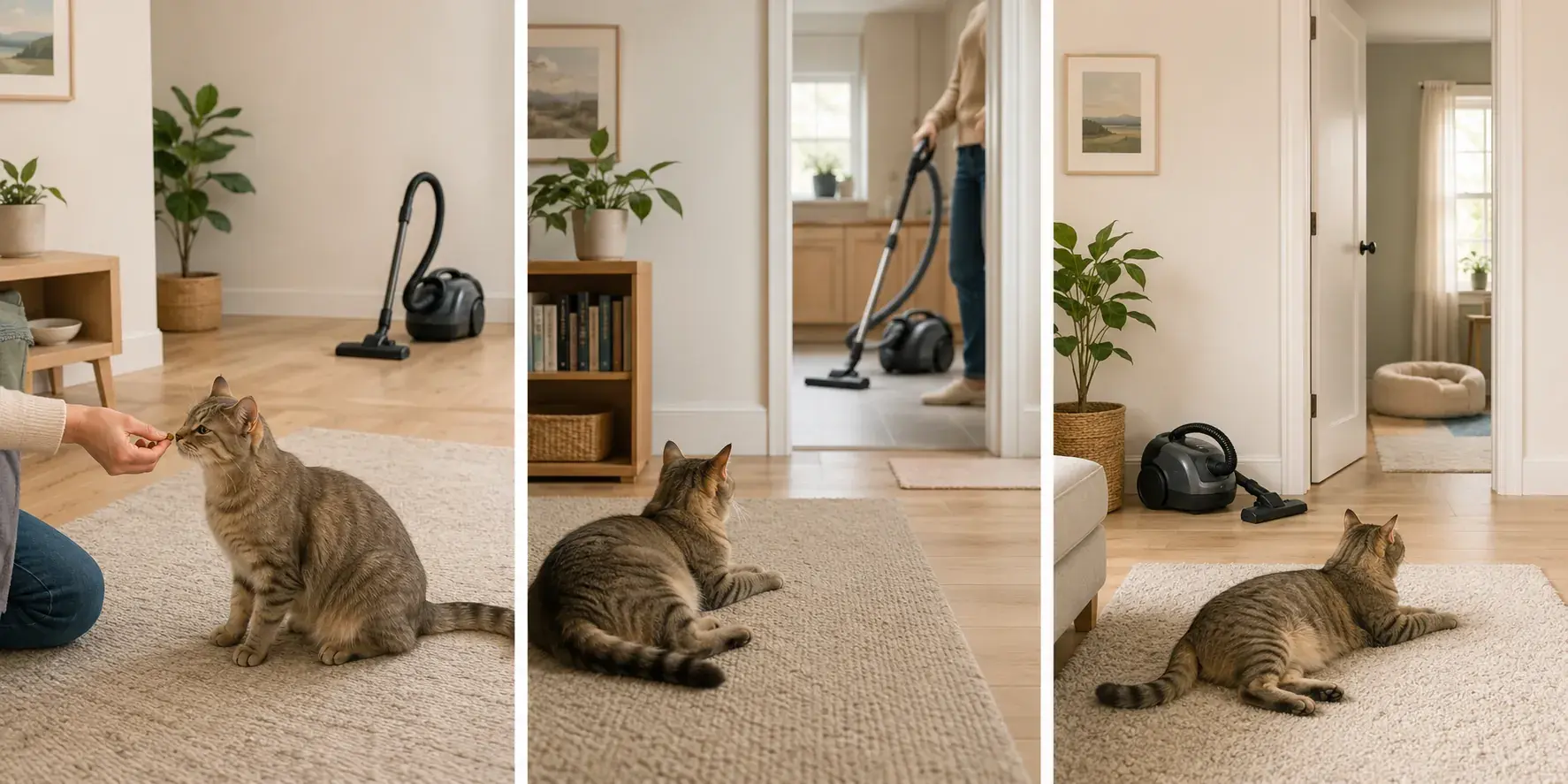
- 1Begin with the silent machine
Leave the unplugged vacuum stationary at a comfortable distance and reward calm looking or investigation without moving it closer.
- 2Add sound from far away
Run the vacuum briefly in another room while the cat remains able to eat, play or retreat; stop before fear escalates.
- 3Add a little movement later
In a later session, move the silent vacuum a short distance and reward calm choice while keeping the quiet escape room open.
Start with the silent object
Leave the unplugged vacuum stationary at a distance. Reward calm looking, then put it away. If the cat will not eat or play, increase distance.
Separate sound from movement
With the cat safely far away, run the vacuum briefly in another room while offering something enjoyable. Stop before fear escalates.
Add movement in tiny steps
Move the silent machine slightly, then later combine low-duration sound and movement at a large distance. Progress over days or weeks.
Preserve an opt-out
Always leave a clear route to a closed quiet room with resources. Training success means reduced fear, not forcing the cat to remain nearby.
Begin before the motor starts
Leave the switched-off vacuum at a distance and reward calm investigation without moving it toward the cat. On another day, move it briefly while silent. Introduce the sound from behind a closed door or far away for only a second, then offer food or play if the cat remains able to engage. Increase one element at a time.
Clean around the cat's limits
Never chase the cat, block hiding places or carry the vacuum toward a retreat. For necessary cleaning, place the cat voluntarily in a prepared quiet room with food, water, litter and hiding, then reopen access after the machine stops. If noise fear is severe or generalises to ordinary sounds, seek veterinary and qualified behaviour guidance.
Your quick checklist
Your progress is saved on this device.
Three simple things you can do
You do not have to change everything today. Pick one step that feels realistic, try it and see how your cat responds.
- 1Begin with the vacuum switched off at a distance and reward calm choice.
- 2Separate movement, sound and reduced distance into tiny steps over different sessions.
- 3Always preserve a quiet escape room where the vacuum never follows.
Common mistakes
×Chasing the cat with the vacuum as a joke.
×Switching it on beside a sleeping or trapped cat.
×Using food so close that fear prevents comfortable eating.
Questions cat people ask
Can cats get used to a vacuum cleaner?+
Many can become less fearful through gradual exposure and choice, though they do not need to enjoy it. Progress at the cat's pace.
Should I hold my cat while vacuuming?+
No. Restraint removes escape and can intensify fear. Give distance, a safe room and predictable cleaning routines.
Still looking for the right answer?
Search the full EverYes Cats encyclopedia with your own words — a symptom, food, behaviour, breed or everyday question.
Checked, dated and transparent
- Prepared by
- EverYes Cats editorial team
- Last updated
- 4 September 2026
- Source checked
- 4 September 2026
- Primary reference
- FelineVMA Positive Reinforcement Training ↗
We begin with the named reference, rewrite the information in plain language and add practical cat-parent steps. Urgent health statements are checked against veterinary sources. This guide has not been individually reviewed by a veterinarian unless explicitly stated. It provides education, not diagnosis or treatment.
How we choose and use sources →
Spotted something unclear or outdated? Tell us so we can review it.
Your answer helps us improve the cat encyclopedia.
Furniture scratching improves when the legal alternative matches the cat's preferred material, angle, height and location. Scratching is normal communication and body care, not spite.