How to weigh your cat at home accurately
Consistent home weighing can reveal gradual change before it is visible. Use the same scale, similar timing and a written trend rather than reacting to one measurement.
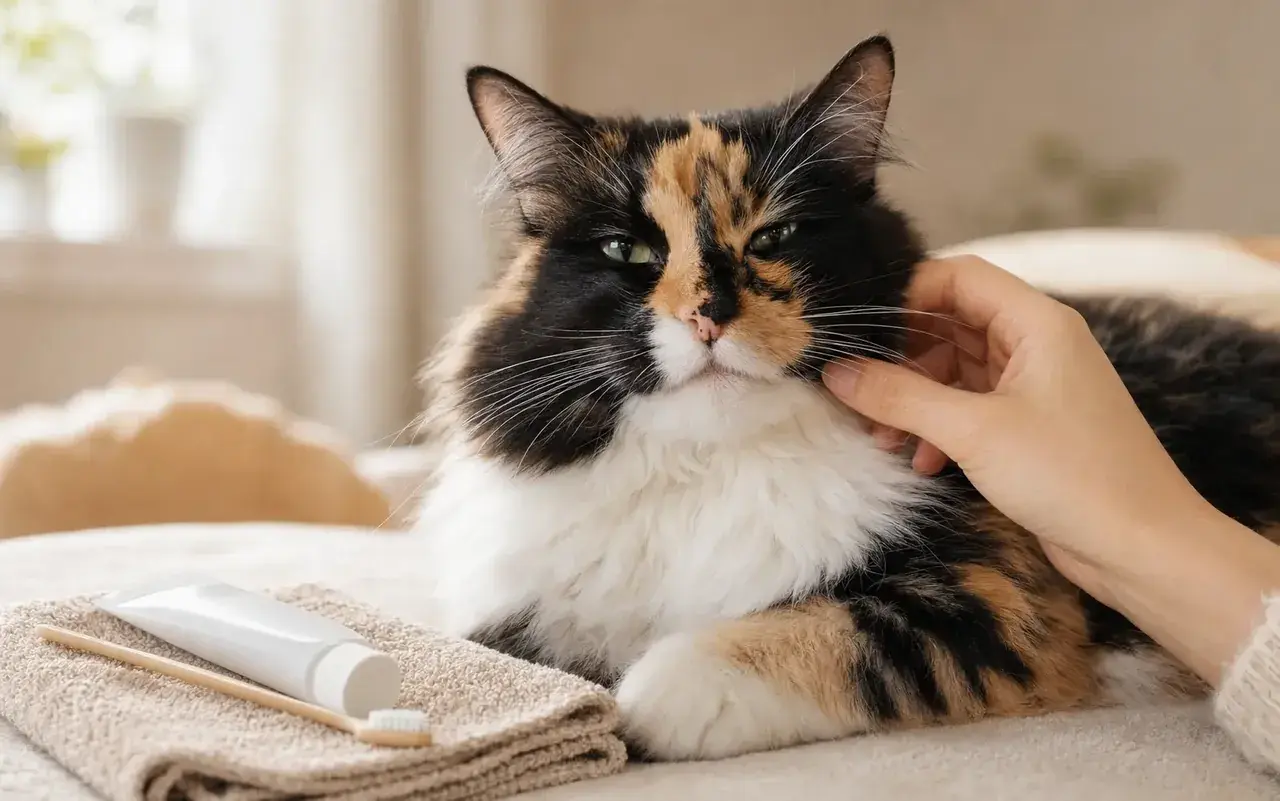 Topic illustration selected for this guide. Some learning images may be AI-assisted.
How to weigh your cat at home accurately — the quick answer
✓ Use the same scale and conditions
✓ Trend matters more than one reading
✓ Record weight with appetite and body condition
✓ Unplanned change deserves veterinary advice
Small gradual losses or gains can be hard to see under fur. Consistent home weights add context to appetite and body condition, but they do not replace examination.
Choose a method
Use a pet or baby scale for the clearest small changes. Alternatively weigh yourself holding the cat and subtract your weight, recognising that household scales are less precise.
Standardise the moment
Weigh at a similar time, on the same surface and preferably before a meal. Reward calm standing or sitting; never restrain a panicked cat.
Create a readable trend
Record date, weight, appetite and notable health changes. Weekly or monthly frequency depends on age, health and the veterinary plan.
Act on direction
Contact the veterinarian for unexplained loss or gain, especially with appetite, thirst, vomiting, stool, breathing or activity changes. Do not crash-diet a cat.
Choose a repeatable method
Use a pet or baby scale for the clearest result, placing a non-slip towel on top and zeroing it first. Alternatively, weigh yourself holding the cat and subtract your own weight, recognising that this is less precise. Measure at a similar time of day and never force a frightened cat to remain on a high surface.
Interpret weight with the whole cat
Record appetite, measured food, thirst, stool, vomiting, activity and body condition alongside the number. Thick fur or abdominal fat can hide muscle loss over the spine and hindquarters. Contact a veterinarian about unplanned loss, continued gain or meaningful change, especially with increased thirst, weakness, poor appetite or digestive signs.
Your quick checklist
Your progress is saved on this device.
Three simple things you can do
You do not have to change everything today. Pick one step that feels realistic, try it and see how your cat responds.
- 1Use the same accurate scale and similar timing for each measurement.
- 2Record weight alongside appetite, body condition and muscle condition.
- 3Contact a veterinarian for an unexplained trend rather than waiting for a dramatic change.
Common mistakes
×Comparing readings from different unreliable scales.
×Focusing on weight alone while muscle is being lost.
×Crash-dieting an overweight cat.
Questions cat people ask
How often should I weigh my cat?+
Monthly checks suit many stable adults, while kittens, seniors and cats on treatment may need a veterinarian-directed schedule.
How much weight loss is concerning?+
Any unexplained downward trend matters, especially with appetite, thirst or behaviour changes. Percentage and speed should be assessed against the individual baseline.
Still looking for the right answer?
Search the full EverYes Cats encyclopedia with your own words — a symptom, food, behaviour, breed or everyday question.
Checked, dated and transparent
- Prepared by
- EverYes Cats editorial team
- Last updated
- 4 September 2026
- Source checked
- 4 September 2026
- Primary reference
- WSAVA Nutrition Toolkit ↗
We begin with the named reference, rewrite the information in plain language and add practical cat-parent steps. Urgent health statements are checked against veterinary sources. This guide has not been individually reviewed by a veterinarian unless explicitly stated. It provides education, not diagnosis or treatment.
How we choose and use sources →
Spotted something unclear or outdated? Tell us so we can review it.
Your answer helps us improve the cat encyclopedia.
Indoor cats can get fleas through other animals, people, shared buildings or dormant stages in the home. Itching is not always present, so diagnosis should be evidence-based.