A litter-box cleaning routine cats actually appreciate
Cats usually prefer a litter tray that is scooped often, smells familiar and is cleaned without strong perfume. A predictable routine also makes health changes easier to notice.
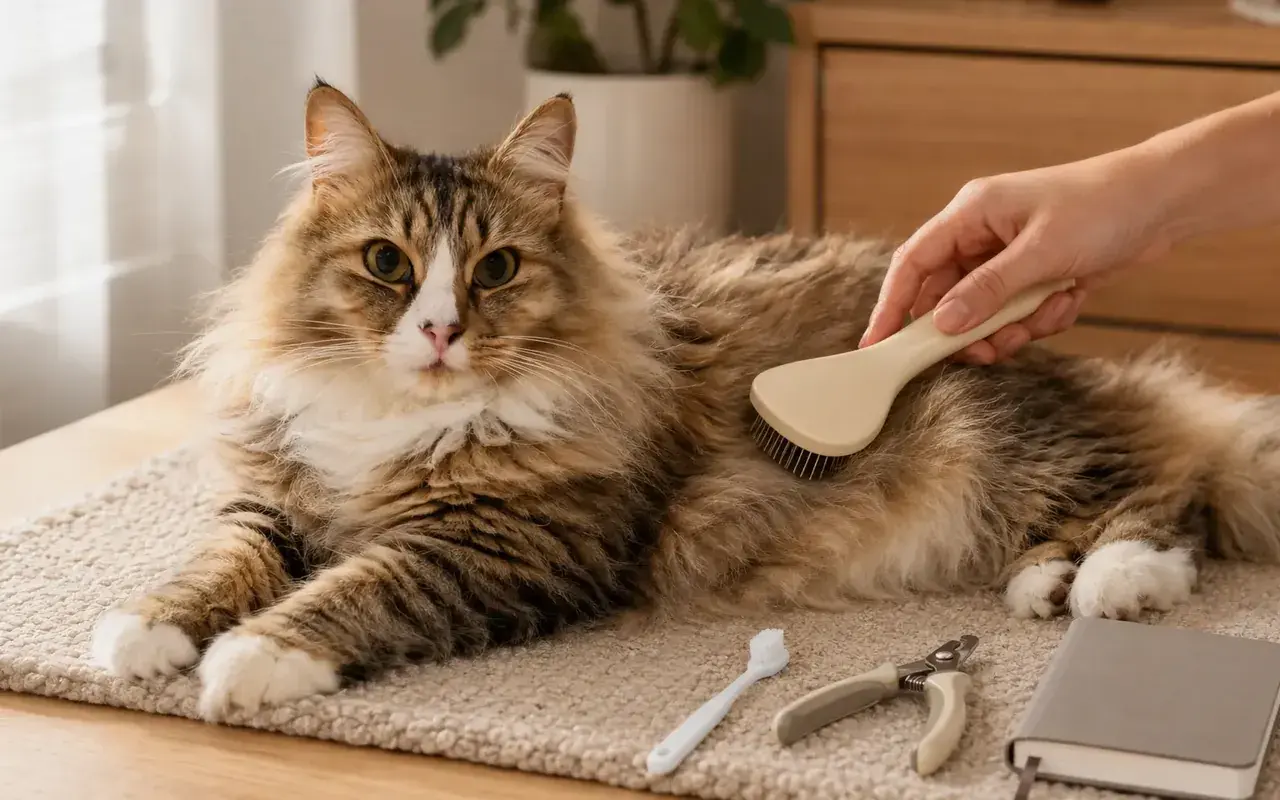 Topic illustration selected for this guide. Some learning images may be AI-assisted.
A litter-box cleaning routine cats actually appreciate — the quick answer
✓ Scoop at least daily
✓ Offer enough boxes in separate locations
✓ Avoid strong fragrance and harsh residue
✓ A sudden toilet change needs a health check
Cats need clean, accessible toileting areas. Strong fragrance may please people while making the box less acceptable to a scent-sensitive cat.
Scoop and observe
Remove urine and stool at least daily and note changes in clump size, stool or frequency. Cleaning is also a simple health-monitoring opportunity.
Wash gently
Empty and wash the tray regularly using mild unscented products, rinse thoroughly and dry before adding litter the cat already accepts.
Replace thoughtfully
Scratched plastic can retain odour. Replace damaged boxes, but keep size, entry and placement familiar when the cat is using them reliably.
Treat avoidance as information
Do not punish accidents. Pain, urinary disease, constipation, box conflict and environmental stress can all cause changes; contact a veterinarian for a new pattern.
Separate daily care from full cleaning
Remove urine clumps and stool at least daily and top up with the same familiar litter. Record unusual volume, colour or frequency. For a full clean, use warm water and a mild unscented cat-safe product, rinse thoroughly and dry before refilling. Avoid ammonia, concentrated fragrance and mixing household chemicals.
Protect choice while making changes
Keep enough trays in separate accessible locations and clean them at staggered times so one familiar option remains. Change litter type, tray style or location gradually rather than all at once. Straining, repeated small urinations, blood, crying or inability to pass urine is a medical problem, not a cleaning preference, and needs urgent veterinary attention.
Your quick checklist
Your progress is saved on this device.
Three simple things you can do
You do not have to change everything today. Pick one step that feels realistic, try it and see how your cat responds.
- 1Scoop at least daily and top up with the litter depth the cat accepts.
- 2Wash the box periodically with mild unscented products and rinse well.
- 3Keep a spare box available while cleaning and replace damaged trays.
Common mistakes
×Using strong perfume or harsh residual cleaner.
×Waiting until every box is heavily soiled.
×Changing box, litter, location and cleaning product at the same time.
Questions cat people ask
How often should a litter box be scooped?+
At least daily is a useful baseline, with more frequent scooping for multiple cats or heavy use. Cleanliness also lets you notice health changes.
Should I use bleach in a litter box?+
A mild unscented cleaning method is usually easier to rinse completely. Never mix chemicals, and keep cats away until the tray is rinsed and dry.
Still looking for the right answer?
Search the full EverYes Cats encyclopedia with your own words — a symptom, food, behaviour, breed or everyday question.
Checked, dated and transparent
- Prepared by
- EverYes Cats editorial team
- Last updated
- 4 September 2026
- Source checked
- 4 September 2026
- Primary reference
- FelineVMA House-Soiling Guide ↗
We begin with the named reference, rewrite the information in plain language and add practical cat-parent steps. Urgent health statements are checked against veterinary sources. This guide has not been individually reviewed by a veterinarian unless explicitly stated. It provides education, not diagnosis or treatment.
How we choose and use sources →
Spotted something unclear or outdated? Tell us so we can review it.
Your answer helps us improve the cat encyclopedia.
Residue, saturated litter, trapped odor in scratched plastic or an unclean rim can remain after waste is removed. Learn what to check, what to change safely and when professional help matters.