Why do cats lick each other’s ears?
Calm ear and head grooming between familiar cats can be social, but repeated attention to one ear may point to irritation. Observe both cats and inspect for physical signs.
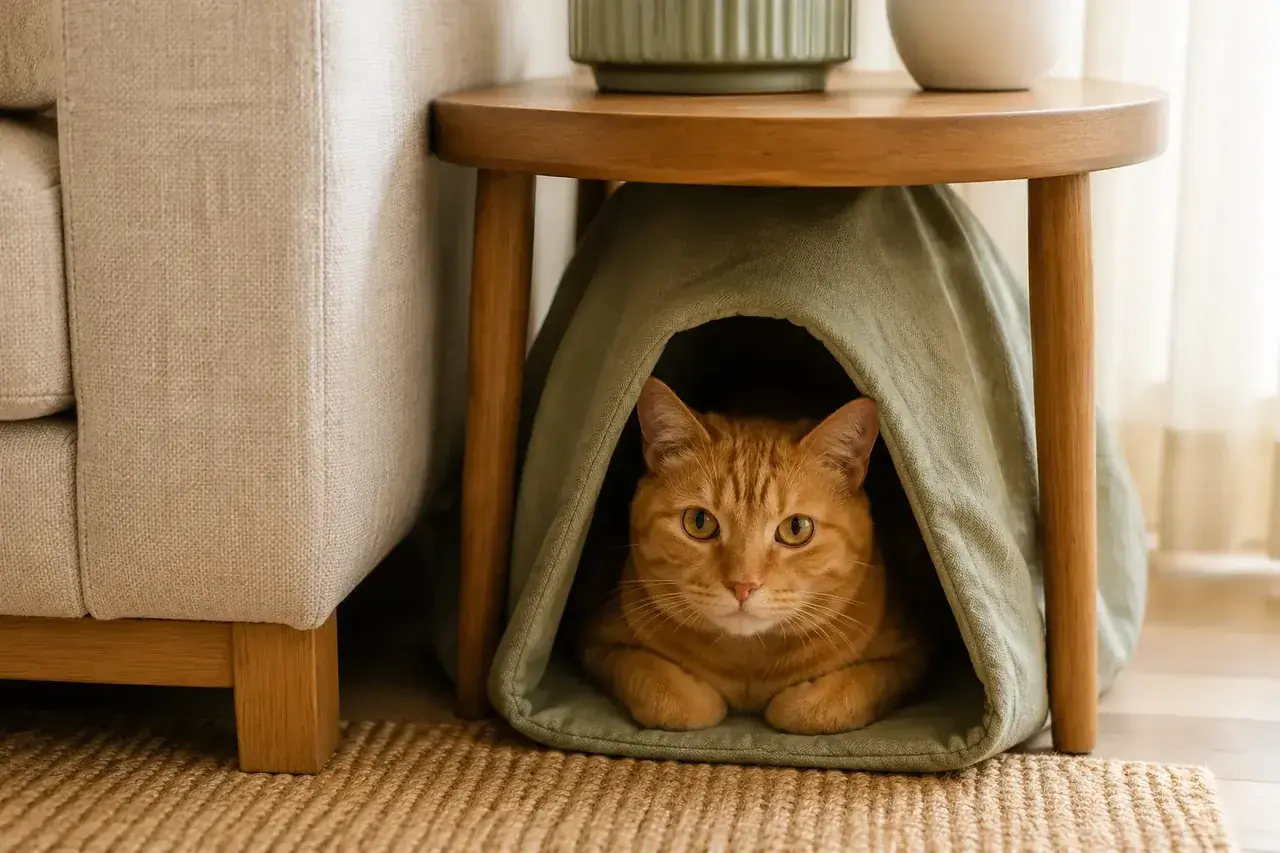 Topic illustration selected for this guide. Some learning images may be AI-assisted.
Why do cats lick each other’s ears — the quick answer
✓ Calm mutual grooming often occurs between familiar partners, but repeated focus on one ear can also signal irritation.
✓ Observe whether both cats remain relaxed and check for scratching, odour, redness or discharge.
✓ Pain, discharge, head shaking, bald skin or one cat restraining the other needs investigation.
Cats living together may groom areas that are difficult for the other cat to reach.
The short answer
Cats living together may groom areas that are difficult for the other cat to reach.
Why it may happen
Calm mutual grooming often occurs between familiar partners, but repeated focus on one ear can also signal irritation.
Read the whole situation
Look at whether the recipient leans in, stays loose and can walk away. A cat that pins the other down, repeatedly targets one ear or follows after the other tries to leave is showing a different interaction from a brief voluntary grooming session.
What to do now
Observe whether both cats remain relaxed and check for scratching, odour, redness or discharge.
What not to do
Do not hold one cat still for the other to groom, and do not put cotton buds or leftover ear drops into an ear that seems irritated. Give both cats separate resting places and interrupt unwanted attention by inviting the grooming cat away without punishment.
When to contact a veterinarian
Pain, discharge, head shaking, bald skin or one cat restraining the other needs investigation.
Keep a useful record
If one ear attracts repeated attention, note which cat initiates, which ear is targeted and whether you see scratching, head shaking, odour or discharge. A short video of the voluntary interaction and a photo of the outer ear can help the veterinary team.
Read the whole interaction
Mutual grooming is usually loose and voluntary, with either cat able to leave. Note whether grooming is one-sided, forceful or always focused on the same ear. Do not restrain the cats to continue an interaction one is trying to end.
DEEPER GUIDE1 more detailed sectionsOpen +
Check the ear without home treatment
Look for scratching, head shaking, odour, redness, discharge, swelling or hair loss. Do not insert cotton buds, oils or leftover medication. Pain, discharge, balance change or persistent one-ear focus needs veterinary assessment.
Your quick checklist
Your progress is saved on this device.
Three simple things you can do
You do not have to change everything today. Pick one step that feels realistic, try it and see how your cat responds.
- 1Observe whether both cats remain relaxed and can leave.
- 2Check the ears for redness, odour, discharge or excessive moisture.
- 3Interrupt gently when grooming becomes one-sided or causes soreness.
Common mistakes
×Assuming all mutual grooming proves friendship.
×Letting one cat pin the other.
×Using social licking to clean an infected ear.
Questions cat people ask
Why do cats lick each other's ears?+
Mutual grooming can maintain social bonds and reach difficult areas, though it can also release tension or become controlling in some relationships.
When is ear licking a problem?+
Repeated focused licking may be attracted by discharge or irritation. Redness, odour, pain, head shaking or hair loss warrants a veterinary check.
Still looking for the right answer?
Search the full EverYes Cats encyclopedia with your own words — a symptom, food, behaviour, breed or everyday question.
Checked, dated and transparent
- Prepared by
- EverYes Cats editorial team
- Last updated
- 19 September 2026
- Source checked
- 19 September 2026
- Primary reference
- International Cat Care ↗
We begin with the named reference, rewrite the information in plain language and add practical cat-parent steps. Urgent health statements are checked against veterinary sources. This guide has not been individually reviewed by a veterinarian unless explicitly stated. It provides education, not diagnosis or treatment.
How we choose and use sources →
Spotted something unclear or outdated? Tell us so we can review it.
Your answer helps us improve the cat encyclopedia.
The ears may track your voice behind the cat without showing fear; the rest of the body reveals whether the cat is relaxed. Read the full body, try a gentle response and know when the change matters.