Grooming an arthritic cat more comfortably
Groom an arthritic cat in short, supported sessions on a non-slip surface. Work only where the cat stays comfortable, and treat reduced grooming as possible health information rather than laziness.
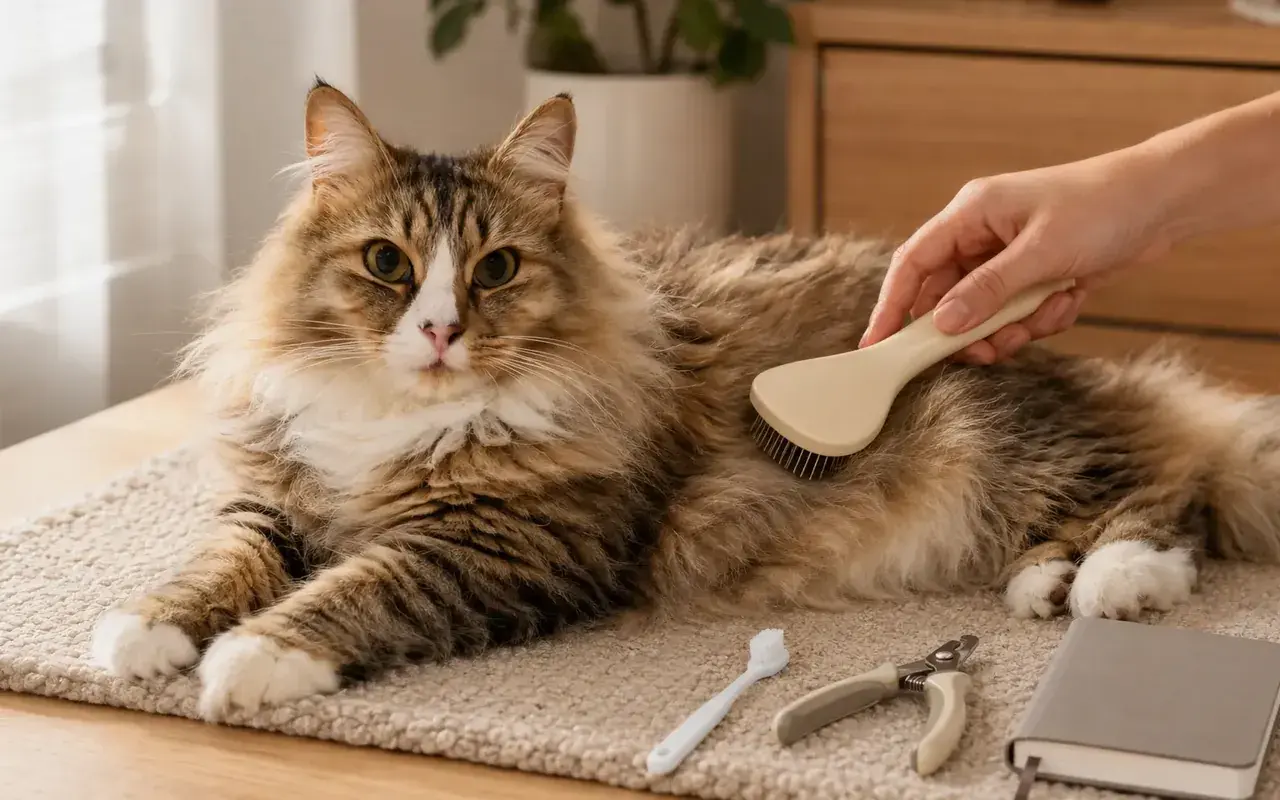 Topic illustration selected for this guide. Some learning images may be AI-assisted.
Grooming an arthritic cat more comfortably — the quick answer
✓ Use a warm non-slip surface, soft tools and a position the cat chooses.
✓ Groom one small area at a time, support limbs and add low, stable scratching options.
✓ New stiffness, missed grooming, overgrown claws or touch sensitivity needs veterinary assessment.
Arthritis can reduce twisting, scratching, jumping and tolerance of handling. This guide shows how to maintain coat and claws without painful joint positions or long restraint, what equipment helps, how to protect trust and when routine care should become professional care.
Groom an arthritic cat without forcing the position
Bring grooming to a comfortable non-slip place, work in tiny sections and let moving away end the session.
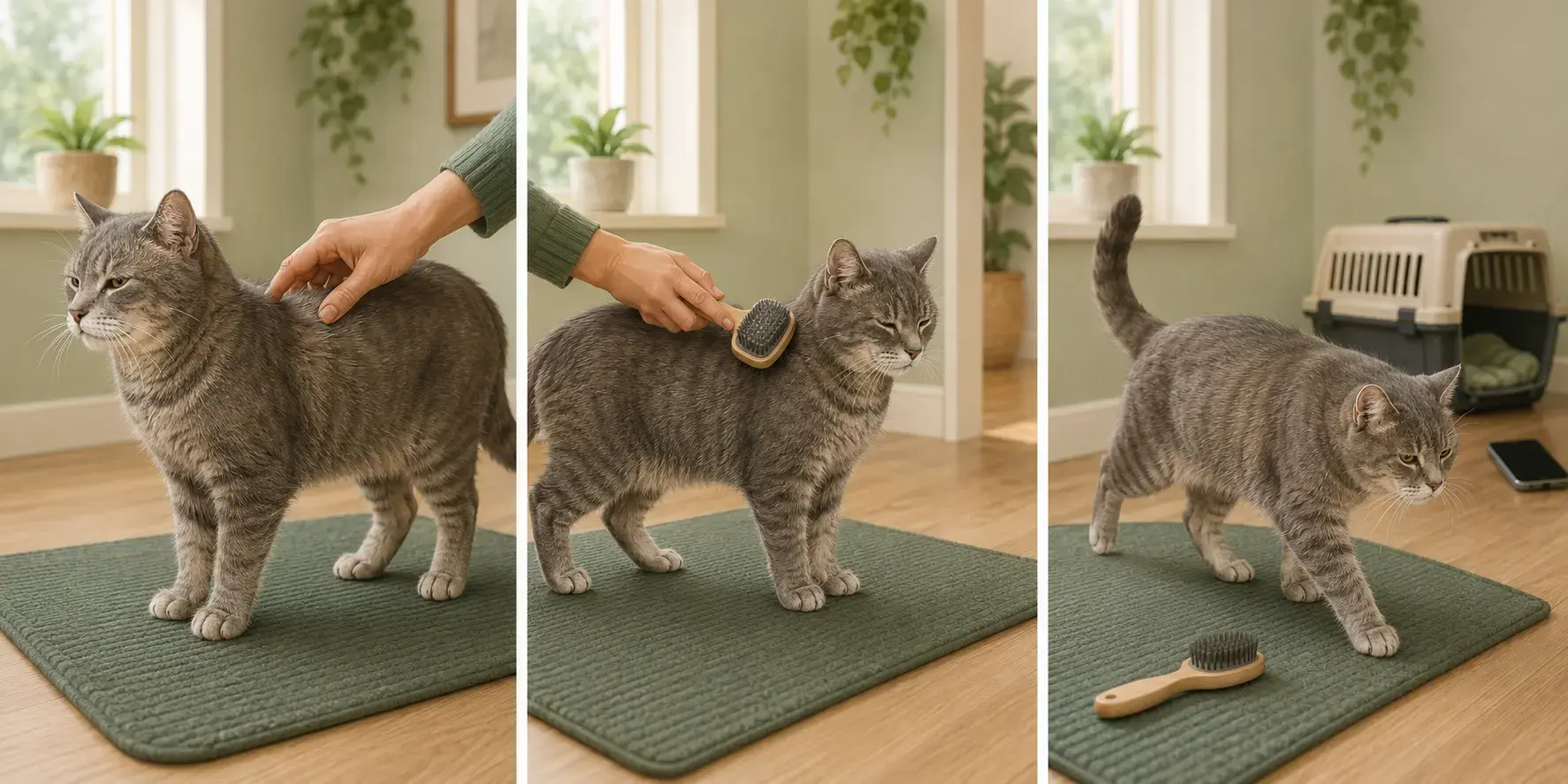
- 1Check comfort with fingertips
Let your cat stand or rest naturally while you feel one easy coat area without lifting or stretching a joint.
- 2Use one supported stroke
Brush in the direction of coat growth while the cat has stable footing and an open route away.
- 3Put the brush down early
Stop at bracing, turning or moving away, and ask for professional help with tight mats, pain or a new coat change.
The goal
Keep the coat comfortable without twisting sore joints or completing the whole cat in one session. An arthritic cat may struggle to reach the back and hindquarters; new mats or grease can be a sign that pain management and access need review.
Set up before the cat arrives
Use a warm non-slip surface, soft tools and a position the cat chooses. Put everything within reach so you never leave the cat unattended on a raised surface. Close unsafe exits but keep a clear route to a familiar bed or hiding place. Preparation shortens the task and prevents the frustrating search for equipment after the cat has already agreed to participate.
A step-by-step method
Bring the brush to a warm non-slip place the cat already chooses. Begin with one gentle stroke in an easy area, pause and let the cat move away. Divide the coat across days and ask the veterinary team how to handle tight mats or claw care if gentle home work is not possible.
Keep sessions shorter than you think
Many successful care sessions last between a few seconds and a few minutes. Stop after one claw, one tangle, one tooth surface or one small body area if that is what the cat can manage comfortably. Ending early creates a useful memory: the equipment appeared, something predictable happened and the cat retained control.
Read consent in real time
A cat may initially approach and then change their mind. Turning the head away, crouching, tail flicking, skin twitching, ears rotating back, gripping the surface or taking treats roughly are early requests for a pause. Growling, swatting or biting are late signals. Responding to the early signs makes late signals less necessary.
What to avoid
Do not stretch joints, lift by the front legs or interpret pain as bad behavior. Also avoid shouting, spraying water, scruffing and holding the cat in a position they cannot safely escape. These methods may finish today's task but make the next session harder. If essential care cannot be completed safely, professional assistance is a responsible plan rather than a failure.
Senior and painful cats
Reduced flexibility can change grooming, claw wear, toileting and tolerance. Use low surfaces, non-slip footing, warm rooms and positions the cat chooses. Do not label resistance as grumpiness until pain and illness have been considered. New stiffness, missed grooming, overgrown claws, accidents or a reluctance to be touched deserves veterinary assessment rather than simply firmer handling.
Know when home care should stop
Stop if the cat braces, flinches, growls or cannot move comfortably. New stiffness, mats close to the skin, overgrown claws or loss of grooming warrants a veterinary check. Do not cut a tight mat with scissors or stretch a painful limb to reach it.
DEEPER GUIDE2 more detailed sectionsOpen +
Modify the position before changing the brush
Bring supplies to the cat instead of lifting them onto a high table. Use a stable mat, keep painful joints in a natural position and begin with fingertips or one gentle stroke in an easy area. A soft brush, grooming mitt or wide-toothed comb may be better tolerated, but the cat's response matters more than the product label.
Prioritise comfort over finishing the coat
Divide the body across several days and stop at skin twitching, bracing, turning, growling or moving away. Do not pull or cut tight mats close to thin skin. New mats, dandruff, greasy coat, odour, weight change or reduced ability to reach the back and hindquarters deserves veterinary assessment and a pain-management review.
Your quick checklist
Your progress is saved on this device.
Three simple things you can do
You do not have to change everything today. Pick one step that feels realistic, try it and see how your cat responds.
- 1Set up a non-slip grooming place where the cat already rests.
- 2Use one gentle stroke in an easy area and pause for consent.
- 3Split coat care into several short sessions across the week.
Common mistakes
×Lifting painful joints into a convenient grooming position.
×Trying to finish the entire coat after the cat asks to stop.
×Cutting a tight mat close to thin cat skin with scissors.
Questions cat people ask
How do you groom a cat with arthritis?+
Bring grooming to a comfortable resting place, support a natural posture and use very short sessions with frequent pauses. Stop when the cat braces, turns, growls or moves away.
What grooming tool is best for an arthritic cat?+
A soft brush, grooming mitt or wide-toothed comb may suit different coats, but comfort and technique matter more than one universal tool. Ask a veterinarian or experienced cat groomer about tight mats.
Still looking for the right answer?
Search the full EverYes Cats encyclopedia with your own words — a symptom, food, behaviour, breed or everyday question.
Checked, dated and transparent
- Prepared by
- EverYes Cats editorial team
- Last updated
- 22 September 2026
- Source checked
- 22 September 2026
- Primary reference
- FelineVMA: Patient Support ↗
We begin with the named reference, rewrite the information in plain language and add practical cat-parent steps. Urgent health statements are checked against veterinary sources. This guide has not been individually reviewed by a veterinarian unless explicitly stated. It provides education, not diagnosis or treatment.
How we choose and use sources →
Spotted something unclear or outdated? Tell us so we can review it.
Your answer helps us improve the cat encyclopedia.
Keep the coat comfortable without disturbing an incision or recovery plan with a calm, practical routine.