Grooming a cat after surgery
Keep the coat comfortable without disturbing an incision or recovery plan with a calm, practical routine.
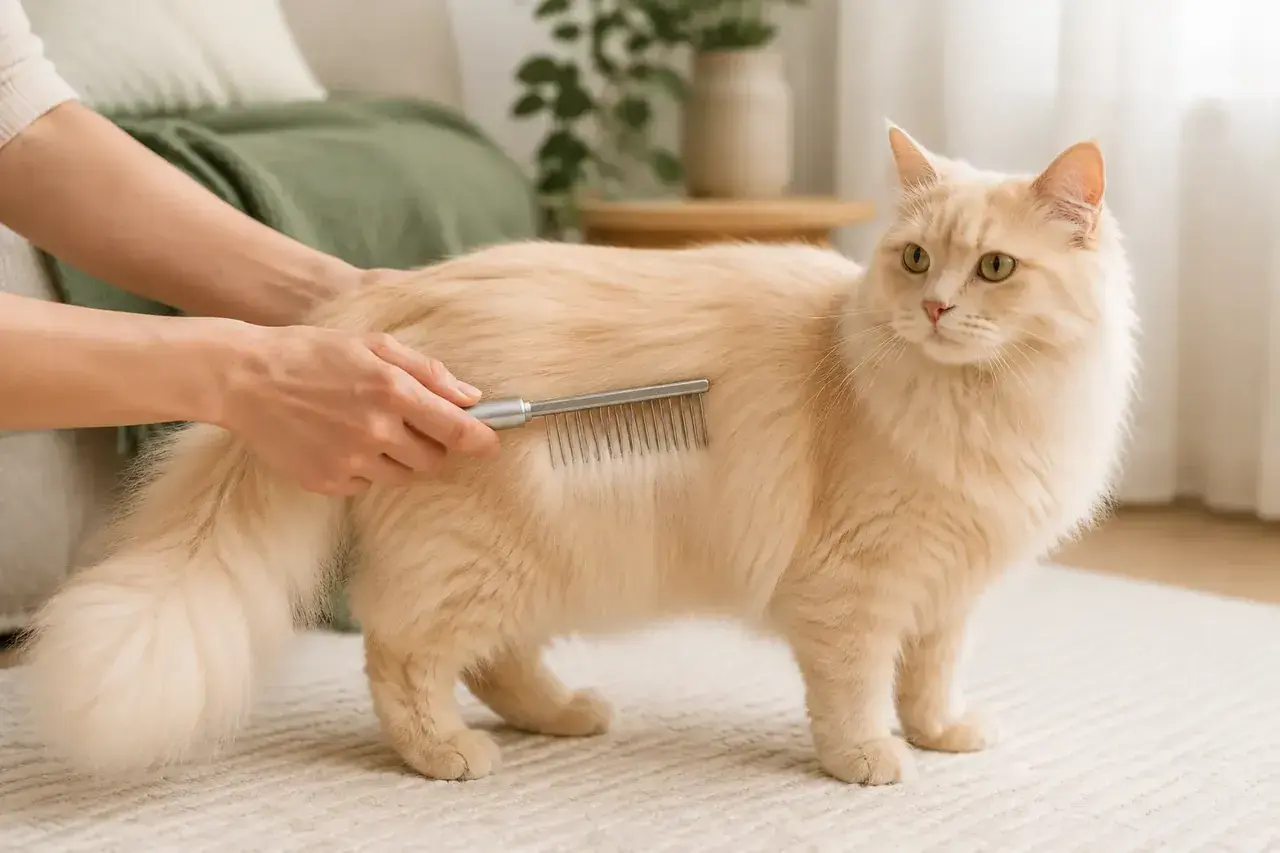 Topic illustration selected for this guide. Some learning images may be AI-assisted.
Grooming a cat after surgery — the quick answer
✓ Follow discharge instructions and identify areas that can be brushed without moving or stretching the wound.
✓ Use short gentle strokes away from the incision and keep cones or recovery suits exactly as directed.
✓ Call for swelling, opening, discharge, odor, bleeding, fever, poor appetite or increased pain.
Anesthetic residue, limited movement and protective clothing can alter normal grooming. This guide shows how to keep the coat comfortable without disturbing an incision or recovery plan, what equipment helps, how to protect trust and when routine care should become professional care.
The goal
Keep the cat comfortable while protecting the surgical site and following the discharge plan. Grooming is optional until the clinic confirms which areas may safely be touched; wound protection takes priority over a neat coat.
Set up before the cat arrives
Follow discharge instructions and identify areas that can be brushed without moving or stretching the wound. Put everything within reach so you never leave the cat unattended on a raised surface. Close unsafe exits but keep a clear route to a familiar bed or hiding place. Preparation shortens the task and prevents the frustrating search for equipment after the cat has already agreed to participate.
A step-by-step method
Read the clinic's instructions first. If grooming is allowed, use one short gentle stroke away from the incision on a stable surface and stop if the cat turns, tenses or tries to leave. Keep the recovery collar or suit in place as directed and prevent other pets from licking the wound.
Keep sessions shorter than you think
Many successful care sessions last between a few seconds and a few minutes. Stop after one claw, one tangle, one tooth surface or one small body area if that is what the cat can manage comfortably. Ending early creates a useful memory: the equipment appeared, something predictable happened and the cat retained control.
Read consent in real time
A cat may initially approach and then change their mind. Turning the head away, crouching, tail flicking, skin twitching, ears rotating back, gripping the surface or taking treats roughly are early requests for a pause. Growling, swatting or biting are late signals. Responding to the early signs makes late signals less necessary.
What to avoid
Do not clean, wet, apply products to or remove crust from an incision unless instructed. Also avoid shouting, spraying water, scruffing and holding the cat in a position they cannot safely escape. These methods may finish today's task but make the next session harder. If essential care cannot be completed safely, professional assistance is a responsible plan rather than a failure.
Know when home care should stop
Call the clinic for new swelling, wound opening, discharge, bad odour, bleeding, increased pain or poor appetite. Do not wet, clean, apply products to or remove crust from an incision without direct veterinary instruction. Breathing difficulty or collapse needs urgent care.
Prepare for professional help
Tell the clinic or groomer exactly what the cat tolerates, what triggers fear and whether pain may be present. Bring photographs, product names and your care note. Ask how to prepare the carrier and whether medication has been prescribed before the visit. Honest handling information lets professionals plan a lower-stress, safer appointment for everyone.
DEEPER GUIDE2 more detailed sectionsOpen +
If the cat refuses today
Refusal is information, not disobedience. Check whether the location, tool, smell, sound or body position changed. Consider pain, static, a hidden tangle, a sore mouth, a dirty tray or a previous frightening experience. Return to the last step the cat accepted, or simply end the session and offer a normal pleasant activity. For urgent care, phone the veterinary team rather than escalating restraint at home. For routine care, try again after a genuine break with an easier goal. Progress is not lost because one day went badly; trust is protected when the cat learns that clear discomfort makes handling stop.
The practical bottom line
To keep the coat comfortable without disturbing an incision or recovery plan, use preparation, short sessions and genuine choice. Use short gentle strokes away from the incision and keep cones or recovery suits exactly as directed. Do not clean, wet, apply products to or remove crust from an incision unless instructed. Keep the routine flexible enough to fit the individual cat. If comfort, skin, coat, claws, mouth, elimination, appetite or behavior changes, step away from the checklist and seek appropriate veterinary advice.
Your quick checklist
Your progress is saved on this device.
Three simple things you can do
You do not have to change everything today. Pick one step that feels realistic, try it and see how your cat responds.
- 1Observe your cat’s individual baseline.
- 2Make one gentle change at a time.
- 3Ask a qualified professional when health or safety is involved.
Common mistakes
×Waiting for a dramatic symptom instead of noticing smaller changes from the cat’s normal routine.
×Changing several things at once, making it difficult to learn what actually helped.
×Treating general guidance as a substitute for advice from a veterinarian who knows the individual cat.
Questions cat people ask
Does every cat follow the same rule?+
No. Age, health, history, temperament and environment all change what works for an individual.
When should I seek professional help?+
Seek veterinary advice for sudden, persistent or concerning changes and urgent help for breathing difficulty, collapse, seizures, poisoning or urinary obstruction signs.
Still looking for the right answer?
Search the full EverYes Cats encyclopedia with your own words — a symptom, food, behaviour, breed or everyday question.
Checked, dated and transparent
- Prepared by
- EverYes Cats editorial team
- Last updated
- 22 September 2026
- Source checked
- 22 September 2026
- Primary reference
- FelineVMA: Patient Support ↗
We begin with the named reference, rewrite the information in plain language and add practical cat-parent steps. Urgent health statements are checked against veterinary sources. This guide has not been individually reviewed by a veterinarian unless explicitly stated. It provides education, not diagnosis or treatment.
How we choose and use sources →
Spotted something unclear or outdated? Tell us so we can review it.
Your answer helps us improve the cat encyclopedia.
Create lifelong comfort with brushes, paws, ears and brief body checks with a calm, practical routine.