Helping a senior cat with grooming and mats
Mats in an older cat often reflect reduced flexibility, pain, dental disease, weight change or illness. Gentle coat help should accompany investigation of the cause.
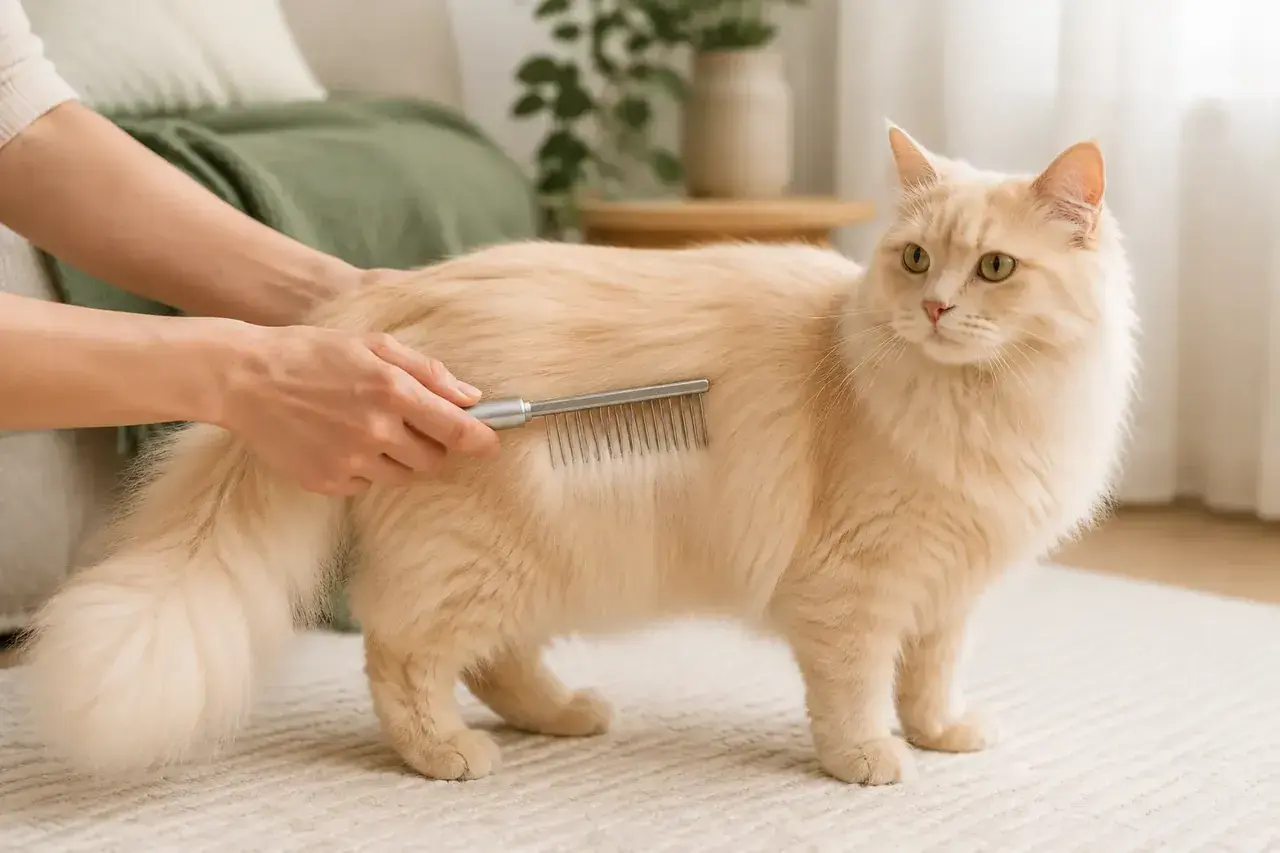 Topic illustration selected for this guide. Some learning images may be AI-assisted.
Helping a senior cat with grooming and mats — the quick answer
✓ New mats can signal pain or illness
✓ Never cut a mat with household scissors
✓ Use short comfortable grooming sessions
✓ Severe mats need professional removal
Mats often form because reaching, twisting or tolerating touch has become painful. Removing the knot helps the coat, but finding the reason protects the cat.
Check the pattern
Mats over the back, hips or hindquarters may follow reduced flexibility. Greasy coat, dandruff, weight change or poor grooming elsewhere also deserves a health check.
Prevent rather than pull
Use a soft tool the cat accepts for seconds at a time. Support the skin, work around sensitive areas and reward before the cat becomes tense.
Remove safely
Cat skin is thin and can be pulled inside a mat. Do not use scissors close to skin or bathe tight mats. Ask a veterinary team or experienced cat groomer for safe clipping.
Make self-care easier
Address pain with the veterinarian, add non-slip resting routes and maintain a healthy body condition. Senior grooming is often a health partnership, not a cosmetic task.
Work around comfort, not through pain
Choose a warm non-slip surface and begin with fingertips or a soft suitable comb in an easy area. Divide grooming across days and stop at bracing, skin twitching, tail movement or turning away. Never pull a tight mat or cut close to skin with scissors because thin skin can lift into the tangle.
Get help before mats tighten
A veterinarian or experienced cat groomer can remove painful mats safely and help plan coat care. New grease, dandruff, odour, baldness or inability to reach the back should be discussed with a veterinarian. Add accessible beds, weight management and pain treatment as advised so the cat can participate in normal grooming again.
Your quick checklist
Your progress is saved on this device.
Three simple things you can do
You do not have to change everything today. Pick one step that feels realistic, try it and see how your cat responds.
- 1Check high-friction areas with fingers and a wide-tooth comb several times each week.
- 2Use brief supported grooming on a non-slip surface and stop before discomfort.
- 3Ask a veterinarian or experienced groomer to remove tight mats and assess mobility or pain.
Common mistakes
×Cutting mats with scissors close to thin folded skin.
×Pulling hard while the senior cat is stiff or painful.
×Treating declining self-grooming as cosmetic only.
Questions cat people ask
Why is my older cat suddenly getting mats?+
Arthritis, dental pain, obesity, illness and reduced flexibility can make grooming difficult. New coat neglect deserves a health assessment.
Can I shave mats off my senior cat at home?+
Tight mats can pull skin into the cutting area. Professional removal is safer, especially for thin-skinned, anxious or medically fragile cats.
Still looking for the right answer?
Search the full EverYes Cats encyclopedia with your own words — a symptom, food, behaviour, breed or everyday question.
Checked, dated and transparent
- Prepared by
- EverYes Cats editorial team
- Last updated
- 4 September 2026
- Source checked
- 4 September 2026
- Primary reference
- AAHA/AAFP Feline Life Stage Guidelines ↗
We begin with the named reference, rewrite the information in plain language and add practical cat-parent steps. Urgent health statements are checked against veterinary sources. This guide has not been individually reviewed by a veterinarian unless explicitly stated. It provides education, not diagnosis or treatment.
How we choose and use sources →
Spotted something unclear or outdated? Tell us so we can review it.
Your answer helps us improve the cat encyclopedia.
A senior-friendly home keeps food, water, litter, warmth and favourite resting places within easy reach. Small changes can protect independence without forcing a cat to stop using familiar spaces.