One kitten or two? Make the decision for your home
One or two kittens can both work when the household can meet their social, financial, medical and space needs. A pair is not automatically compatible or easier.
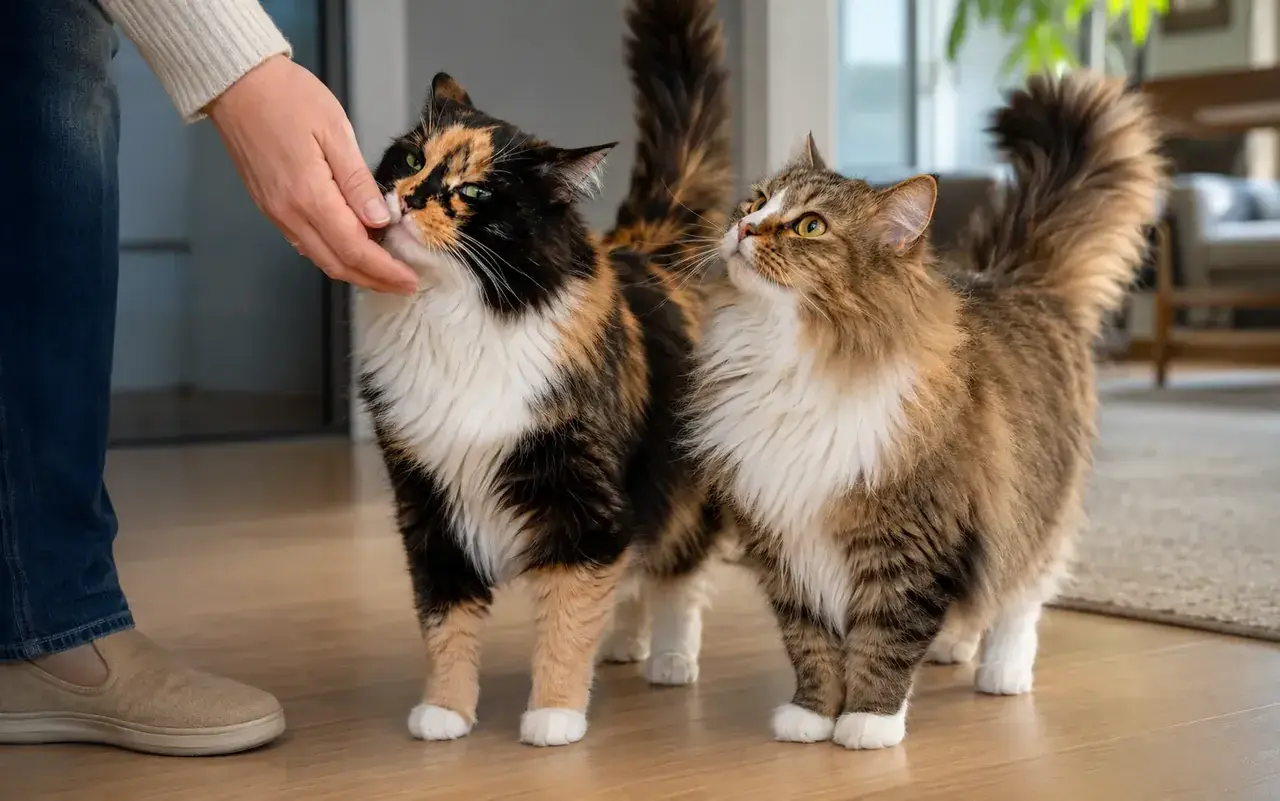 Topic illustration selected for this guide. Some learning images may be AI-assisted.
One kitten or two? Make the decision for your home — the quick answer
✓ Choose based on capacity, not guilt
✓ A bonded pair may transition well together
✓ Each kitten needs individual resources and attention
✓ Adult resident cats should not be used as kitten entertainment
Two compatible kittens may play and learn together, but a pair is not automatically easier. Costs, veterinary care, space, individual bonding and long-term compatibility still need a realistic plan.
Calculate lifetime capacity
Budget for insurance or emergencies, routine care, food, litter, carriers and boarding for two. Consider whether housing and future moves can accommodate both.
Ask about the relationship
A rescue can explain whether kittens are bonded, simply familiar or independent. Do not split a genuinely bonded pair without specialist advice.
Build for individuals
Provide multiple litter boxes, feeding points, hiding places, scratching options and carriers. Train and handle each kitten separately as well as together.
If choosing one
Plan frequent interactive play, enrichment and calm social time. A single kitten can thrive when needs are met; adding a random second kitten is not a guaranteed behaviour fix.
Assess the actual kittens and home
Ask the rescue or breeder about existing bonds, play style, confidence and experience with other cats. Two compatible kittens may share play, but each still needs individual handling, training, veterinary care and rest. A single kitten needs frequent appropriate play and social contact without using hands as toys.
Budget and arrange resources separately
Plan for two carriers, veterinary costs, insurance or emergency savings, feeding spaces and multiple litter trays in separate locations. Monitor growth and appetite individually rather than assuming shared bowls show both ate. Introduce unrelated kittens gradually when advised. Choose the arrangement you can sustain through adulthood, not only during the appealing kitten stage.
Your quick checklist
Your progress is saved on this device.
Three simple things you can do
You do not have to change everything today. Pick one step that feels realistic, try it and see how your cat responds.
- 1Ask the rescue about temperament, bond, age and observed social needs.
- 2Budget for separate veterinary care, food, insurance, litter and long-term space for each kitten.
- 3Provide individual resources and one-to-one handling even when adopting a pair.
Common mistakes
×Assuming two kittens require no human play or training.
×Separating an established bonded pair for convenience.
×Adopting a second kitten without considering the resident cat's needs.
Questions cat people ask
Are two kittens easier than one?+
A compatible pair can share social play and practise cat communication, but they also double many costs and still need individual care and suitable resources.
Will two kittens bond with people?+
Yes. Provide gentle individual handling, play and routines so each kitten develops confidence with humans as well as the other cat.
Still looking for the right answer?
Search the full EverYes Cats encyclopedia with your own words — a symptom, food, behaviour, breed or everyday question.
Checked, dated and transparent
- Prepared by
- EverYes Cats editorial team
- Last updated
- 4 September 2026
- Source checked
- 4 September 2026
- Primary reference
- FelineVMA Healthy Feline Environment ↗
We begin with the named reference, rewrite the information in plain language and add practical cat-parent steps. Urgent health statements are checked against veterinary sources. This guide has not been individually reviewed by a veterinarian unless explicitly stated. It provides education, not diagnosis or treatment.
How we choose and use sources →
Spotted something unclear or outdated? Tell us so we can review it.
Your answer helps us improve the cat encyclopedia.
Quiet darkness can feel safer while the cat is still learning the home..