Candles, fireplaces and open flames around cats
Whiskers, tails and fur can ignite quickly, while hot wax and smoke can injure skin and lungs.
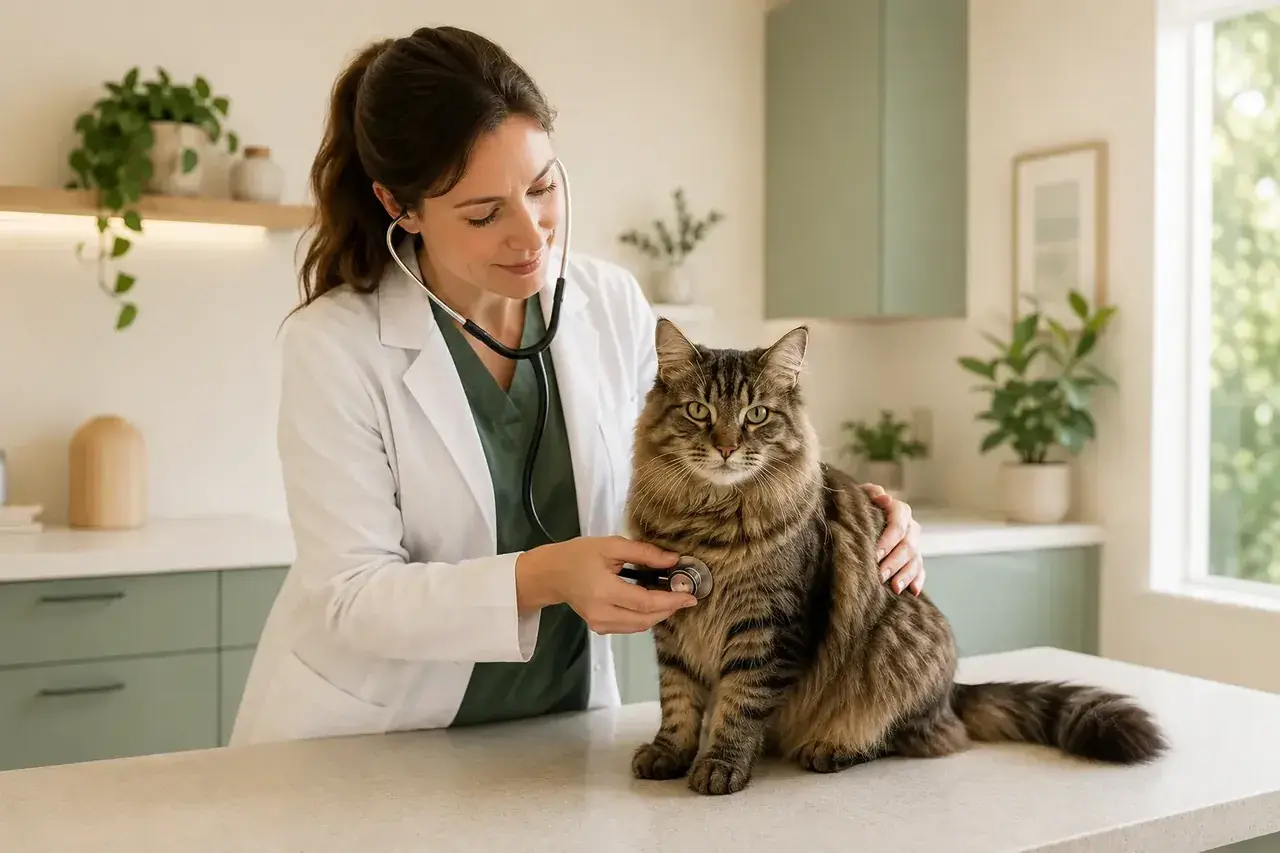 Topic illustration selected for this guide. Some learning images may be AI-assisted.
Candles, fireplaces and open flames around cats — the quick answer
✓ Choose flameless alternatives, use a fixed fireguard and create a cat-free zone around every heat source.
✓ Extinguish flames before leaving the room and check that embers, wax and surfaces are fully cool.
✓ Burns, singed facial hair, coughing, soot around the nose or breathing difficulty require urgent care.
Whiskers, tails and fur can ignite quickly, while hot wax and smoke can injure skin and lungs. This guide explains how to reduce the risk, prepare the household, respond safely and recognize when the cat needs urgent professional care.
Why this deserves a plan
A tail, whisker or coat can reach a flame before a cat reacts, while hot wax, embers and smoke may injure skin or airways. High shelves are not automatically safe when a cat can climb nearby furniture.
Make the safe choice the easy choice
Choose flameless candles when possible. Use a stable fixed fireguard, keep climbable routes away from heat and give the cat a comfortable resting place outside the danger zone.
A practical step-by-step routine
Before lighting a flame, clear the surrounding surface and close off unsafe access. Stay in the room, extinguish every flame before leaving and keep the barrier in place until wax, embers and surfaces are fully cool.
What not to do
Do not rely on supervision from across the room, place a candle on a ledge the cat can reach or leave a fire unattended because the cat appears asleep elsewhere.
Know the urgent threshold
Cool a suspected burn only as directed by a veterinary professional and seek prompt care. Singed facial hair, soot near the nose, coughing, pain, blistering or breathing difficulty needs urgent assessment.
See the room from cat height
Kneel and look beneath furniture, behind appliances and along climbing routes. Notice loops, gaps, warm cavities, unstable objects and small pieces that disappear against the floor. Then look upward: shelves, windows, plants and cords may become reachable through a chair or curtain. Repeat the inspection after furniture moves or the cat learns a new skill.
Make every caregiver capable
Walk another adult through the hazard and the response. Show where the carrier, records and cleaning supplies are stored. Agree who calls the clinic, who contains other pets and who handles transport. Children should alert an adult rather than retrieve a frightened or injured cat. Clear roles reduce delay and prevent several people from giving conflicting help.
The bottom line
The central risk is simple: whiskers, tails and fur can ignite quickly, while hot wax and smoke can injure skin and lungs. The practical response is to extinguish flames before leaving the room and check that embers, wax and surfaces are fully cool. Build layers that still work when people are rushed and cats are frightened. When exposure or injury may have occurred, seek professional advice early instead of waiting for certainty.
Your quick checklist
Your progress is saved on this device.
Three simple things you can do
You do not have to change everything today. Pick one step that feels realistic, try it and see how your cat responds.
- 1Observe your cat’s individual baseline.
- 2Make one gentle change at a time.
- 3Ask a qualified professional when health or safety is involved.
Common mistakes
×Waiting for a dramatic symptom instead of noticing smaller changes from the cat’s normal routine.
×Changing several things at once, making it difficult to learn what actually helped.
×Treating general guidance as a substitute for advice from a veterinarian who knows the individual cat.
Questions cat people ask
Does every cat follow the same rule?+
No. Age, health, history, temperament and environment all change what works for an individual.
When should I seek professional help?+
Seek veterinary advice for sudden, persistent or concerning changes and urgent help for breathing difficulty, collapse, seizures, poisoning or urinary obstruction signs.
Still looking for the right answer?
Search the full EverYes Cats encyclopedia with your own words — a symptom, food, behaviour, breed or everyday question.
Checked, dated and transparent
- Prepared by
- EverYes Cats editorial team
- Last updated
- 22 September 2026
- Source checked
- 22 September 2026
- Primary reference
- Cornell Feline Health Center: Common Cat Hazards ↗
We begin with the named reference, rewrite the information in plain language and add practical cat-parent steps. Urgent health statements are checked against veterinary sources. This guide has not been individually reviewed by a veterinarian unless explicitly stated. It provides education, not diagnosis or treatment.
How we choose and use sources →
Spotted something unclear or outdated? Tell us so we can review it.
Your answer helps us improve the cat encyclopedia.
Chewing a live cable can cause mouth burns, electric shock, breathing problems or fire.