Washing machines and dryers: a cat-safety routine
Warm drums, laundry piles and open appliance doors can attract a cat who is almost invisible among fabrics.
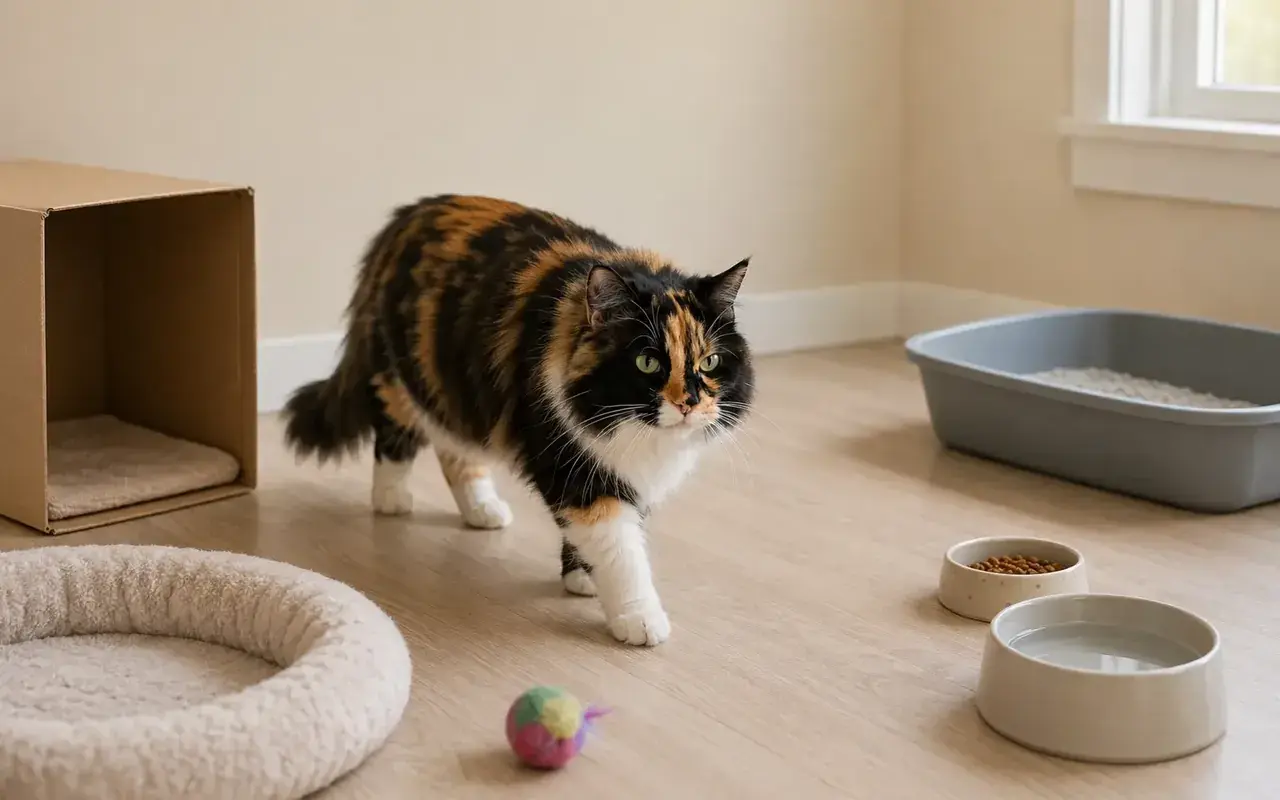 Topic illustration selected for this guide. Some learning images may be AI-assisted.
Washing machines and dryers: a cat-safety routine — the quick answer
✓ Keep appliance doors shut, store laundry in a closed basket and make a household rule that the drum is checked by hand and sight before every cycle.
✓ Remove items one by one, look behind and inside the drum, call the cat by name and confirm where every cat is before pressing start.
✓ A cat found in a running appliance needs immediate emergency veterinary care even if they appear awake.
Warm drums, laundry piles and open appliance doors can attract a cat who is almost invisible among fabrics. This guide explains how to reduce the risk, prepare the household, respond safely and recognize when the cat needs urgent professional care.
Why this deserves a plan
A cat can slip into a warm drum or disappear among laundry without making a sound. Treat every open washer and dryer as a possible hiding place, especially after loading clothes or leaving the door open.
Make the safe choice the easy choice
Keep appliance doors closed between loads and laundry in a closed basket. Agree that the person pressing start must locate every cat and inspect the drum immediately before starting a cycle.
A practical step-by-step routine
Before each cycle, remove or shift laundry piece by piece, look and feel through the entire drum and check behind the appliance. Close the door, locate every cat by sight in a safe place, then start the machine. Repeat the check if you step away before pressing start.
What not to do
Do not rely on a glance through dark laundry, assume the machine's noise will make a cat leave, or press start while a cat's location is unknown.
Know the urgent threshold
Stop the appliance immediately if a cat may be inside. A cat exposed to a running washer or dryer needs emergency veterinary care even if it appears alert; phone the clinic while arranging safe transport.
Make every caregiver capable
Walk another adult through the hazard and the response. Show where the carrier, records and cleaning supplies are stored. Agree who calls the clinic, who contains other pets and who handles transport. Children should alert an adult rather than retrieve a frightened or injured cat. Clear roles reduce delay and prevent several people from giving conflicting help.
Multi-cat households need individual checks
One cat may be bold while another hides inside furniture or behind luggage. Count cats by name before operating equipment, opening external doors or leaving a location. Use separate carriers and enough resources during confinement. Stress can change relationships, so do not force frightened cats together in one small enclosure unless emergency responders direct otherwise.
After visitors or household work
Deliveries, cleaning, repairs and celebrations leave small changes: a door unlatched, cord moved, pill dropped or plant placed on a table. Complete a short reset before releasing the cat from a safe room. Count tools and packaging, inspect floors, restore barriers and ask whether any product was used where paws or fur could contact it.
DEEPER GUIDE1 more detailed sectionsOpen +
The bottom line
The central risk is simple: warm drums, laundry piles and open appliance doors can attract a cat who is almost invisible among fabrics. The practical response is to remove items one by one, look behind and inside the drum, call the cat by name and confirm where every cat is before pressing start. Build layers that still work when people are rushed and cats are frightened. When exposure or injury may have occurred, seek professional advice early instead of waiting for certainty.
Your quick checklist
Your progress is saved on this device.
Three simple things you can do
You do not have to change everything today. Pick one step that feels realistic, try it and see how your cat responds.
- 1Observe your cat’s individual baseline.
- 2Make one gentle change at a time.
- 3Ask a qualified professional when health or safety is involved.
Common mistakes
×Waiting for a dramatic symptom instead of noticing smaller changes from the cat’s normal routine.
×Changing several things at once, making it difficult to learn what actually helped.
×Treating general guidance as a substitute for advice from a veterinarian who knows the individual cat.
Questions cat people ask
Does every cat follow the same rule?+
No. Age, health, history, temperament and environment all change what works for an individual.
When should I seek professional help?+
Seek veterinary advice for sudden, persistent or concerning changes and urgent help for breathing difficulty, collapse, seizures, poisoning or urinary obstruction signs.
Still looking for the right answer?
Search the full EverYes Cats encyclopedia with your own words — a symptom, food, behaviour, breed or everyday question.
Checked, dated and transparent
- Prepared by
- EverYes Cats editorial team
- Last updated
- 22 September 2026
- Source checked
- 22 September 2026
- Primary reference
- Cornell Feline Health Center: Common Cat Hazards ↗
We begin with the named reference, rewrite the information in plain language and add practical cat-parent steps. Urgent health statements are checked against veterinary sources. This guide has not been individually reviewed by a veterinarian unless explicitly stated. It provides education, not diagnosis or treatment.
How we choose and use sources →
Spotted something unclear or outdated? Tell us so we can review it.
Your answer helps us improve the cat encyclopedia.
Chewed, punctured or swallowed batteries can cause caustic burns, electrical injury and obstruction.