Why cats head-bunt and rub their cheeks
Head-bunting and cheek rubbing often deposit facial scent and can accompany greeting, familiarity or requests for interaction. Meaning depends on the whole body and context.
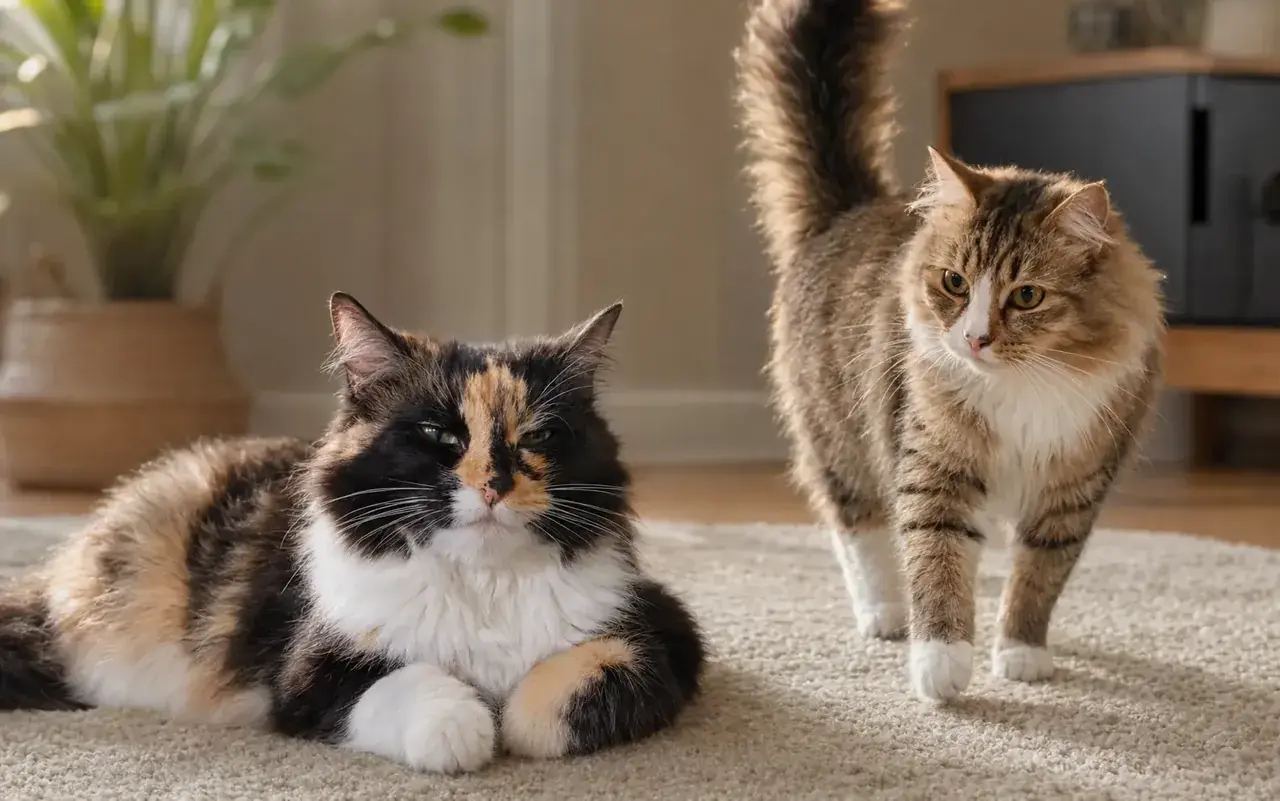 Topic illustration selected for this guide. Some learning images may be AI-assisted.
Why cats head-bunt and rub their cheeks — the quick answer
✓ Cheek rubbing helps create familiar scent
✓ Head-bunting often accompanies relaxed social contact
✓ Return contact gently and briefly
✓ New frantic rubbing with other signs needs context
Cats have scent glands around the face and use rubbing in familiar social and environmental contexts. A head-bunt may combine scent marking with a request for contact, but the cat still decides how long it lasts.
Familiarity through scent
Rubbing deposits chemical information people cannot interpret directly. Repeated contact helps a space or social partner smell familiar to the cat.
Respond softly
Offer cheek or chin strokes if those are known preferences. Avoid pressing down on the head or restraining the cat during the interaction.
Distinguish rubbing from pressing
Normal bunting is an active social movement. Persistent head pressing against a wall or object, especially with disorientation, is different and requires urgent veterinary assessment.
Use scent during transitions
Move familiar bedding with the cat, avoid washing every scent item at once and let a newly adopted cat mark safe furniture without interruption.
Let the cat control contact
Offer a still hand at nose level and allow the cat to approach, rub or move away. Respond with brief cheek or chin contact only when the body stays soft and the cat returns for more. Do not interpret rubbing as permission to lift, restrain or touch every body area.
Notice when rubbing changes
Frequent rubbing on familiar objects can be normal scent communication. Sudden frantic rubbing, head pressing, facial sensitivity, discharge, swelling, imbalance or skin damage is different and needs veterinary assessment. Read ears, eyes, whiskers, posture and movement together rather than using one affectionate-looking action as proof of mood.
Your quick checklist
Your progress is saved on this device.
Three simple things you can do
You do not have to change everything today. Pick one step that feels realistic, try it and see how your cat responds.
- 1Stay still and let the cat control pressure and duration.
- 2Respond with gentle cheek or head contact only if the cat remains relaxed.
- 3Notice whether rubbing is social or whether new pressing and disorientation suggest illness.
Common mistakes
×Forcing face-to-face contact.
×Confusing friendly bunting with persistent head pressing against walls.
×Assuming every rub means the cat wants full-body petting.
Questions cat people ask
Why does my cat bump its head against me?+
Relaxed head bunting commonly combines social contact with deposition of familiar facial scent and can be part of a friendly greeting.
Is head pressing the same as head bunting?+
No. Repeatedly pressing the head against a wall or object with abnormal behaviour can signal a neurological emergency and needs immediate veterinary care.
Still looking for the right answer?
Search the full EverYes Cats encyclopedia with your own words — a symptom, food, behaviour, breed or everyday question.
Checked, dated and transparent
- Prepared by
- EverYes Cats editorial team
- Last updated
- 4 September 2026
- Source checked
- 4 September 2026
- Primary reference
- FelineVMA Healthy Feline Environment ↗
We begin with the named reference, rewrite the information in plain language and add practical cat-parent steps. Urgent health statements are checked against veterinary sources. This guide has not been individually reviewed by a veterinarian unless explicitly stated. It provides education, not diagnosis or treatment.
How we choose and use sources →
Spotted something unclear or outdated? Tell us so we can review it.
Your answer helps us improve the cat encyclopedia.
Read clusters, not single signals. Ears, eyes, whiskers, tail, posture, movement, distance and context together reveal whether a cat feels relaxed, uncertain or overwhelmed.