Train a cat to take medication before it is urgent
Medication training creates a calm sequence before treatment is needed, but it must never delay an essential dose or substitute for veterinary instructions.
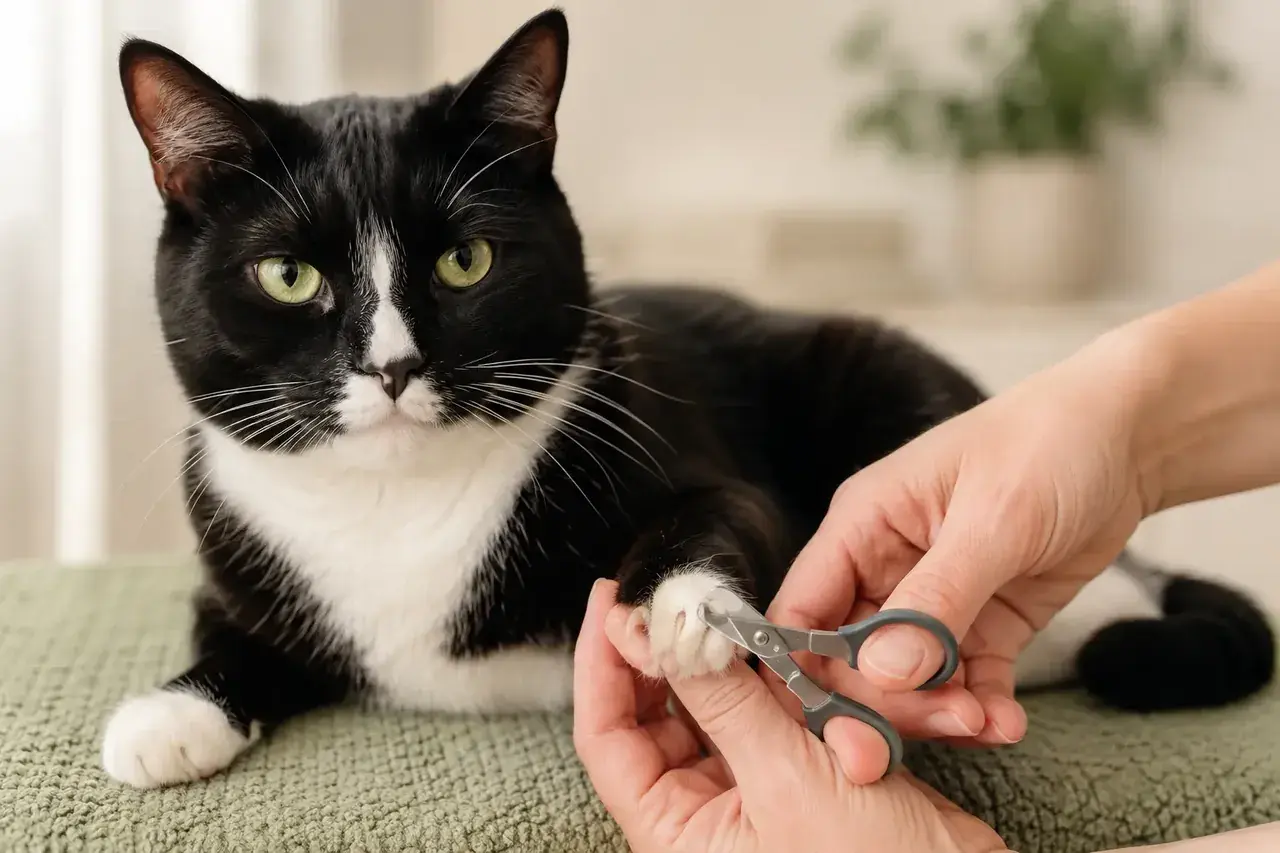 Topic illustration selected for this guide. Some learning images may be AI-assisted.
Train a cat to take medication before it is urgent — the quick answer
✓ Ask how the specific medicine must be given
✓ Never crush or open medication without approval
✓ Practise empty steps with rewards
✓ Call the clinic rather than repeatedly wrestling
Medication methods depend on the drug, and not every tablet may be crushed or hidden. Training calm handling and a reliable reward before illness gives you more options later.
Clarify the prescription
Ask whether the medicine can be given with food, divided, crushed or compounded, and what to do after a missed or vomited dose.
Train the sequence
Practise approaching the station, cheek touch, brief head handling or accepting an empty treat pocket. Reward each step and stop before resistance.
Protect food aversion
Do not contaminate the cat's entire favourite meal with bitter medicine. Use only a small approved portion, then offer normal food separately.
Know when the plan fails
Repeated spitting, drooling, vomiting, hiding or missed doses means the method needs revision. Clinics may demonstrate technique or discuss an alternative formulation.
Teach the equipment in tiny steps
Choose the likely format—syringe, tablet, eye drops or ear handling—and first reward the cat for approaching a mat or station. Introduce an empty device at a distance, then brief cheek, lip or ear contact as appropriate. End after seconds, allow the cat to leave and practise with harmless veterinary-approved substitutes only.
Separate practice from real treatment
Ask the veterinary team whether medicine can be crushed, mixed with food or followed by water, because altering some products is unsafe. Monitor whether the full dose was swallowed rather than assuming an empty bowl proves it. If the cat repeatedly refuses, vomits, drools heavily or becomes distressed, contact the prescriber promptly for another formulation or handling plan.
Your quick checklist
Your progress is saved on this device.
Three simple things you can do
You do not have to change everything today. Pick one step that feels realistic, try it and see how your cat responds.
- 1Practise the handling position and empty routine before medication is needed when possible.
- 2Pair each tiny step with a reward and stop before struggle.
- 3Ask the veterinarian about alternative formulations if dosing repeatedly fails.
Common mistakes
×Hiding essential medication in a full meal that may not be finished.
×Crushing tablets without confirming it is safe.
×Continuing a dangerous struggle that risks injury or missed doses.
Questions cat people ask
Can every cat tablet be crushed?+
No. Some medicines must remain intact or taste extremely bitter. Ask the veterinarian or pharmacist about the exact product.
What if my cat spits out medicine?+
Do not automatically repeat a full dose because some may have been swallowed. Contact the clinic for product-specific instructions and a better administration plan.
Still looking for the right answer?
Search the full EverYes Cats encyclopedia with your own words — a symptom, food, behaviour, breed or everyday question.
Checked, dated and transparent
- Prepared by
- EverYes Cats editorial team
- Last updated
- 4 September 2026
- Source checked
- 4 September 2026
- Primary reference
- FelineVMA Positive Reinforcement Training ↗
We begin with the named reference, rewrite the information in plain language and add practical cat-parent steps. Urgent health statements are checked against veterinary sources. This guide has not been individually reviewed by a veterinarian unless explicitly stated. It provides education, not diagnosis or treatment.
How we choose and use sources →
Spotted something unclear or outdated? Tell us so we can review it.
Your answer helps us improve the cat encyclopedia.
A prepared veterinary visit gives the team clearer information and reduces avoidable stress. Bring trends, medication details and a safely carrier-trained cat whenever time allows.