Spraying or peeing? Read the location and posture
Spraying usually marks a vertical surface with a small amount while the cat stands; ordinary urination typically creates a larger puddle on a horizontal surface. Both deserve investigation.
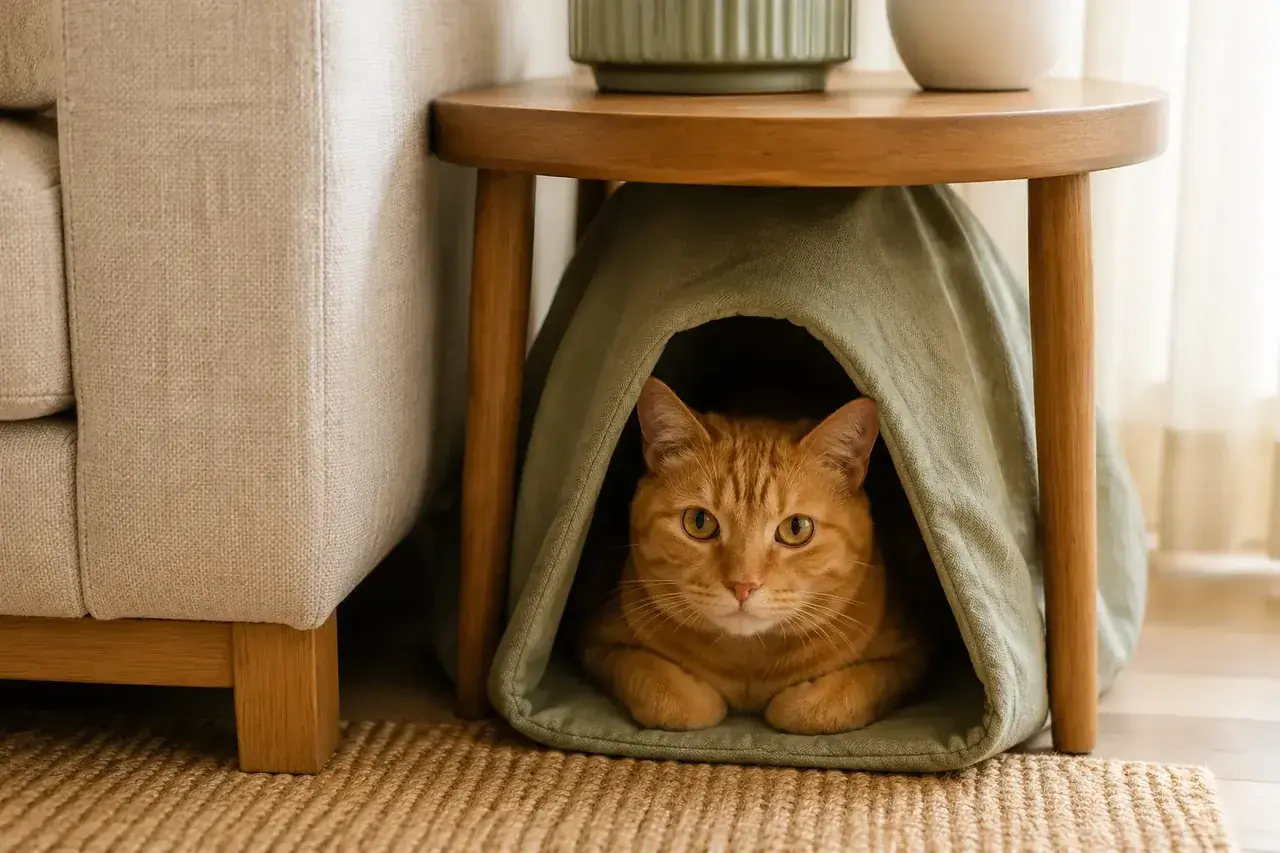 Topic illustration selected for this guide. Some learning images may be AI-assisted.
Spraying or peeing? Read the location and posture — the quick answer
✓ Any new urine change deserves a health check
✓ Spraying is communication, not revenge
✓ Clean with an appropriate enzymatic product
✓ Punishment increases stress
Spraying often places a small amount of urine on a vertical surface while the cat stands; toileting usually creates a larger puddle on a horizontal surface. Real cases do not always follow the textbook.
Document the pattern
Note posture, tail movement, amount, surface, location and time. A home camera can reveal blocking by another cat or visitors near windows.
Rule out pain and disease
Urinary inflammation, infection, stones, kidney disease, diabetes and mobility problems may alter toileting. Straining with little or no urine is an emergency.
Improve the toilet system
Provide large clean boxes in separate quiet locations with easy entry and the cat's preferred litter. One box beside another is often one location, not two choices.
Reduce marking pressure
Block views of outdoor cats when relevant, spread resources, preserve familiar scent and clean marked areas without ammonia-like odours. Seek qualified behaviour help for persistence.
Document posture and location
Note whether the tail quivers, the cat backs toward a wall or instead squats on a bed, floor or bath. Record frequency, volume, household changes and access to litter trays. Clean with a cat-safe enzymatic product without punishment, because stress and pain can worsen after scolding.
Rule out medical causes first
Urinary infection, bladder inflammation, stones, kidney disease and pain can change toileting. Straining, repeated tiny urinations, crying, blood or inability to pass urine requires urgent veterinary care, especially possible blockage. After medical assessment, improve tray number, placement, cleanliness and social resource access, then address marking triggers gradually.
Your quick checklist
Your progress is saved on this device.
Three simple things you can do
You do not have to change everything today. Pick one step that feels realistic, try it and see how your cat responds.
- 1Arrange a veterinary examination and urine testing for new house-soiling.
- 2Photograph the location and note posture, volume, frequency and social context.
- 3Clean with an appropriate enzymatic product and improve litter and resource access.
Common mistakes
×Punishing the cat or rubbing its nose in the area.
×Calling every incident territorial spraying.
×Blocking the spot without addressing pain, litter preference or conflict.
Questions cat people ask
How can I tell spraying from urination?+
Spraying often involves a small amount on a vertical surface with the cat standing and tail raised, while urination usually forms a larger pool on a horizontal surface. Exceptions occur.
Why did my cat suddenly pee outside the box?+
Urinary pain, other illness, litter-box access, aversion and social stress are among many causes. New behaviour needs veterinary assessment first.
Still looking for the right answer?
Search the full EverYes Cats encyclopedia with your own words — a symptom, food, behaviour, breed or everyday question.
Checked, dated and transparent
- Prepared by
- EverYes Cats editorial team
- Last updated
- 4 September 2026
- Source checked
- 4 September 2026
- Primary reference
- FelineVMA House-Soiling Guide ↗
We begin with the named reference, rewrite the information in plain language and add practical cat-parent steps. Urgent health statements are checked against veterinary sources. This guide has not been individually reviewed by a veterinarian unless explicitly stated. It provides education, not diagnosis or treatment.
How we choose and use sources →
Spotted something unclear or outdated? Tell us so we can review it.
Your answer helps us improve the cat encyclopedia.
An upright tail often accompanies a friendly or confident approach, but its meaning depends on movement, posture, facial expression and the surrounding situation.