Why does my cat stare at me while using the litter box?
A cat may watch you in the bathroom because the routine is predictable, the room is interesting or your attention is easy to gain.
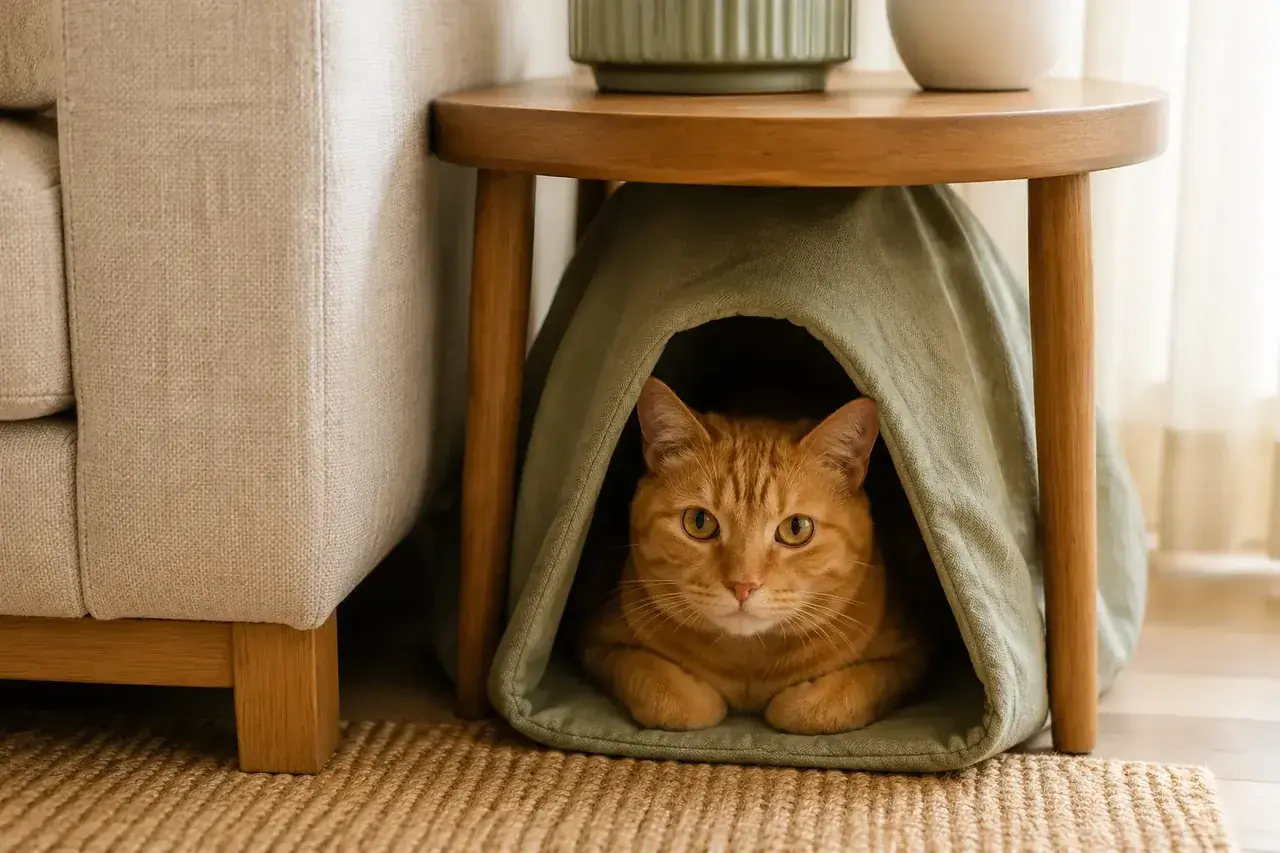 Topic illustration selected for this guide. Some learning images may be AI-assisted.
Why does my cat stare at me while using the litter box — the quick answer
✓ The cat may monitor the room during a vulnerable activity or expect routine interaction
✓ Give privacy while keeping the route and exit clear.
✓ Straining, crying, blood, diarrhoea or reduced output needs veterinary care.
The cat may monitor the room during a vulnerable activity or expect routine interaction. Eye contact alone does not prove embarrassment or a request for help.
The short answer
The cat may monitor the room during a vulnerable activity or expect routine interaction. Eye contact alone does not prove embarrassment or a request for help.
What to observe
Look for relaxed posture versus tension, pausing, vocalising or repeated attempts.
How to read the situation
A relaxed cat may look toward a trusted person while checking the room during a vulnerable moment. Tense staring with repeated repositioning, crying, digging or frequent unproductive visits is not a social signal to interpret; it can accompany urinary or bowel discomfort.
What to do now
Give privacy while keeping the route and exit clear.
What not to do
Do not stare back, crowd the tray or pick the cat up during elimination. Give a clear exit and avoid photographing or repeatedly approaching the box. Never punish accidents or straining.
When to contact a veterinarian
Straining, crying, blood, diarrhoea or reduced output needs veterinary care.
What to record
Note urine-clump size, stool consistency, time in the tray and whether the cat strains, cries or returns soon afterward. These details are more useful than the direction of the gaze when discussing a change with a veterinarian.
What to check first
Read posture and context rather than assuming protection or dominance. Note whether a closed door causes distress.
DEEPER GUIDE1 more detailed sectionsOpen +
What to do next
Allow calm company if wanted or provide a nearby waiting spot and reward quiet behaviour outside the room. Sudden clinginess, distress, confusion or appetite change needs veterinary assessment.
Your quick checklist
Your progress is saved on this device.
Three simple things you can do
You do not have to change everything today. Pick one step that feels realistic, try it and see how your cat responds.
- 1Observe your cat’s individual baseline.
- 2Make one gentle change at a time.
- 3Ask a qualified professional when health or safety is involved.
Common mistakes
×Waiting for a dramatic symptom instead of noticing smaller changes from the cat’s normal routine.
×Changing several things at once, making it difficult to learn what actually helped.
×Treating general guidance as a substitute for advice from a veterinarian who knows the individual cat.
Questions cat people ask
Does every cat follow the same rule?+
No. Age, health, history, temperament and environment all change what works for an individual.
When should I seek professional help?+
Seek veterinary advice for sudden, persistent or concerning changes and urgent help for breathing difficulty, collapse, seizures, poisoning or urinary obstruction signs.
Still looking for the right answer?
Search the full EverYes Cats encyclopedia with your own words — a symptom, food, behaviour, breed or everyday question.
Checked, dated and transparent
- Prepared by
- EverYes Cats editorial team
- Last updated
- 19 September 2026
- Source checked
- 19 September 2026
- Primary reference
- International Cat Care ↗
We begin with the named reference, rewrite the information in plain language and add practical cat-parent steps. Urgent health statements are checked against veterinary sources. This guide has not been individually reviewed by a veterinarian unless explicitly stated. It provides education, not diagnosis or treatment.
How we choose and use sources →
Spotted something unclear or outdated? Tell us so we can review it.
Your answer helps us improve the cat encyclopedia.
A cat may wrap their tail around the body for warmth, comfort or protection. Decide whether the cat is cosy or cautious by checking muscle tension, ears, eyes and the situation—not the tail alone.