Preparing a cat for air travel
Airline rules, documentation, carrier dimensions, temperature and the cat's health all require advance planning.
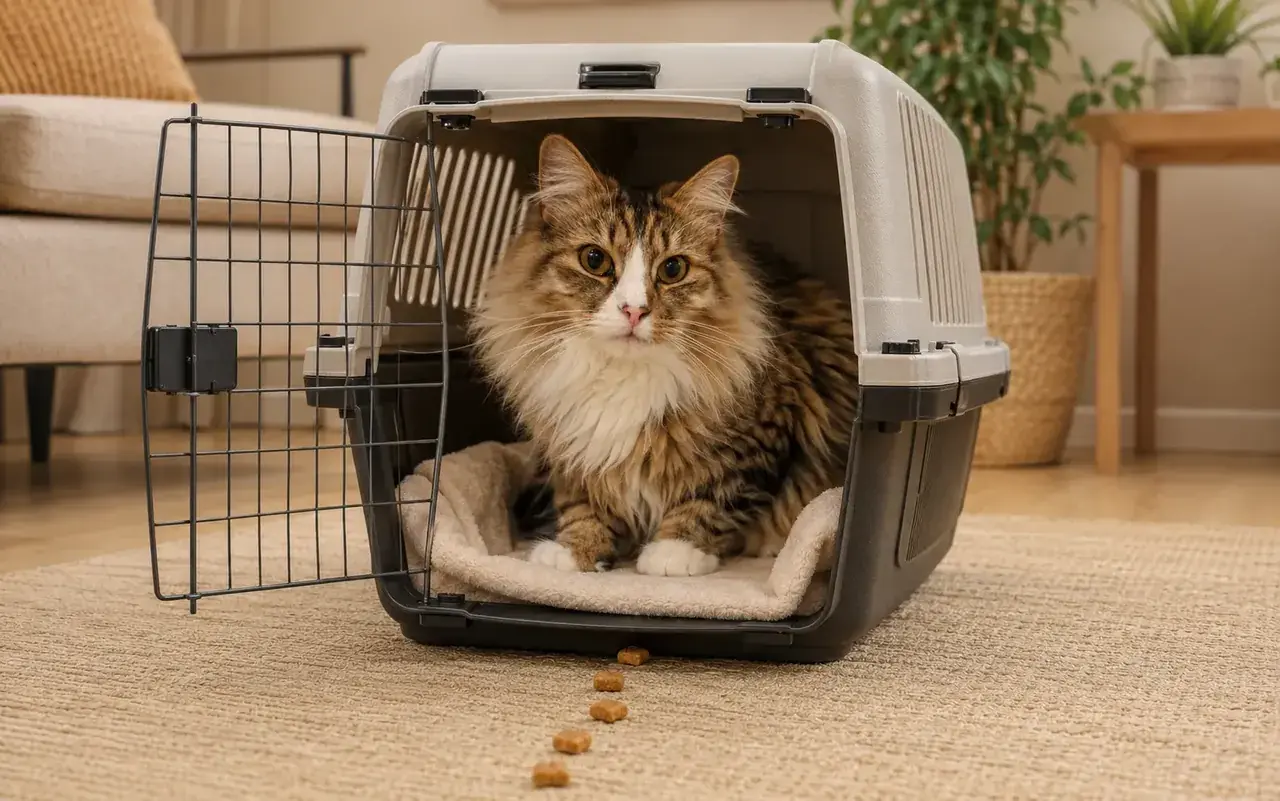 Topic illustration selected for this guide. Some learning images may be AI-assisted.
Preparing a cat for air travel — the quick answer
✓ Confirm current airline and destination rules, book a veterinary check and train with the approved carrier well before departure.
✓ Label the carrier, carry records and medication instructions, and plan every security and transfer step.
✓ Breathing difficulty, collapse, overheating or severe distress during travel is an emergency.
Airline rules, documentation, carrier dimensions, temperature and the cat's health all require advance planning. This guide explains how to reduce the risk, prepare the household, respond safely and recognize when the cat needs urgent professional care.
Why this deserves a plan
Airline booking rules, carrier limits, health documents and destination requirements can change and may differ by route. A safe plan therefore starts with the current official requirements, the individual cat's health and enough time for carrier training.
Make the safe choice the easy choice
Before booking, confirm the current rules directly with the airline and destination authorities, reserve the cat's place and ask the veterinary team what health checks or documents are needed. Choose a secure ventilated carrier that meets the operator's current specifications.
A practical step-by-step routine
Confirm the full route, transfers, pet reservation and carrier dimensions; label and practise with the carrier; organise records, prescribed medicine, food and water; then reconfirm requirements shortly before departure. Keep essential documents accessible rather than inside checked luggage.
What not to do
Do not rely on an old blog post or a previous flight, sedate a cat without direct veterinary guidance or test a new food or travel product on departure day. Never open the carrier in an unsecured public area, even when the cat is vocalising.
Know the urgent threshold
Postpone travel and seek veterinary advice when the cat is unwell or the planned journey may not be safe for its condition. Open-mouth breathing, pronounced breathing effort, collapse, overheating or severe distress during travel is an emergency.
Prepare the carrier
Use one secure carrier per cat whenever possible. Check doors, clips, ventilation and the base before each use. Label it with the cat and owner details without exposing unnecessary private information. Keep familiar washable bedding nearby. Never store the carrier behind heavy boxes when it may be needed during fire, illness or evacuation.
Build a useful information kit
Keep the veterinarian, emergency clinic, poison service, microchip registry and trusted caregiver contacts in your phone and on paper. Add current medication, allergies, diagnoses and feeding instructions. Internet access and battery power can fail. A short accurate card is more useful under pressure than a long document nobody can locate.
Transport without creating a second emergency
Contain the cat before opening an external door. Secure the carrier so it cannot slide and keep the vehicle comfortably ventilated. Phone ahead when possible. Do not hold an injured or poisoned cat loose in the car; fear and pain can trigger escape or a bite. Bring packaging, records and medication with you.
DEEPER GUIDE1 more detailed sectionsOpen +
The bottom line
The central risk is simple: airline rules, documentation, carrier dimensions, temperature and the cat's health all require advance planning. The practical response is to label the carrier, carry records and medication instructions, and plan every security and transfer step. Build layers that still work when people are rushed and cats are frightened. When exposure or injury may have occurred, seek professional advice early instead of waiting for certainty.
Your quick checklist
Your progress is saved on this device.
Three simple things you can do
You do not have to change everything today. Pick one step that feels realistic, try it and see how your cat responds.
- 1Observe your cat’s individual baseline.
- 2Make one gentle change at a time.
- 3Ask a qualified professional when health or safety is involved.
Common mistakes
×Waiting for a dramatic symptom instead of noticing smaller changes from the cat’s normal routine.
×Changing several things at once, making it difficult to learn what actually helped.
×Treating general guidance as a substitute for advice from a veterinarian who knows the individual cat.
Questions cat people ask
Does every cat follow the same rule?+
No. Age, health, history, temperament and environment all change what works for an individual.
When should I seek professional help?+
Seek veterinary advice for sudden, persistent or concerning changes and urgent help for breathing difficulty, collapse, seizures, poisoning or urinary obstruction signs.
Still looking for the right answer?
Search the full EverYes Cats encyclopedia with your own words — a symptom, food, behaviour, breed or everyday question.
Checked, dated and transparent
- Prepared by
- EverYes Cats editorial team
- Last updated
- 24 September 2026
- Source checked
- 24 September 2026
- Primary reference
- CDC: Pet Travel Safety ↗
We begin with the named reference, rewrite the information in plain language and add practical cat-parent steps. Urgent health statements are checked against veterinary sources. This guide has not been individually reviewed by a veterinarian unless explicitly stated. It provides education, not diagnosis or treatment.
How we choose and use sources →
Spotted something unclear or outdated? Tell us so we can review it.
Your answer helps us improve the cat encyclopedia.
An unfamiliar room may contain escape routes, unsafe gaps, chemicals and furniture cavities.