← Cat encyclopedia10
38 GUIDES
Travel & moving
Carriers, car rides, holidays and settling into a new home.
IN THIS LIBRARY
Travel and moving with cats
Cats usually cope best when transport and unfamiliar places are prepared in small, predictable steps. This hub covers carrier training, car travel, hotel safety, holidays and settling after a move.
PLAN THE NEXT PART
Six travel pathways
Use the guide that matches your next decision, then work through the journey in order instead of solving everything at departure.
CARRIER TRAININGMake the cat carrier less frightening
Make the carrier familiar before a journey is necessary
Open the travel guide →SECURE IN THE CARWhere should a cat carrier go in the car?Stable placement that prevents sliding and tipping
Open the travel guide →HOTEL ROOMHow to make a hotel room safer for a travelling catInspect gaps, windows, furniture and cleaning products
Open the travel guide →FLYINGPreparing a cat for air travelDocuments, carrier rules and airline preparation
Open the travel guide →WATERHow to offer water during cat travelPlan familiar water and safe opportunities to offer it
Open the travel guide →TRAIN & FERRYTrain and ferry travel with a catCarrier, cabin, temperature and operator rules
Open the travel guide →START WITH YOUR QUESTION
What this topic covers
Make the carrier part of home life
Leave it open with familiar bedding and reward voluntary investigation. Short practice steps are more useful than bringing it out only for stressful trips.
Secure every transition
Keep the cat contained before opening vehicle or room doors. Check windows, balconies, gaps, furniture mechanisms and staff access before release.
Rebuild familiarity after arrival
Begin with one prepared room, familiar scent and predictable resources. Expand slowly and keep identification details current throughout the move.
QUICK QUESTIONS
Important answers before you browse
Should I cover my cat’s carrier?+
A light breathable cover helps some cats by reducing visual stimulation, but airflow and temperature must remain safe and individual preference matters.
Should a cat eat before a car journey?+
Ask the veterinarian for advice based on trip length, age, health and motion sickness history rather than withholding food without a plan.
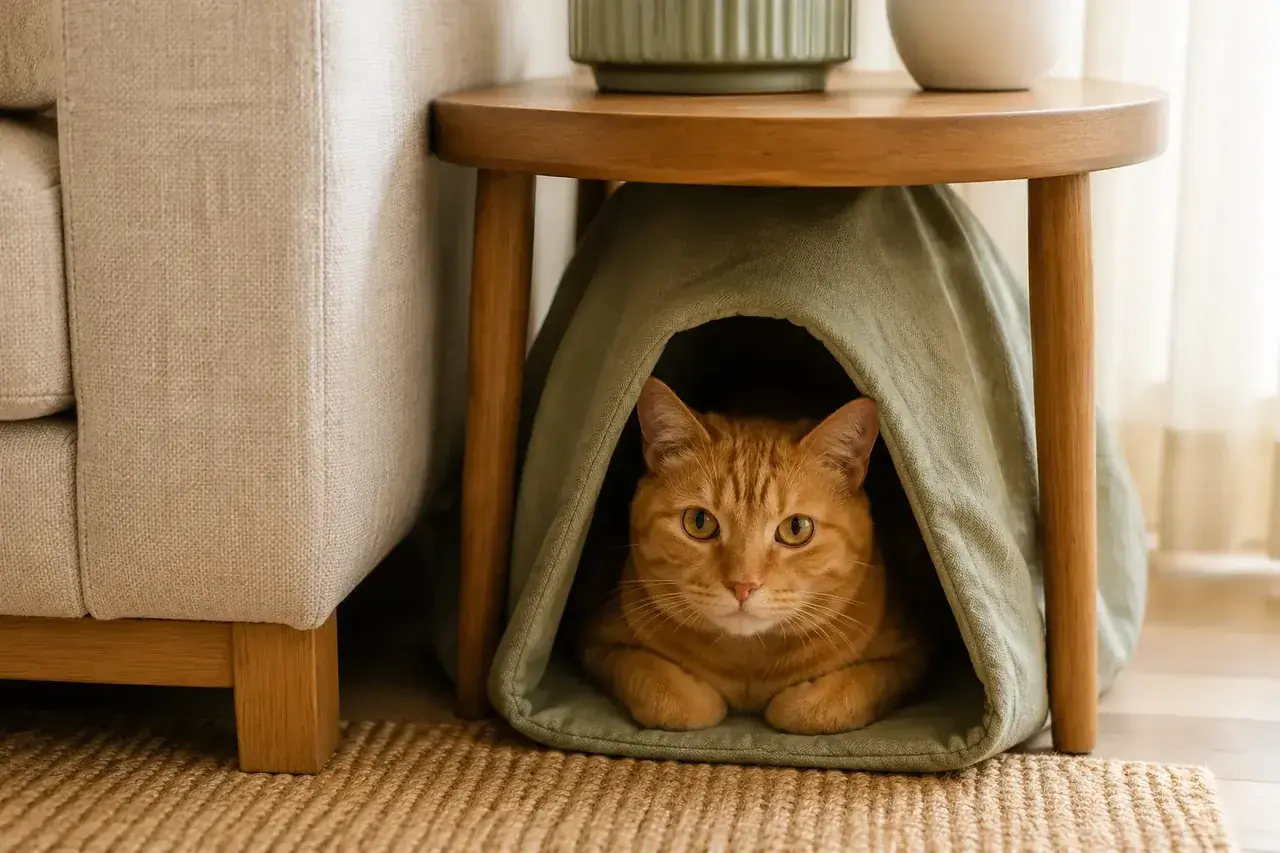
GOOD PLACE TO START · 8 min
Where should a cat carrier go in the car?
The safest carrier position is stable, level and secured so it cannot slide or become a projectile. Follow the carrier and vehicle instructions and never travel with a loose cat.
Read the guide →POPULAR IN THIS LIBRARY
See the complete library ↓Useful answers to start with
01 · 8 minHow do you teach a cat to accept the carrier door closing?Read guide →02 · 7 minHow often should a cat be offered water during travel?Read guide →03 · 9 minWhat size carrier does a cat need?Read guide →04 · 9 minHard or soft cat carrier: which is safer?Read guide →05 · 9 minWhy a top-opening carrier can make vet visits easierRead guide →06 · 9 minShould you leave the cat carrier out all year?Read guide →
All travel & moving guides
38 articles01
GUIDE · 8 min
→02Where should a cat carrier go in the car?
The safest carrier position is stable, level and secured so it cannot slide or become a projectile. Follow the carrier and vehicle instructions and never travel with a loose cat.
GUIDE · 9 min
→03How to offer water during cat travel
Cats need access to safe hydration around travel, but forcing water or opening a carrier in an unsecured place creates greater risk.
GUIDE · 8 min
→04How do you teach a cat to accept the carrier door closing?
Door movement can be separated into tiny rewarded steps before it predicts travel..
GUIDE · 7 min
→05How often should a cat be offered water during travel?
Access depends on journey length, temperature and health, but hydration should be planned before departure..
GUIDE · 9 min
→06What size carrier does a cat need?
A cat should stand, turn and lie naturally without being thrown around in excess space. A calm, practical guide to what it means and what to do next.
GUIDE · 9 min
→07Hard or soft cat carrier: which is safer?
A secure hard-sided carrier is often easiest to stabilise, clean and open from the top, while a structured soft carrier may suit specific travel needs if it cannot collapse.
GUIDE · 9 min
→08Why a top-opening carrier can make vet visits easier
A top-opening carrier can reduce struggling because the cat can be lowered in and examined with less pulling, provided every latch is strong and secure.
GUIDE · 9 min
→09Should you leave the cat carrier out all year?
Leaving the carrier open in the home turns it from an alarm signal into ordinary furniture and gives the cat time to investigate without pressure.
GUIDE · 9 min
→10What bedding should go in a cat carrier?
Carrier bedding should provide grip, absorb small accidents and smell familiar without becoming bulky or hot. A washable towel over a non-slip layer often works well.
GUIDE · 9 min
→11How to reduce stress in a veterinary waiting room
Reduce waiting-room stress by keeping the carrier closed, elevated and partly covered while increasing distance from unfamiliar animals whenever possible.
GUIDE · 9 min
→12How to set up a hotel room for a cat
A small inspection before opening the carrier can prevent escape, hiding and exposure. A calm, practical guide to what it means and what to do next.
GUIDE · 9 min
→13Does a cat need breaks on a long road trip?
Road-trip breaks are for checking temperature, breathing and carrier security—not for letting a cat roam inside the car or at a roadside stop.
GUIDE · 8 min
→14Moving day safety for cats
On moving day, keep the cat in one locked, labelled safe room or secure off-site location until doors are closed and the new base room is ready.
GUIDE · 8 min
→15How to make a hotel room safer for a travelling cat
Before opening the carrier in a hotel room, inspect every door, window, gap, appliance and hiding space. Create one controlled base area and prevent housekeeping entry.
GUIDE · 8 min
→16What to leave for a cat sitter
A cat-sitter sheet should state exact food, medication and litter routines plus normal behaviour, emergency contacts, carrier location and permission for veterinary care.
GUIDE · 8 min
→17Helping your cat settle after your vacation
After vacation, restore familiar meals, play and quiet time without overwhelming the cat. Let reconnection happen at the cat's pace.
GUIDE · 8 min
→18What should you do on a cat’s first night in a new home?
On the first night, one quiet secure room with familiar resources is usually less overwhelming than access to the whole home.
GUIDE · 8 min
→19Should a cat visit the same holiday home each year?
A holiday home brings escape risk and unfamiliar scent. Start with a secure base room and keep identification details current.
GUIDE · 8 min
→20Should you cover a cat carrier during travel?
Many cats relax when most of the carrier is covered, but airflow and temperature must remain safe. Some cats prefer a clear view, so follow the individual's body language.
GUIDE · 8 min
→21How should you manage a cat carrier in a veterinary waiting room?
A veterinary waiting room can be stressful because of unfamiliar animals, sounds and scents. A covered, secure carrier and distance from dogs reduce exposure.
guide · 9 min
→22A 14-day carrier confidence plan
Turn the carrier from a warning sign into ordinary furniture.
guide · 8 min
→23Moving home with an indoor cat
Moving is safer when the cat has one secure base room, reliable identification and controlled transitions at both properties. Familiar scent should travel with the cat.
GUIDE · 15 min
→24Why your cat fears the carrier—and how to rebuild trust
Turn the emergency box into ordinary furniture one small step at a time.
guide · 8 min
→25Boarding or cat sitter? Choose for the individual cat
The best care option depends on the individual cat's health, medication, confidence, household risks and response to unfamiliar people or places.
guide · 6 min
→26Staying away with a cat
A hotel stay is safer when the room is inspected before the carrier opens and the cat has a familiar, contained base with identification and an emergency plan.
GUIDE · 8 min
→27Car travel with a cat
The safest car trip keeps the cat inside a sturdy secured carrier from door to door. Practise before travel, control temperature and plan every transfer in a closed space.
GUIDE · 7 min
→28Make the cat carrier less frightening
Carrier training turns the carrier into familiar furniture through food, play and gradual movement. It improves routine travel but should never delay urgent veterinary care.
guide · 6 min
→29Prepare your cat for a pet sitter
A good sitter plan combines written routines, a practice visit, reliable access and clear instructions for emergencies, medication and each cat's normal behaviour.
GUIDE · 9 min
→30Moving house with a cat
Move a cat between two secure base rooms: one behind a closed door on moving day and one prepared at the new home. Update identification, secure the carrier and expand territory gradually.
guide · 13–15 min
→Clean and reset a cat carrier after a trip
Remove urine, vomit or clinic odors while rebuilding the carrier as a safe resting place with a calm, practical routine.
COMPLETE LIBRARYShow 8 more travel & moving guidesOpen +
31
guide · 5–7 min
→32A cat’s first night in a hotel or holiday rental
An unfamiliar room may contain escape routes, unsafe gaps, chemicals and furniture cavities.
guide · 5–7 min
→33Preparing a cat for air travel
Airline rules, documentation, carrier dimensions, temperature and the cat's health all require advance planning.
guide · 5–7 min
→34Train and ferry travel with a cat
Crowds, noise, vehicle decks and transfer points create different risks from an ordinary car trip.
guide · 5–7 min
→35Portable litter boxes for cat travel
A travel toilet must be accessible, familiar and contained without encouraging escape.
guide · 5–7 min
→36Travelling with a cat who needs medication
Time zones, refrigeration, lost luggage and disrupted routines can cause dangerous dosing errors.
guide · 5–7 min
→37Leaving a cat at home while you travel
A full bowl is not a care plan: cats can become ill, trapped or deprived of clean resources between visits.
guide · 5–7 min
→38How to choose a boarding cattery
Noise, hygiene, ventilation, escape control and health policies differ widely between facilities.
guide · 8 min
→Cat travel documents: a practical checklist
Microchip, vaccination, health and import requirements depend on destination and timing.