Train and ferry travel with a cat
Crowds, noise, vehicle decks and transfer points create different risks from an ordinary car trip.
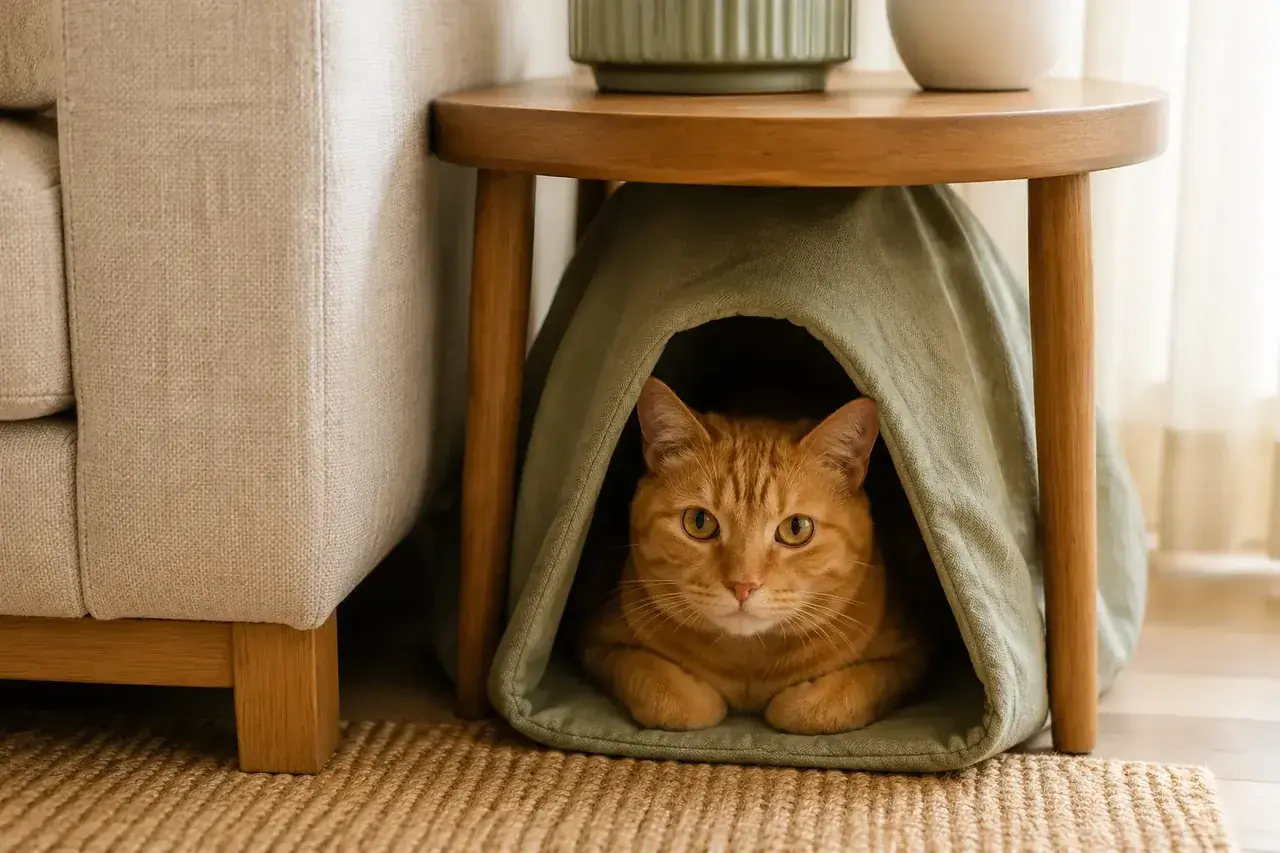 Topic illustration selected for this guide. Some learning images may be AI-assisted.
Train and ferry travel with a cat — the quick answer
✓ Check operator rules, reserve suitable space and use a secure escape-proof carrier with identification.
✓ Keep the carrier closed in public areas, monitor temperature and choose quiet routes and transfer times.
✓ Overheating, breathing change, collapse or escape requires immediate help.
Crowds, noise, vehicle decks and transfer points create different risks from an ordinary car trip. This guide explains how to reduce the risk, prepare the household, respond safely and recognize when the cat needs urgent professional care.
Why this deserves a plan
Train and ferry policies, pet areas and access during the journey vary by operator and route. Crowds, noise, boarding ramps, platforms and vehicle decks also create escape and temperature risks that are different from an ordinary car trip.
Make the safe choice the easy choice
Check the operator's current rules before booking, including where the carrier may be kept and whether you can reach the cat throughout the trip. Use a secure ventilated carrier, plan a quiet waiting place and keep identification and contact details current.
A practical step-by-step routine
Confirm the reservation and pet area, rehearse calm carrier time, and pack an absorbent layer, familiar bedding, water, food, prescribed medicine and records. Keep the carrier closed through stations, terminals and transfers, opening it only in a fully enclosed private space where this is permitted.
What not to do
Do not assume rules for dogs also apply to cats, let the cat loose on a platform, deck or shared cabin, or leave the carrier unattended. Never leave a cat in a vehicle or inaccessible area unless the operator has confirmed the arrangement is permitted and safe for that sailing.
Know the urgent threshold
Overheating, open-mouth breathing, pronounced breathing effort, collapse or escape requires immediate help from transport staff and a veterinarian. If safe access to the cat cannot be maintained, choose a different service or travel plan.
Identification is part of prevention
A microchip is permanent identification, not GPS, and it works only when registration details are current. Keep recent photographs that show face, body and unique markings. A safe breakaway collar may add visible information for some cats. Save the chip number and registry contact where another caregiver can find them quickly.
Prepare the carrier
Use one secure carrier per cat whenever possible. Check doors, clips, ventilation and the base before each use. Label it with the cat and owner details without exposing unnecessary private information. Keep familiar washable bedding nearby. Never store the carrier behind heavy boxes when it may be needed during fire, illness or evacuation.
Make every caregiver capable
Walk another adult through the hazard and the response. Show where the carrier, records and cleaning supplies are stored. Agree who calls the clinic, who contains other pets and who handles transport. Children should alert an adult rather than retrieve a frightened or injured cat. Clear roles reduce delay and prevent several people from giving conflicting help.
DEEPER GUIDE1 more detailed sectionsOpen +
The bottom line
The central risk is simple: crowds, noise, vehicle decks and transfer points create different risks from an ordinary car trip. The practical response is to keep the carrier closed in public areas, monitor temperature and choose quiet routes and transfer times. Build layers that still work when people are rushed and cats are frightened. When exposure or injury may have occurred, seek professional advice early instead of waiting for certainty.
Your quick checklist
Your progress is saved on this device.
Three simple things you can do
You do not have to change everything today. Pick one step that feels realistic, try it and see how your cat responds.
- 1Observe your cat’s individual baseline.
- 2Make one gentle change at a time.
- 3Ask a qualified professional when health or safety is involved.
Common mistakes
×Waiting for a dramatic symptom instead of noticing smaller changes from the cat’s normal routine.
×Changing several things at once, making it difficult to learn what actually helped.
×Treating general guidance as a substitute for advice from a veterinarian who knows the individual cat.
Questions cat people ask
Does every cat follow the same rule?+
No. Age, health, history, temperament and environment all change what works for an individual.
When should I seek professional help?+
Seek veterinary advice for sudden, persistent or concerning changes and urgent help for breathing difficulty, collapse, seizures, poisoning or urinary obstruction signs.
Still looking for the right answer?
Search the full EverYes Cats encyclopedia with your own words — a symptom, food, behaviour, breed or everyday question.
Checked, dated and transparent
- Prepared by
- EverYes Cats editorial team
- Last updated
- 24 September 2026
- Source checked
- 24 September 2026
- Primary reference
- CDC: Pet Travel Safety ↗
We begin with the named reference, rewrite the information in plain language and add practical cat-parent steps. Urgent health statements are checked against veterinary sources. This guide has not been individually reviewed by a veterinarian unless explicitly stated. It provides education, not diagnosis or treatment.
How we choose and use sources →
Spotted something unclear or outdated? Tell us so we can review it.
Your answer helps us improve the cat encyclopedia.
An unfamiliar room may contain escape routes, unsafe gaps, chemicals and furniture cavities.