Space heaters and radiators: safe warmth for cats
Cats seek warmth and may sleep close enough to overheat, burn skin or tip unstable equipment.
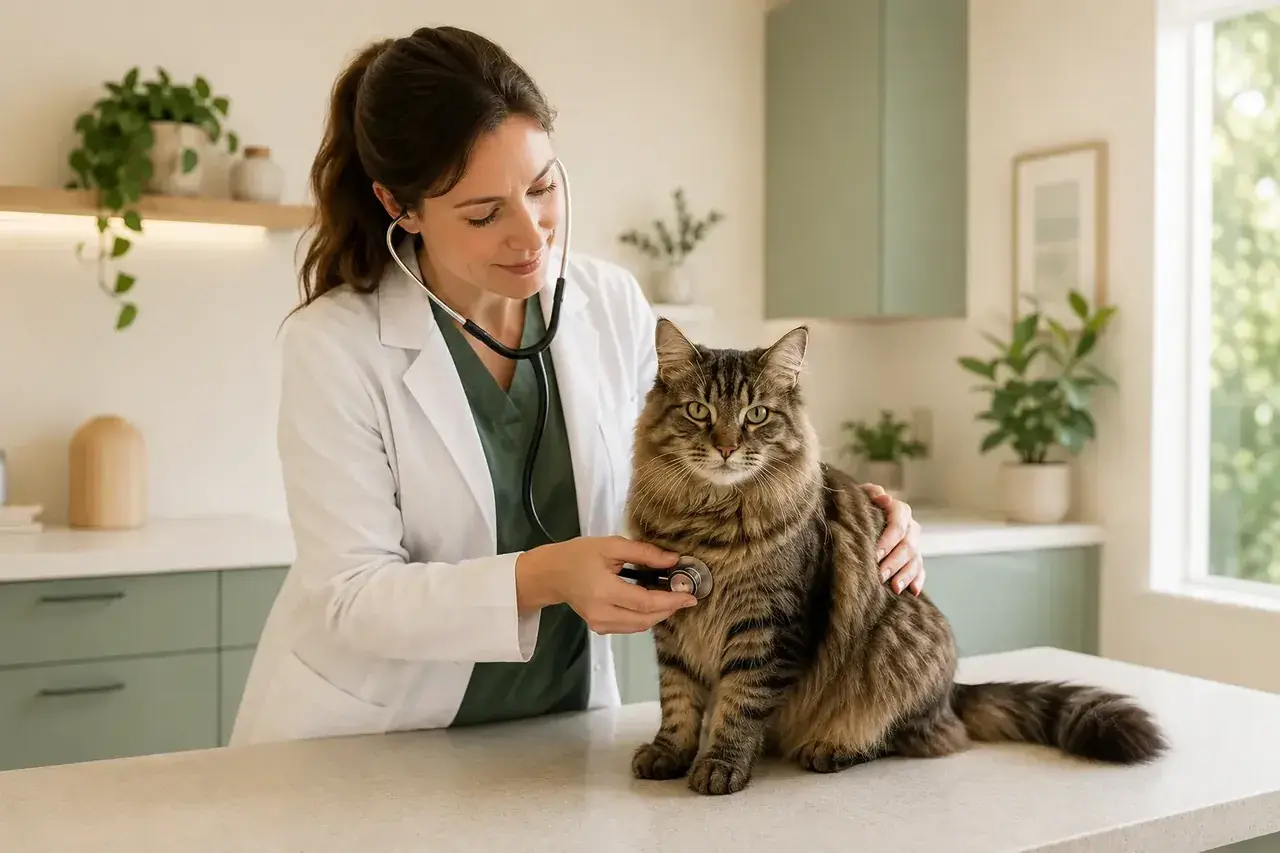 Topic illustration selected for this guide. Some learning images may be AI-assisted.
Space heaters and radiators: safe warmth for cats — the quick answer
✓ Use guarded, stable heaters with automatic shutoff and provide a warm bed at a safer distance.
✓ Check surfaces with your hand, inspect cords and ensure the cat can leave the warm area freely.
✓ Red skin, blisters, weakness, panting or collapse needs urgent veterinary care.
Cats seek warmth and may sleep close enough to overheat, burn skin or tip unstable equipment. This guide explains how to reduce the risk, prepare the household, respond safely and recognize when the cat needs urgent professional care.
Why this deserves a plan
Cats may settle very close to warmth and remain there while a surface or coat becomes too hot. Portable heaters also add risks from unstable placement, cords and nearby fabric.
Make the safe choice the easy choice
Use a stable guarded heater with suitable automatic shutoff and follow its clearance instructions. Offer a warm non-electric bed at a safer distance and make sure the cat can always move to a cooler area.
A practical step-by-step routine
Before use, inspect the heater, plug and cord, remove bedding and curtains from the clearance zone and check that the unit cannot tip. Supervise the room and switch it off as directed before leaving or sleeping.
What not to do
Do not cover a heater, place bedding against it, trap a cat between the heat source and furniture or leave an unsuitable portable heater running unattended. Keep chewing access to cords blocked.
Know the urgent threshold
Red or blistered skin, pain, weakness, panting or collapse needs urgent veterinary advice. Disconnect power safely after suspected electrical injury and seek care even when the visible mark appears small.
See the room from cat height
Kneel and look beneath furniture, behind appliances and along climbing routes. Notice loops, gaps, warm cavities, unstable objects and small pieces that disappear against the floor. Then look upward: shelves, windows, plants and cords may become reachable through a chair or curtain. Repeat the inspection after furniture moves or the cat learns a new skill.
Senior and disabled cats
Reduced vision, hearing, balance or mobility can make familiar stairs, heat sources and box entrances unsafe. Add non-slip paths, low resting places and easy carrier access. Never assume confusion or reluctance is simply old age. A new change can indicate pain or illness, and the veterinary team can help adapt both treatment and the home.
The bottom line
The central risk is simple: cats seek warmth and may sleep close enough to overheat, burn skin or tip unstable equipment. The practical response is to check surfaces with your hand, inspect cords and ensure the cat can leave the warm area freely. Build layers that still work when people are rushed and cats are frightened. When exposure or injury may have occurred, seek professional advice early instead of waiting for certainty.
Your quick checklist
Your progress is saved on this device.
Three simple things you can do
You do not have to change everything today. Pick one step that feels realistic, try it and see how your cat responds.
- 1Observe your cat’s individual baseline.
- 2Make one gentle change at a time.
- 3Ask a qualified professional when health or safety is involved.
Common mistakes
×Waiting for a dramatic symptom instead of noticing smaller changes from the cat’s normal routine.
×Changing several things at once, making it difficult to learn what actually helped.
×Treating general guidance as a substitute for advice from a veterinarian who knows the individual cat.
Questions cat people ask
Does every cat follow the same rule?+
No. Age, health, history, temperament and environment all change what works for an individual.
When should I seek professional help?+
Seek veterinary advice for sudden, persistent or concerning changes and urgent help for breathing difficulty, collapse, seizures, poisoning or urinary obstruction signs.
Still looking for the right answer?
Search the full EverYes Cats encyclopedia with your own words — a symptom, food, behaviour, breed or everyday question.
Checked, dated and transparent
- Prepared by
- EverYes Cats editorial team
- Last updated
- 24 September 2026
- Source checked
- 24 September 2026
- Primary reference
- Cornell Feline Health Center: Common Cat Hazards ↗
We begin with the named reference, rewrite the information in plain language and add practical cat-parent steps. Urgent health statements are checked against veterinary sources. This guide has not been individually reviewed by a veterinarian unless explicitly stated. It provides education, not diagnosis or treatment.
How we choose and use sources →
Spotted something unclear or outdated? Tell us so we can review it.
Your answer helps us improve the cat encyclopedia.
Chewing a live cable can cause mouth burns, electric shock, breathing problems or fire.